Introduction
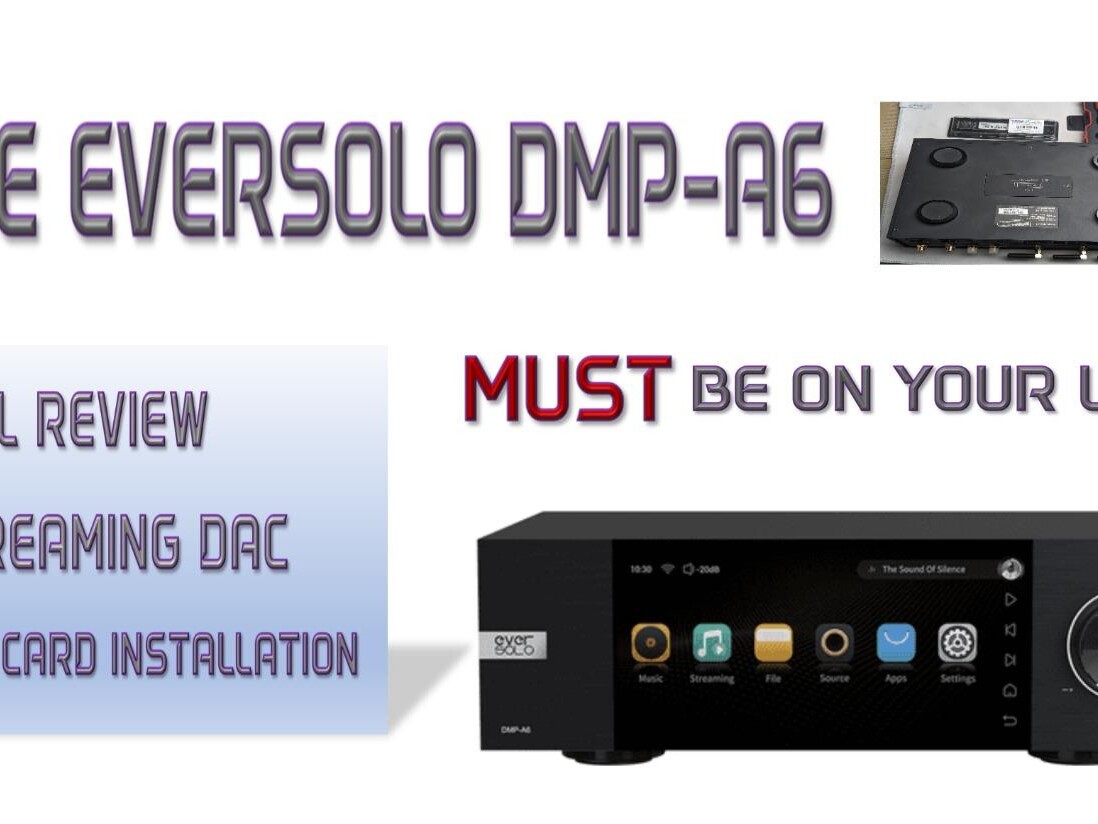
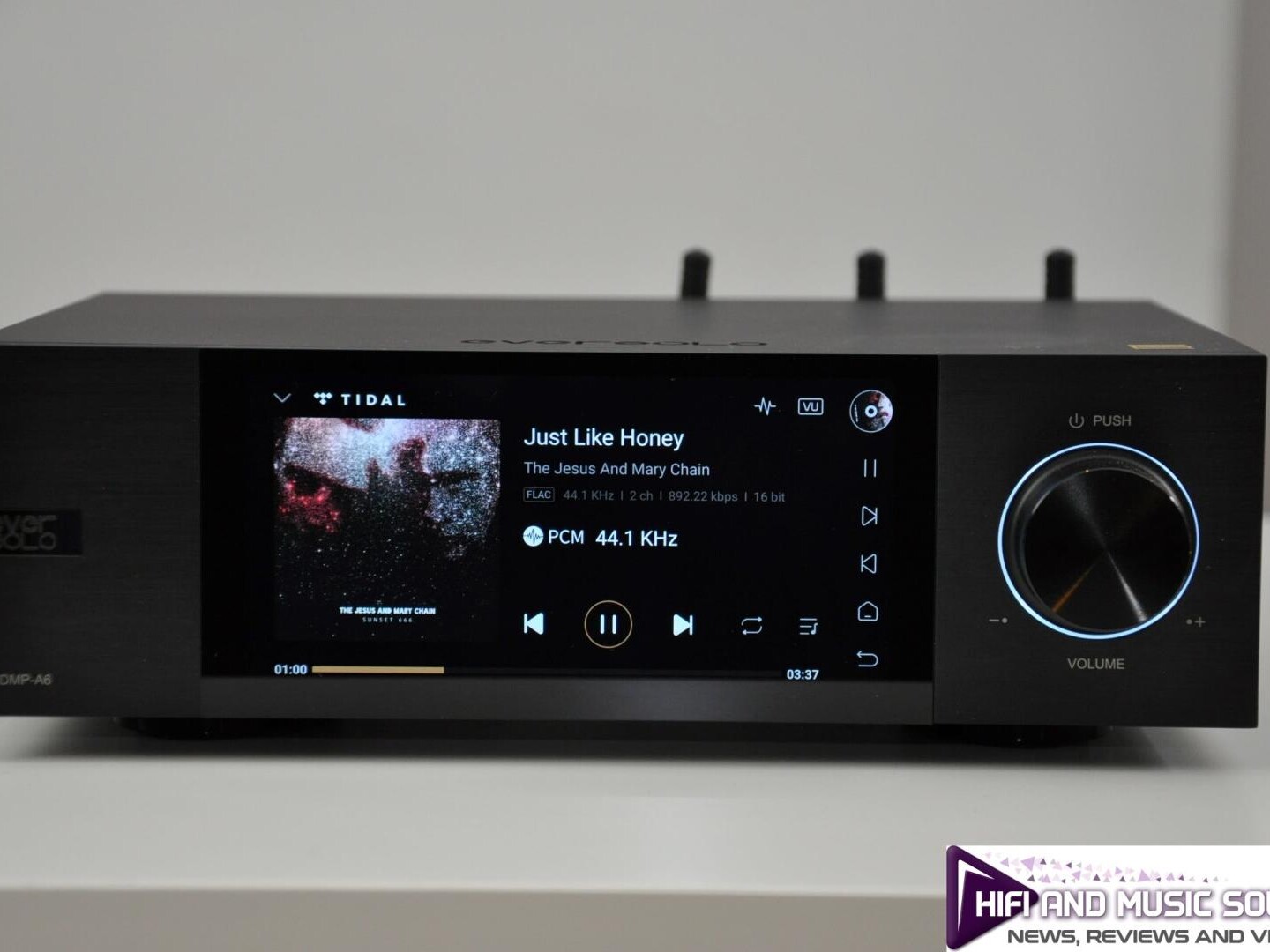
Following the sad demise (imho) of Auralic to streaming heaven in the sky, my transport of choice has been an Eversolo DMP-A6. Unfortunately, my Volumio RIVO stopped working, which was a bit of a shame, as it was mustard really.
With this crowded transport space exploding in the last few years with really great electronics from the likes of dorpo (the former Oppo guys), HiFi Rose, WiiM, Bluesound and many others (FiiO, iFi etc), Auralic’s departure from the upper midrange of audiophile equipment has not been as calamitous as it might have been, but I have been keenly searching for a proper transport solution for a few years now. Reading the news of the T10 recently set me tingling; could this dedicated transport be the new Reference I’m looking for?
Design
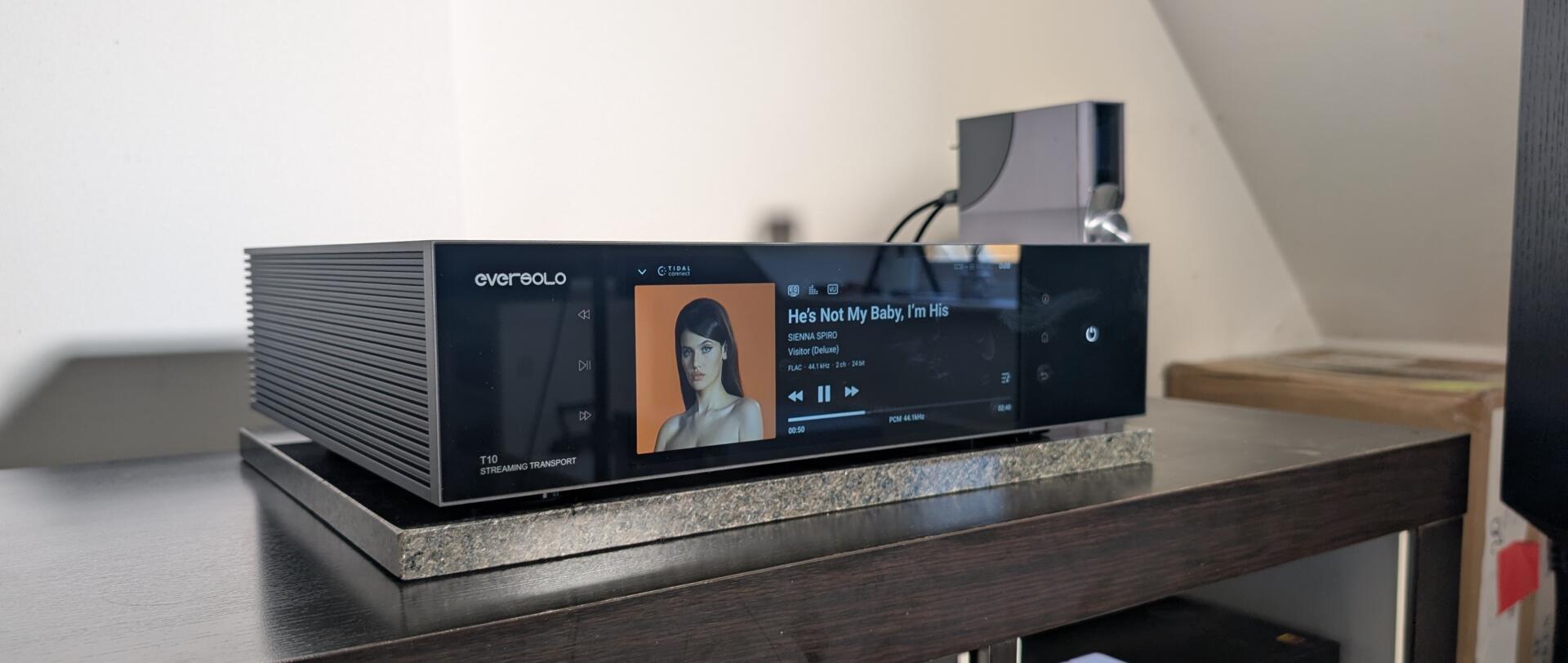
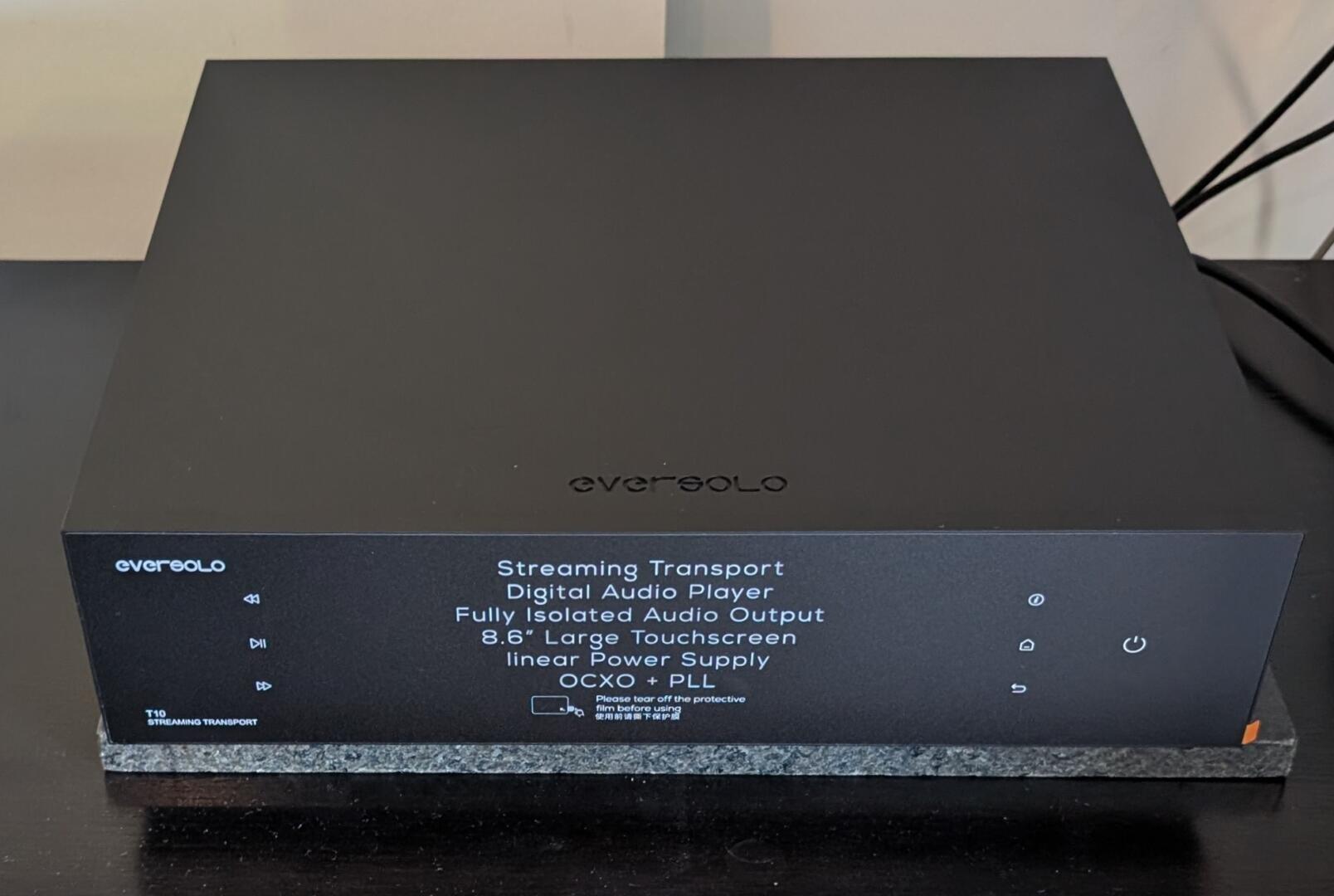
The Eversolo T10 is an audio streaming transport; there’s no DAC to convert the audio file streamed to analogue, so you’ll need your preferred DAC solution.
There is also a T8 model with fewer options, such as the external clock option, smaller RAM, different clocking specs, and no access to the PEQ room correction option (though you can upload a room profile). But it is essentially very similar for several hundred pounds less.
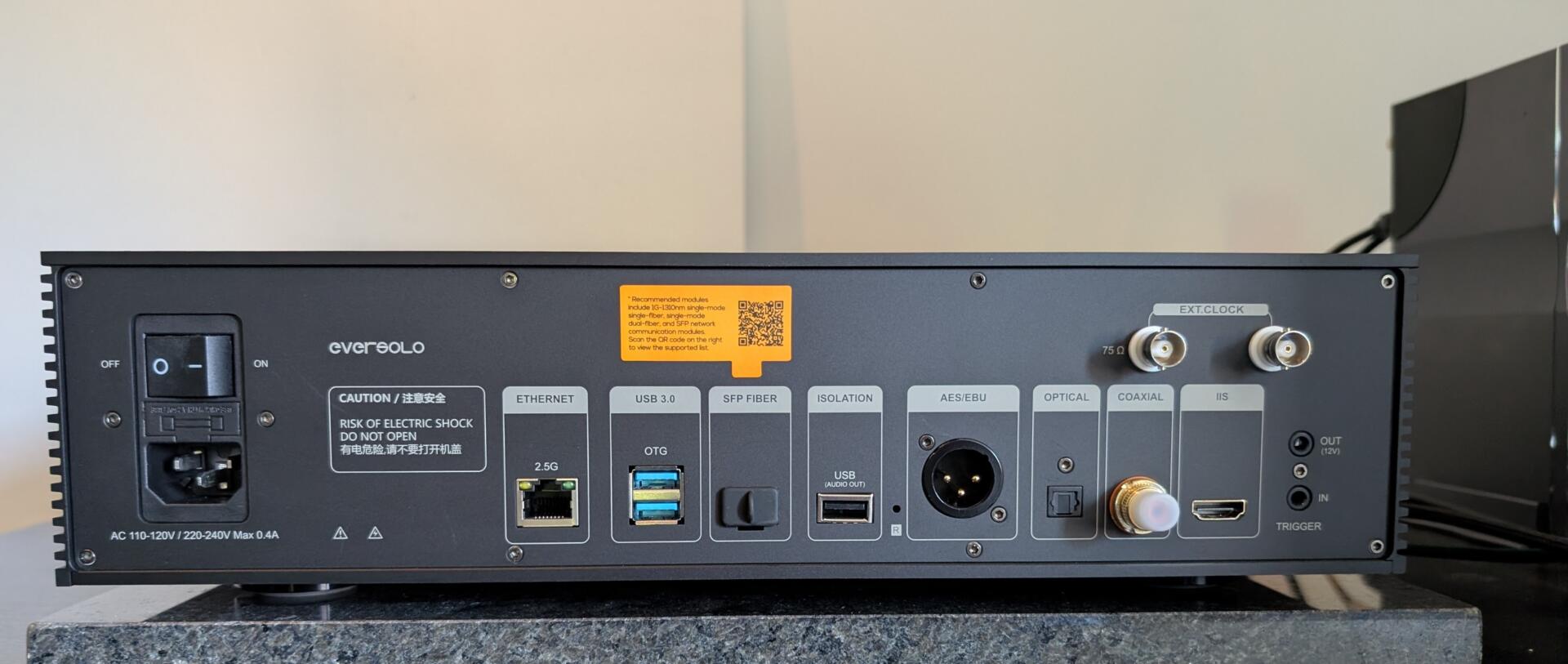
The T10 has both an SFP (Small Form Pluggable) fibre input and an Ethernet input. It is also dual-band Wi-Fi 6 (2.4G + 5G) compatible.
The SFP input port converts incoming optical (light) signals into electrical signals so the device can process the data. Optically carried data is designed to avoid network-based electromagnetic or radio-frequency interference, reducing the noise floor.
On the output side, there is an isolated USB audio output (that supports up to stereo DSD512 Native and PCM 768kHz/32-bit), IIS audio output (up to stereo DSD512 Native and PCM 768kHz/32-bit) and optical /coaxial/AES/EBU outputs (up to stereo PCM 192kHz/24-bit and DoP64).
The internal high-precision OCXO femtosecond clock is a high-grade solution in this T10. The OCXO clock maintains a constant temperature, ensuring data consistency. Coupled with this clock is a low-noise PLL (Phase-Locked Loop Technology) system that optimises the signal to further reduce jitter. Separately, there is the opportunity to use an external clock if that is available to you. This can further enhance data accuracy.
The T10 has a custom linear power supply built in, which is separately isolated from the other components.
The T10 is controlled via the touchscreen, Android/iPhone/iPad/TV app control, or a remote control. It is compatible with just about everything I can think of, including native integration with leading streaming platforms including TIDAL, Qobuz, HIGHRESAUDIO, IDAGIO, Amazon Music, TuneIn Radio, Presto Music, KKBOX, Radio Paradise, Deezer, etc., and it supports Spotify Connect Lossless, TIDAL Connect, Qobuz Connect, and DLNA.
I think only Roon Ready is missing, but this is pending, I gather.
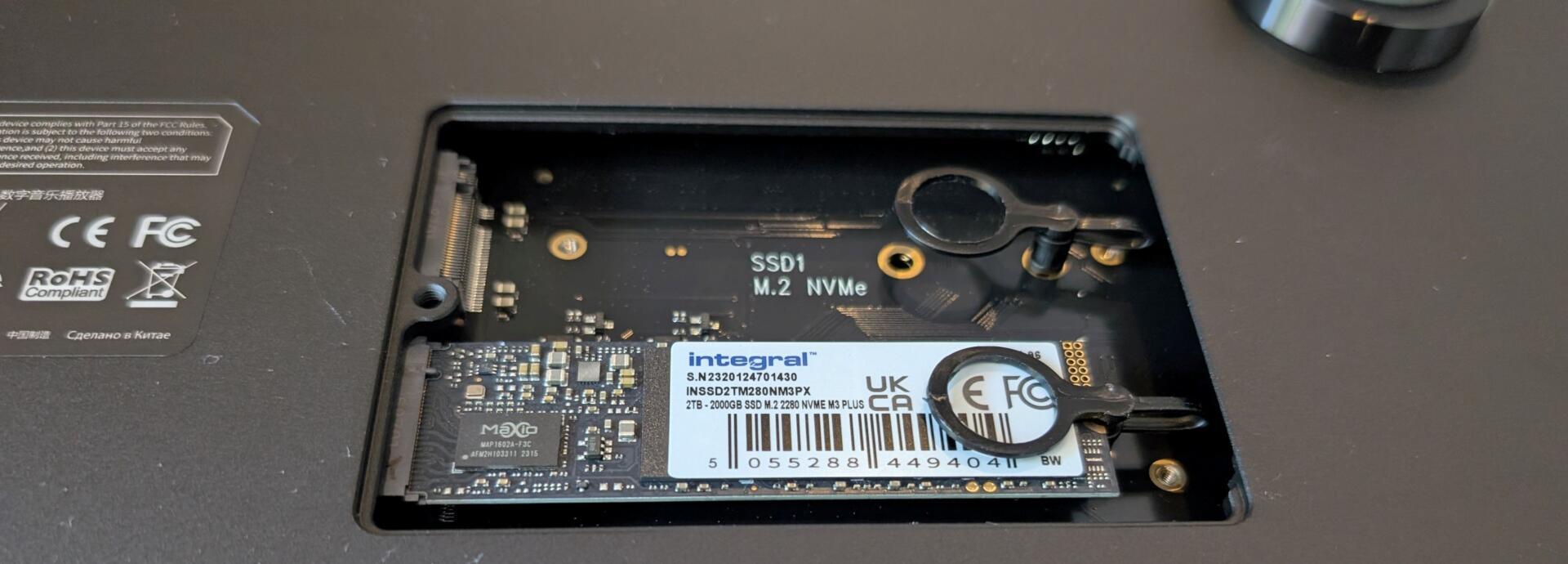
The T10 can receive dual M.2 SSD cards in the slots (up to 8TB each).
Quality
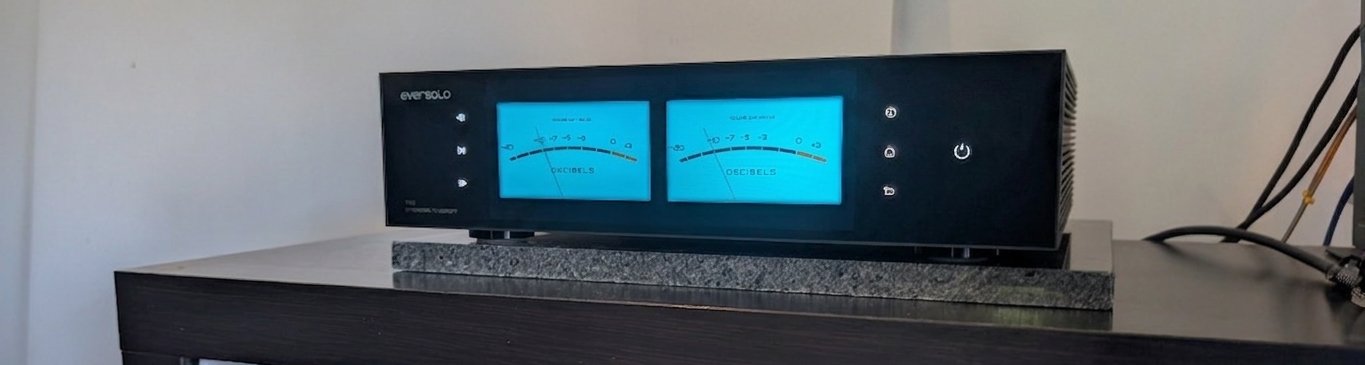
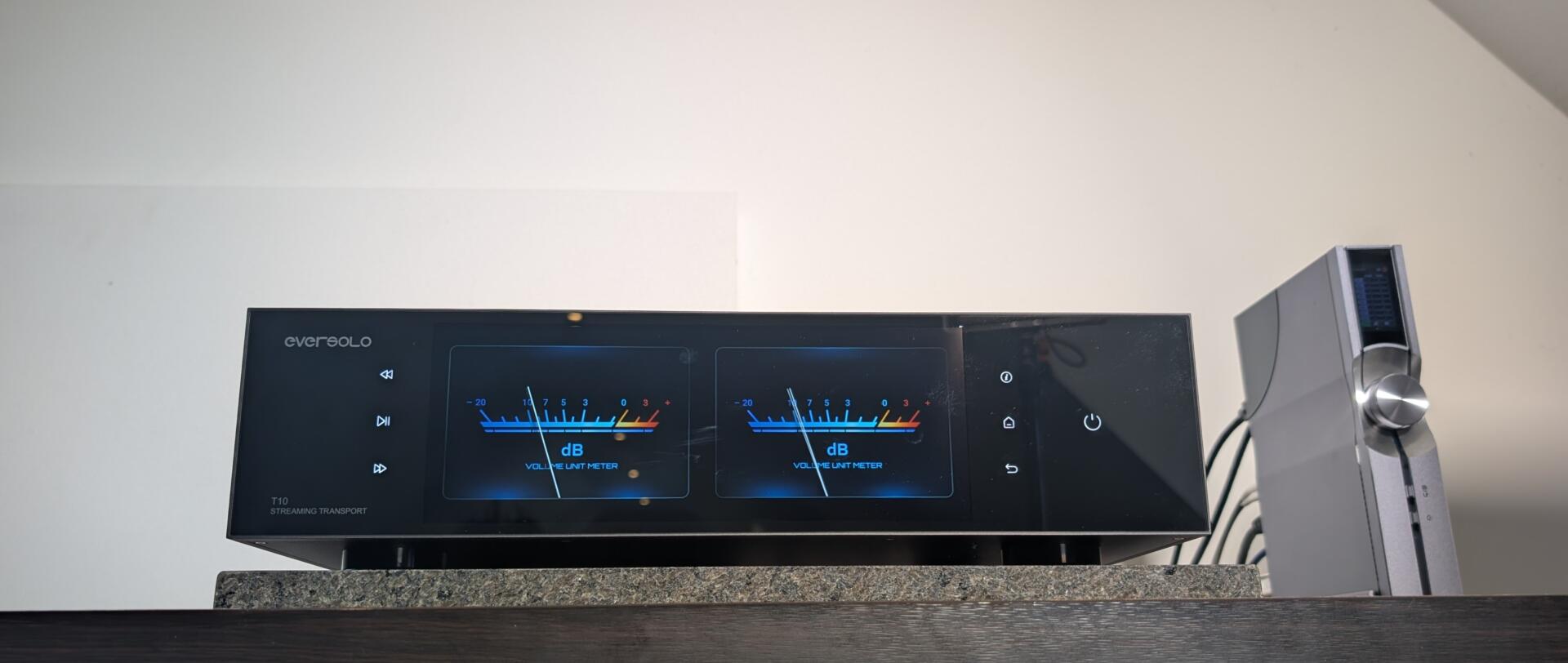
The brushed aluminium casework has that soft-touch feel. The unit is weighty, with the touchscreen fascia covering the full width; the 8.6″ LCD Touchscreen is in the centre of the front. The remote is classy, metal and heavy in a wide ovoid shape. The rear of the T10 is sparse; some of the USBs are programmable. The BNC external clock option is at the rear.
Specification and Price
Eversolo T10 Streaming Transport
Display: 8.6″ LCD Touchscreen
Size: 365 mm × 310 mm × 88 mm (W × D × H)
Memory: 8GB DDR + 64GB eMMC
Power Supply: Custom O-Type Linear Power Supply
System Clock: Femtosecond Clock
USB-A Ports: USB 3.0 ×2
Wi-Fi: Dual-band Wi-Fi 6 (2.4G + 5G)
Ethernet: RJ-45 (10/100/1000/2500Mbps)
SFP Fibre Network: Supports Gigabit single-mode single-fibre and single-mode dual-fibre optical modules (SFP module not included).
Built-in SSD Slots: Dual M.2 NVMe 3.0 2280 slots, supporting up to 16TB total storage expansion (SSD not included)
Music Services: TIDAL, Qobuz, HIGHRESAUDIO, Amazon Music, IDAGIO, Calm Radio, Internet Radio, TuneIn, Radio, Paradise, Deezer, SoundCloud, Presto Music, Apple Music…
Streaming: Spotify Connect Lossless, TIDAL Connect, Qobuz Connect, DLNA, and more…
Control Methods: Touchscreen, Android/iPhone/iPad/TV app control, remote control, Trigger Out
Audio Clock: OCXO Clock system+ Phase-Locked Loop Technology
Music Playback: Supports up to stereo DSD512 Native and PCM 768kHz/32-bit
Isolated USB Audio Output: Supports up to stereo DSD512 Native and PCM 768kHz/32-bit
Isolated IIS Audio Output: Supports up to stereo DSD512 Native and PCM 768kHz/32-bit
Optical / Coaxial / AES/EBU Outputs: Supports up to stereo PCM 192kHz/24-bit and DoP64
External Clock Input: Supports external 10MHz / 25MHz clock input with 50Ω / 75Ω impedance
Full details are on the company’s site.
Price – £1999






Performance
Review Equipment
I’m using the HF&MS Reference System with a USB-A-to-USB-B Mavros with GRUN to the manaDAC.
Physically
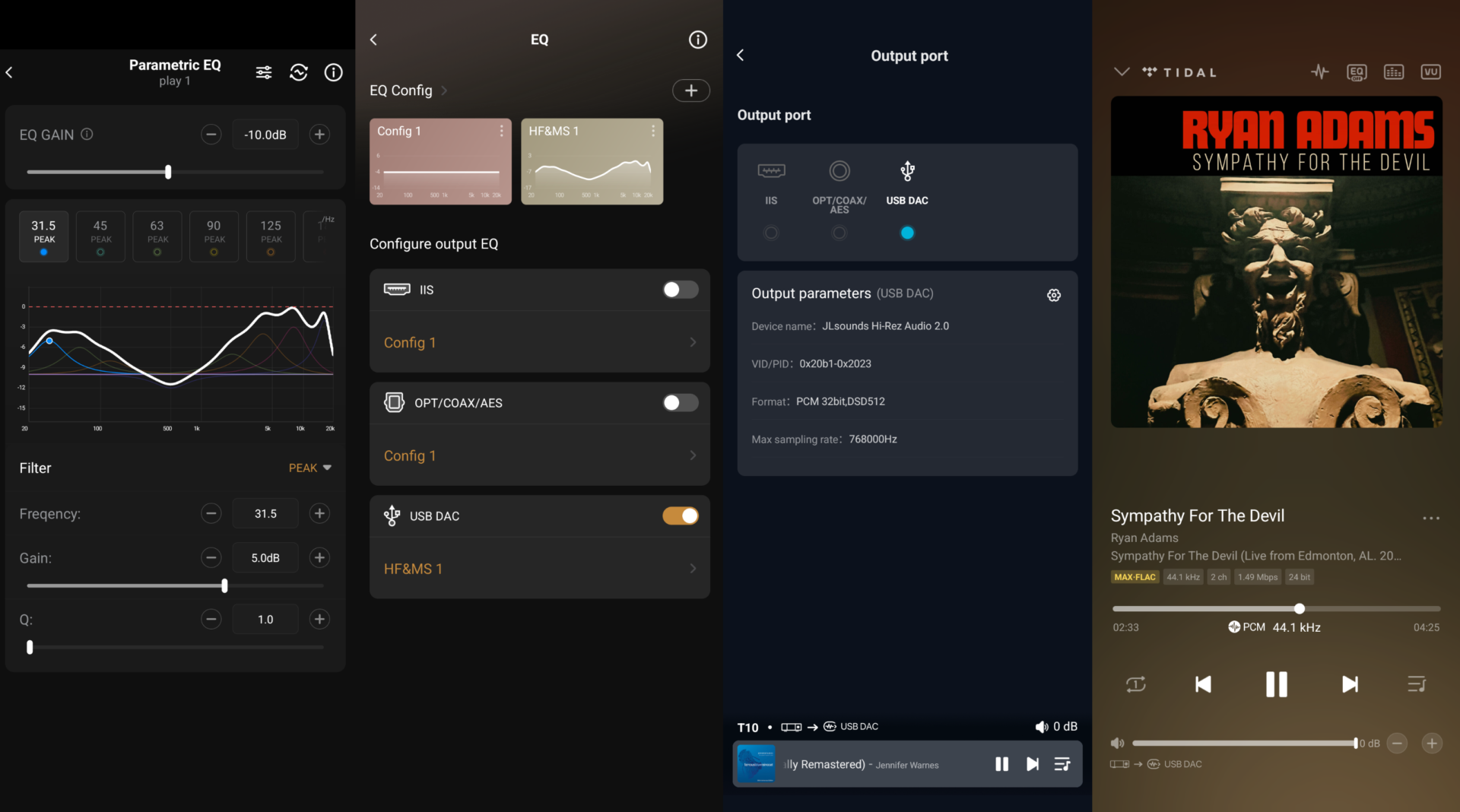
The unit is weighty but easy to handle; there’s plenty of room at the rear. For me, I set it up in minutes, though I do have the Eversolo App already with the Tidal and Qobuz passwords set up. There is no lag on either the App or the screen.
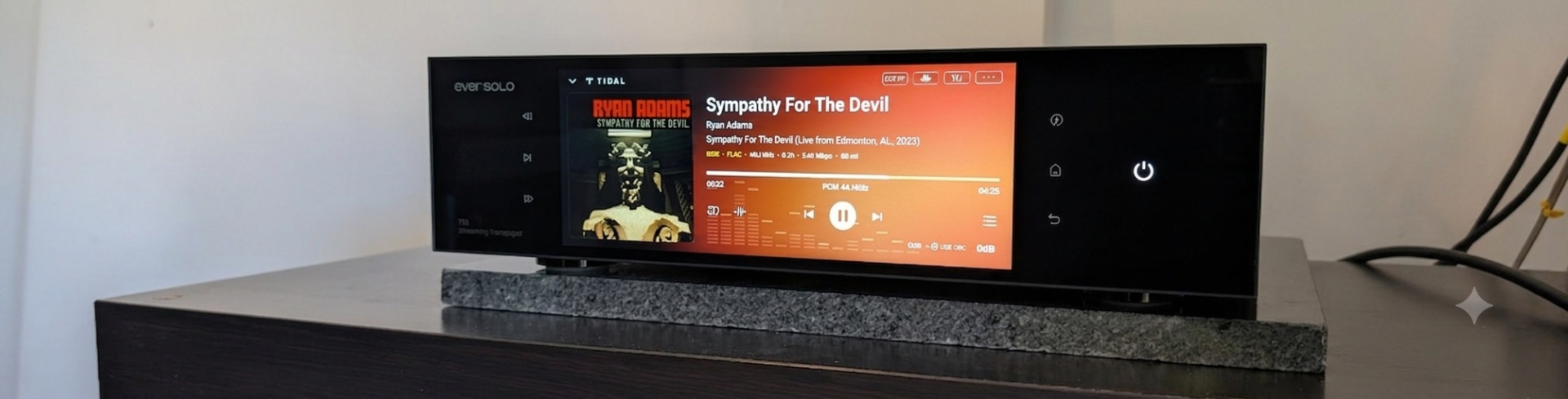
The breadth of VU and spectrum analysers would make the 1980s version of myself explode with joy.
The Important Bit: Sound Signature
What should we expect from a streaming transport? For me, it is a vital part of the source chain, defined by precise audio timing and a clean signal path, ideally against a pitch-black background. On the usability side, I want a strong software interface, especially for file access, alongside a responsive screen.
On all these counts, the T10 is exemplary; taking the latter two, the networked Melco and file access have been faultless, and the screen is a total joy. There is no perceptible lagging in the screens, the Connects, the App or other functionality. Screen mirroring is still great fun.
In terms of a signature, this is simply a super clean and resolving (meaning detailed) transport. I wouldn’t describe the transport as either analytical or warm. How can I? The DAC is doing the heavy lifting in audio terms, but the transport is a means to an end, and if it is timed well, the DAC can do the rest.
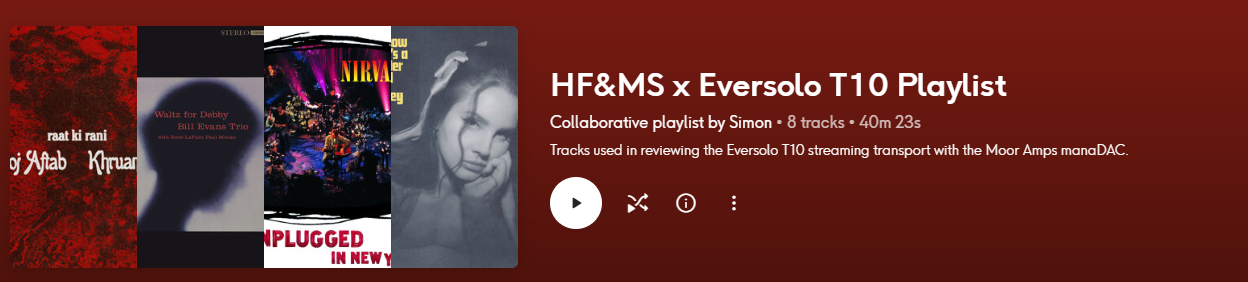
Take Nirvana’s MTV Live Unplugged album. Here, every stroke of the guitar strings is crisp, fast, and lifelike; some will call this a fast attack. I particularly enjoy Lake of Fire (Qobuz 16-bit, 44.1kHz) on this album, a track that was actually written by the Meat Puppets. In terms of soundstage depth and imaging, my room is lively and joyful. Similarly, Arooj Aftab’s album Vulture Prince (Qobuz 24-bit, 96kHz) is such a beautiful recording, and the staging is so gentle; this vinyl-like presentation comes across so smoothly with the manaDAC.
My noise floor is reduced nicely from my previous A6, and I would suggest the upgrade is worth the money. What I don’t get from this transport is any high-frequency digital glare; atmospheric (background) notes are delivered with care and precision in a full and wide soundstage.
SFP
For various reasons (mainly networked library reasons really), it is much easier for me to use my single-mode optical data solution to my network switch and feed the T10 with the clean Ethernet signal, using some Melco shielded Ethernet cables.
However, for this review, I did put the SFP directly into the T10. And, …. nothing audible happened. This means the SFP in the switch and the T10 are both doing a decent job in eliminating network interference. It is nice to have; I don’t need it the way my switch and system are, however, I would highly recommend this optical upgrade; see this ADOT article for more detail.
M.2
I did transfer my M.2 drive from the A6 into the T10. This took minutes. The outcome is perfect with the M.2 tracks as clean as a whistle when required, through the Eversolo App. Note that my M.2 was formatted by the Eversolo A6, making it compatible with the T10; this might not be the case if you’re moving your M.2 drive from another device.
Melco Library
My networked Melco Library works fine and seems to have indexed easily (I did it overnight). Accessibility is excellent through the App.
Qobuz Connect/Tidal Connect
This is the best part of the device; it is seamless and has been faultless over the last couple of weeks. I have mainly been using Qobuz Connect for reviewing as it is so much easier to use than the Eversolo App, which is sort of fine. I have used all my desktop, smartphone and iPad for Connect functionality. I rarely use the inbuilt Apps but they all work fine.
External clock
An external clock will reduce the noise floor further over and above the T10s specification, just about eliminating jitter. I have received a Mutec REF10 NANO external clock from UK distributor Audio Emotion and will publish my thoughts promptly in due course. I’ve been advised by others that an external clock is a game changer, and the T10 is well placed to deliver this. The T8 does not have this functionality.
PEQ
The room correction software (which is in fact evotune Pro) is brilliant for a bit of room tuning; it worked for me (it has 20 channels between 20Hz and 20kHz). The process took about five minutes with the iPad; I do not think the T8 has this correction software built in, though I gather you can upload a room profile.
Playlists
Playlists used in the evaluation of the Eversolo T10 Streaming Transport.
Thoughts
For me, the rapid pace of change in DAC and transport technology makes it sensible to keep these two elements separate in an audiophile system.
Compared with alternatives such as the Eversolo A6, the latest dorpo A1 used as a transport, or the clean, dependable Chord 2Go/2Yu combination I favoured for so long, the T10 feels like the fullest expression of ease of use, audio delivery, and style. Combined with the upgrade options that include storage, external clocks and optical data choices, this is a low-noise streaming solution for the ages.
What Three Words
Fast – Precise – Usability
Overall
Easy to use, easy to set up, sounds great and looks great with an upgrade path as wide as a motorway; what’s not to like? The Three Words sum this T10 up perfectly: Fast – Precise – Usable. I’ve been looking for a Reference streaming solution for a while now; this is it, and it will be my streaming solution for years to come here at HiFiandMusicSource.

Love
- Timing
- Outstanding 8.6” touchscreen
- Control
- Room Correction PEQ is eye-opening
- VU Meters/spectrum analysers everywhere
Like
- Melco interaction
- Screen mirroring
- Simple
- Remote is up there, though rarely used
Wish
- I want one
Eversolo T10 Streaming Transport Highlights
Related Posts
Eversolo Introduces the AMP-F8 Class AB Power Amplifier

The Eversolo AMP-F8 is a high-performance Class…
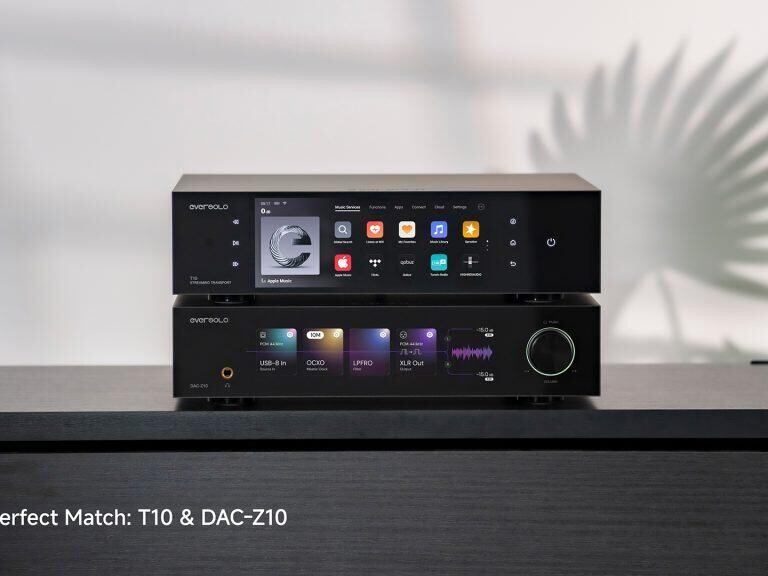
Eversolo Debuts DMP-A8 Gen 2 Series and T10 Transport
At Vienna, last week Eversolo Debuts their…

HF&MS Best of 2023 – Eversolo DMP-A6
The next award this week goes, inevitably, to the…