
Introduction
My recent experience with the Eversolo AMP-F8 highlighted how far Chinese audio products have advanced. The industry now delivers outstanding new designs with remarkable regularity, and Topping’s turn is the Pre900 preamplifier. Expectations are high for its build quality, cutting-edge electronics and performance—but how will this fully balanced digital preamplifier compare with the British analogue classic, the Moor Amps Angel-Pre?
Design
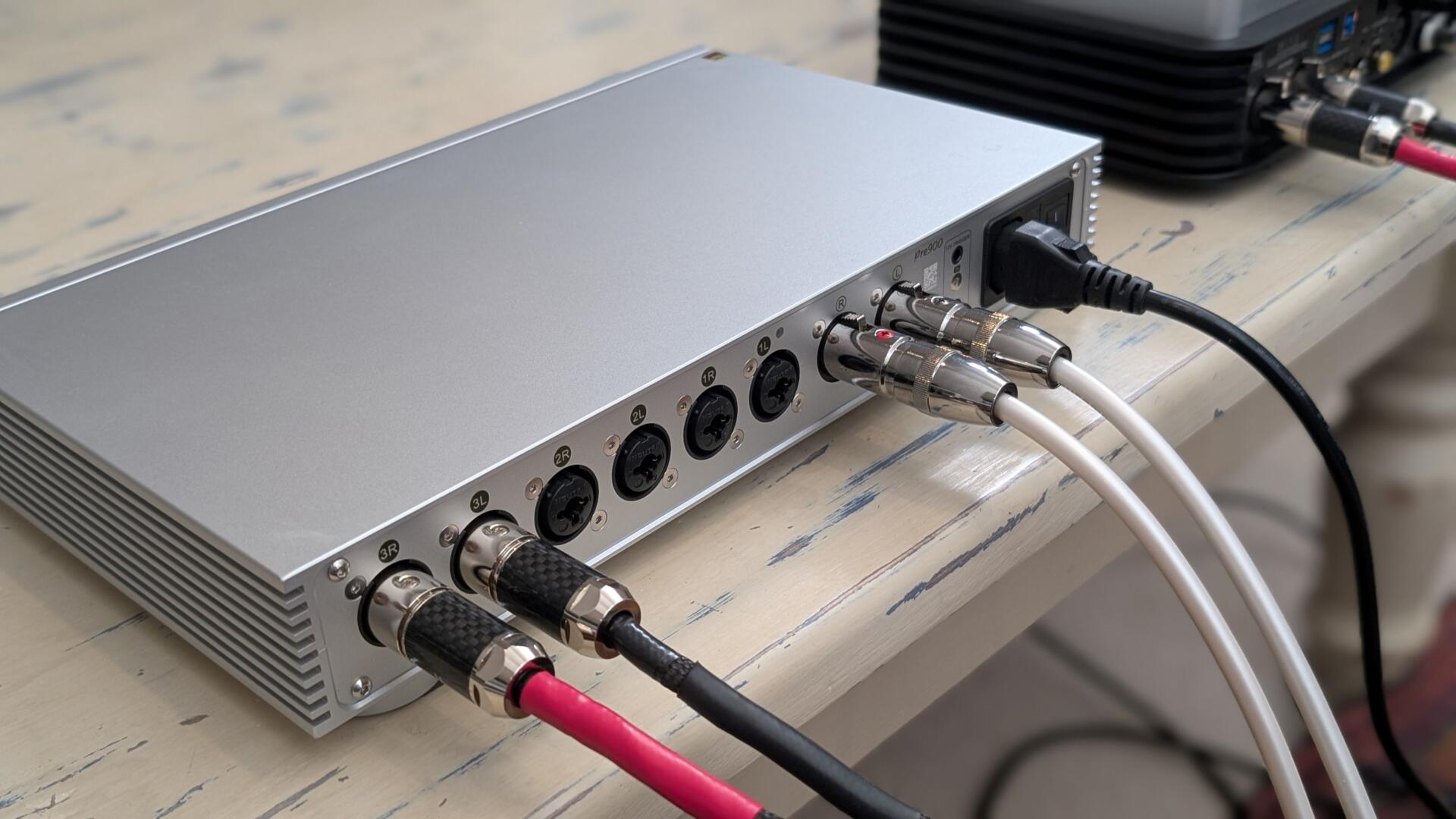
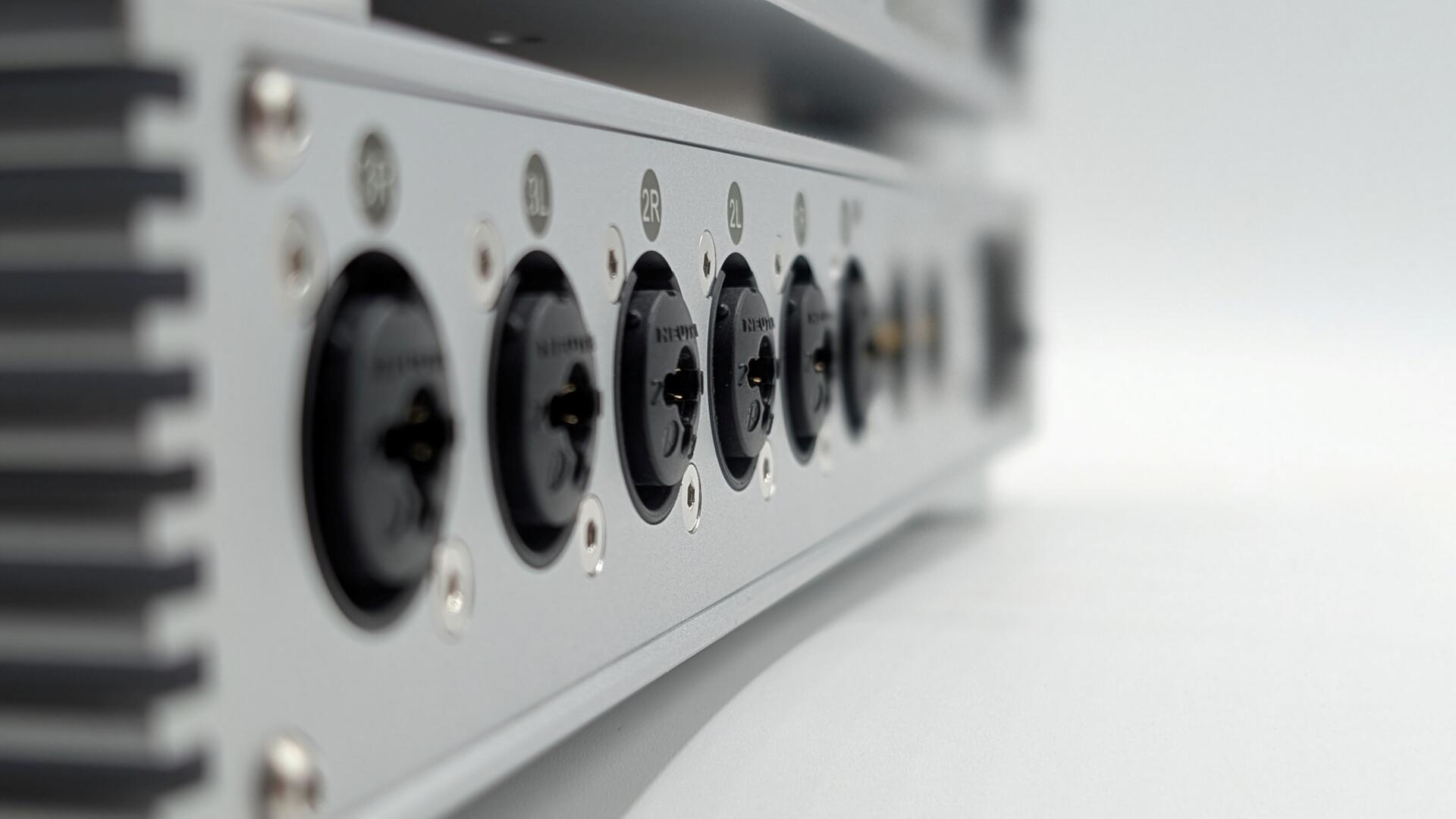
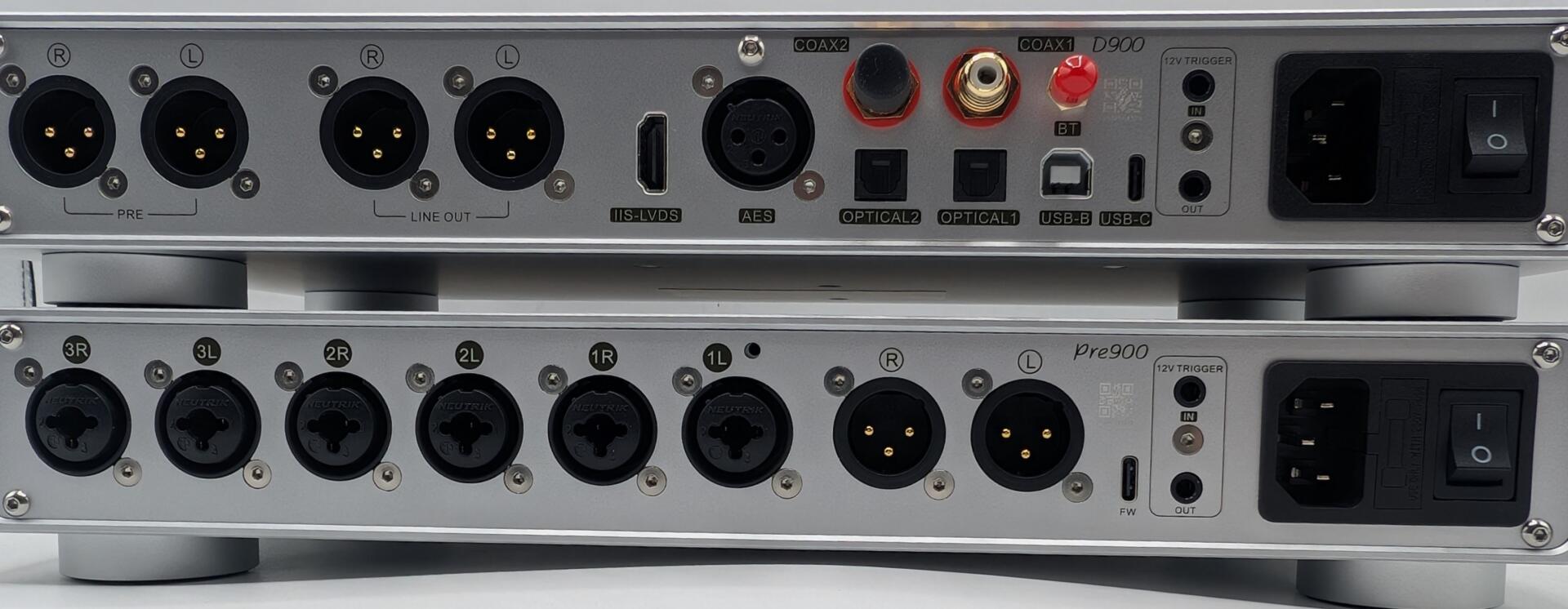
The TOPPING Pre900 is a fully balanced desktop preamplifier designed for dedicated two-channel systems and flagship headphone stacks. It has three balanced (XLR/TRS combo) inputs with balanced output only at the rear. It is strictly fully balanced, with true end-to-end differential components from input to output so the 4 channels never see each other (left + & -, right + & -).
The Topping Pre900 features precision relay volume control through a relay-switched resistor (R-2R) network with 1,000 steps of attenuation in 0.1dB increments.
There are 3 power supplies, each handling different aspects of the preamplification: one dedicated to the left analogue channel, one to the right analogue channel, and one to the digital control circuitry (i.e., the LCD display, microprocessors, and volume relay switches).
There are three gain settings (per input). These are Unity Gain (no added voltage amplification), Medium Gain (+10.4 dB) and High Gain (G=H): +19.9 dB.
Measured performance is off the scale: THD+N is claimed to be 0.00005% at 1kHz A-weighted, THD is below 0.00003% from 20Hz to 20kHz, and the signal-to-noise ratio and dynamic range are 151 dB.
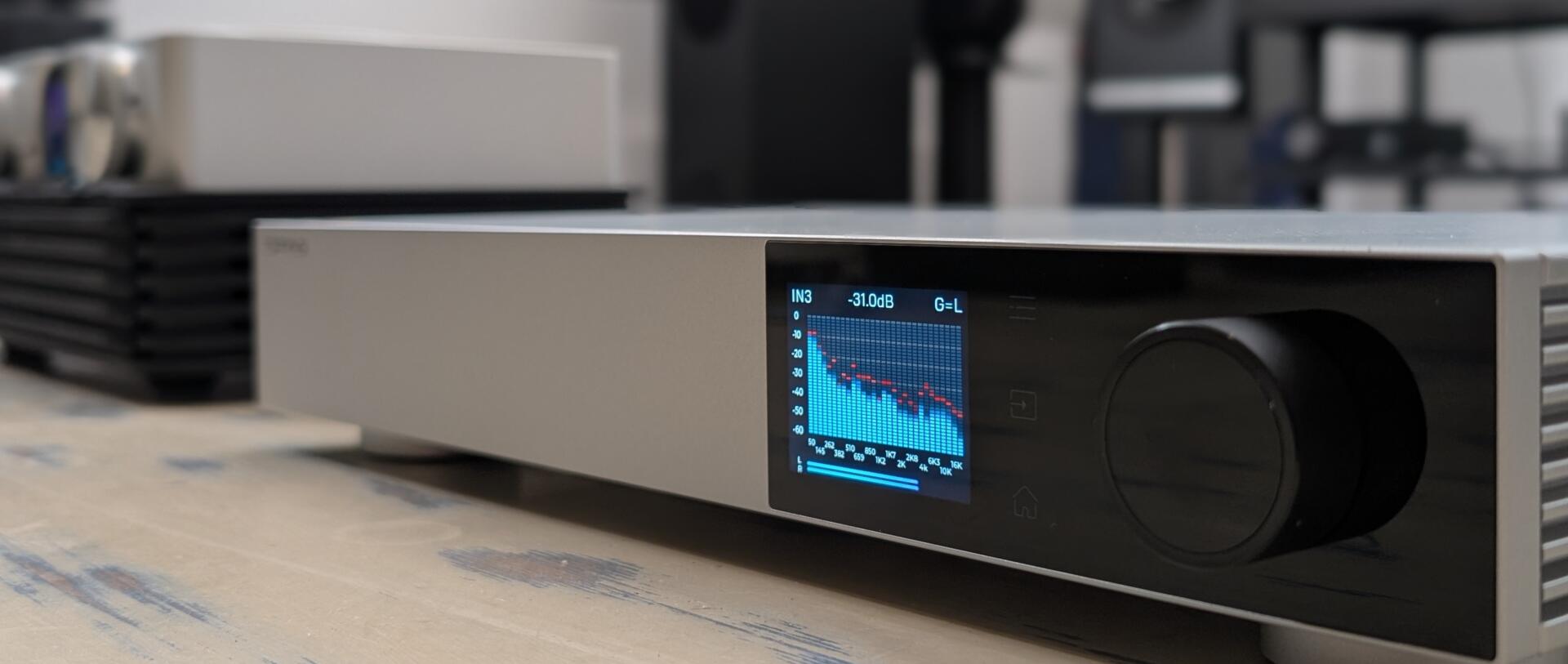
It has a 2.0-inch HD colour LCD with playback info, FFT (Fast Fourier Transform) Spectrum Analyser, and VU meter options.
Quality
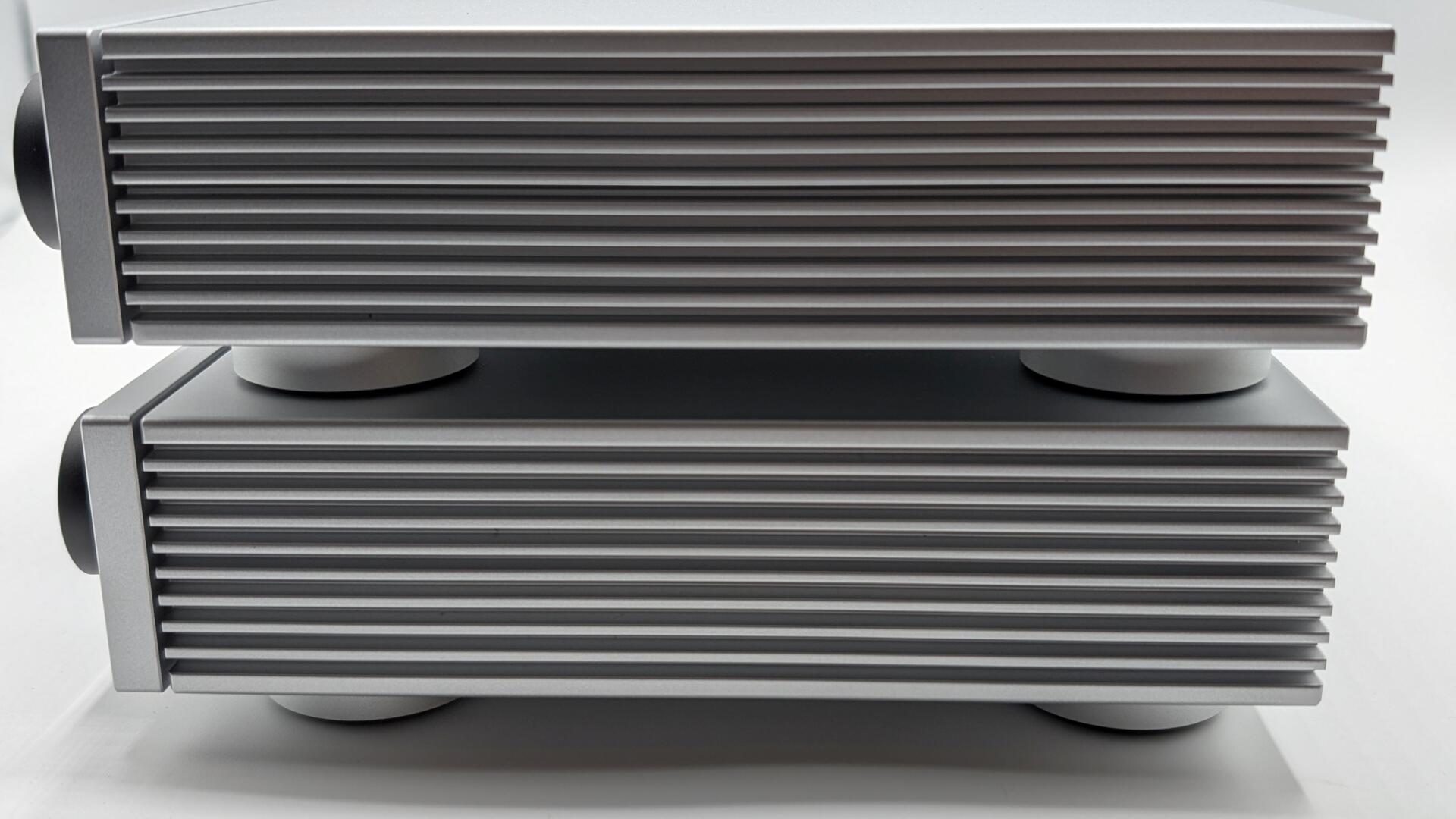
The Pre900 is tank-like, but both slim and solid. It appears to be made of several thick, machined aluminium plates; the sides are ribbed for cooling, I guess. It is a small form piece of luxury engineering. The screen is functional but useful, confirming gain settings on the input.
There is a small but fully functional aluminium CNC-machined remote that works excellently.
Specification and Price
Topping Pre900
Inputs: 3x XLR combo (balanced) / 6.35mm TRS jack (single-ended)
Output: 1x Balanced XLR pre-out
Other connectors:12V trigger input (3.5mm jack)
Trigger Output: 12V (3.5mm jack)
Total harmonic distortion (THD+N): 0.00005% @ 1kHz, A-wt,
Total harmonic distortion (THD): 0.00003% @ 20-20kHz, 90kBW
Signal-to-noise ratio (SNR): 151dB @ Max out, 1kHz, A-wt
Dynamic range: 151dB @ 1kHz, A-wt
Frequency response: 20Hz-40kHz (±0.05dB), 20Hz-100kHz (±0.1dB)
Output level: 69Vpp @ G=L, 65Vpp @ G=M, 65Vpp @ G=H
Audio Precision Noise Level Measurement: < 0.7µVrms @ G=L, < 1.2µVrms @ G=M, < 2.5µVrms @ G=H
Effective noise level : < 0.3µVrms @ G=L, < 0.9µVrms @ G=M, < 2.3µVrms @ G=H
Crosstalk: -150dB @ A-wt
Input sensitivity: 25.3Vrms @ G=L, 7.1Vrms @ G=M, 2.3Vrms @ G=H
Gain: 0dB @ G=L, +10.4dB @ G=M, +19.9dB @ G=H
Input impedance: 20kΩ
Output impedance:100Ω
AC power supply: 100-240VAC 50Hz/60Hz
Dimensions: 330 x 57 x 20mm
Weight: 2.55kg
Price £1499
Full Details on the Topping Website







Performance
Review Equipment
I’m using the HF&MS Reference System with the Pre900 instead of my Moor Amps Angel-Pre, and, happily, I received the Topping D900 (DAC) to put in ahead of manaDAC. News of the Moor Amps Angel 6 MkII has rocked the Reference System boat.
The D900 uses the Eversolo T10 as the source, and it’s pristine. The DELA S50 Switch was undoubtedly a step up on the optical data side; this departed the building during this review.
I’m also using the AVID Ingenium SE with a Pulsus II phono stage; this turntable setup is just about as good as it gets. I daren’t borrow AVID’s other higher turntables, the Relveo or Acutus!
Physically
The Pre900 only takes XLR/TRS balanced input, so any RCA-style input (I’m using XLR-RCA Neutrik adaptors) is unbalanced. This means it only carries half the signal phase of a balanced line. When this signal hits the Pre900, the input signal drops by about 6dB compared to a true balanced source. The Pre900 can adapt with its gain setting, so for my Ingenium SE turntable with the XLR Neutrik adaptors, I selected the medium gain setting (adding around 10dB), which works effectively with no perceived colouration. The menu system is easy to navigate. The D900 XLR input is on low gain, and the Pre900 remembers it, which is excellent.
Pre900 Everyday
The Pre900 is very easy to use every day, and this is a huge plus. The volume, though supposedly a simple function, works exceptionally well on both the remote and the unit itself; it clicks precisely, with plenty of headroom. At very low volumes, the vocals are held firmly in place, which is impressive.
Stereo Balance
With such exceptional channel separation and crosstalk, the stereo image is immaculate; for example, with Celeste’s Strange (Qobuz 16-bit, 44.1kHz), her vocal is solid and deep as the track swirls around the soundstage.
Dynamic Response
On a track like Private Investigations (Phonogram, 1982) on the Ingenium SE turntable, the Pre900 handles the flow and dynamic hits with ease. Indeed, the track before this, Telegraph Road, swells to a crescendo in a refined, present soundstage without ever descending into tumult.
Impressively, the crack of Stuart Copeland’s snares and the transients in his hi-hats in Wrapped Around Your Fingers (Qobuz 16-bit, 44.1kHz) come over naturally. You can hear his work deftly in the soundstage.
Noise Floor
The noise floor is subterranean with this preamplifier, and if you pause a track, there is total silence. This is perfect: no hiss, buzz or hum. The same if you switch inputs; there’s just pitch black, and nothing from the 505s.
Remote Control
The remote is fine and faultless.
Display
The display is quite small for normal ‘Maxell’ style two-channel listening, but the Pre900 can pair with this DAC and, most excitingly, the fully balanced A900 ultra-flagship Topping headphone amplifier, at which point the display becomes desktop perfect.
The display comes in various colours (here at HF&MS, purple magic is the choice), and it’s easy to navigate.
Back to the passive Angel-Pre
For transparency (pardon the pun) and completeness, I felt I should put the analogue (and passive) Angel-Pre back in, keeping the same Tellurium Q Ultra Silver II XLR connection to the Angel-6 power amplifier. Playing Side A of Parachutes (Coldplay, 2000, Parlophone) revealed the Angel-Pre is also a genuinely excellent preamplifier offering the same pitch-black background. I would suggest, immediately, that it is a fraction softer in the presentation.
Both preamplifiers are exceptional; the Pre900 benefits from a fully balanced architecture, immaculate volume control, and a price tag half that of the Angel-Pre. As the owner of the Angel-Pre, I have few complaints. I would recommend the Pre900 unreservedly if you have balanced sources at your disposal.
Playlist
These are the Playlists used in the review.


Thoughts
This is a special, easy-to-appreciate preamplifier that is both fluid in presentation and fully functional, without fuss. It has everything to recommend it, and it is absolutely pitch-black. XLR output, matched with the Angel-6, is firm, controlled and musical, just as I prefer it. My standout feature is the pure per-input gain setting, which is something I don’t have on my existing preamplifier.
What Three Words
Fluid – Functional – Pitch-Black
Overall
Slim, rock-solid, and utterly transparent, the TOPPING Pre900 proves that pure engineering precision pays massive musical dividends. Its fully differential architecture and pitch-black noise floor provide a pristine canvas for dynamic swings and pinpoint stereo imaging, while the 1,000-step relay attenuator ensures flawless channel balance at any volume. Add in per-input gain control that deftly handles line-level discrepancies, and you have an exceptionally versatile, fuss-free preamplifier.

Love
- Everyday
- Lowest noise floor
- Functionality
- Gain settings
Like
- Easy to use
- Sleek
- Precise 1,000-step relay volume control
- Solid, tank-like machined aluminium build
- Compact, desktop-friendly footprint
Wish
- A rack version of this preamplifier with a bigger screen and a couple more inputs? Input buttons would go well with such a preamplifier. Otherwise, it is perfect on the desktop.
Topping Pre900 Highlights
Related Posts


Eversolo Introduces the AMP-F8 Class AB Power Amplifier
The Eversolo AMP-F8 is a high-performance Class…
Musical Fidelity M5xi & M6xi Integrated Amplifiers Announced
Henley Audio has announced the Musical Fidelity…


