
Introduction
I first heard of CANOR a few years ago when I went to the Munich High End Show, and I saw a static display of their electronics. Canor have dedicated three decades to combining exceptional engineering with sound quality, and their products feel as if you are part of the performance. They are very tactile, and the fit and finish are superb. The Foundation series I received for review really impressed for the asking price. This is their new budget range in comparison to the higher series they make, allowing financially challenged individuals a foot on the bottom rung of their product range ladder.
Canor products are crafted by a team of passionate individuals who prioritise attention to detail, thoughtful design, and creating audio equipment that truly resonates with listeners. By keeping development, production, and testing all under one roof, they maintain the precision and flexibility needed to adapt seamlessly at every stage of the process.
Over many years, they have developed in-house measurement and tube-matching technologies (many of their products are valve-based) that play a crucial role in delivering the clarity and realism they strive to achieve. This approach has earned Canor an enviable reputation worldwide.
Virtus I4S Integrated Amplifier
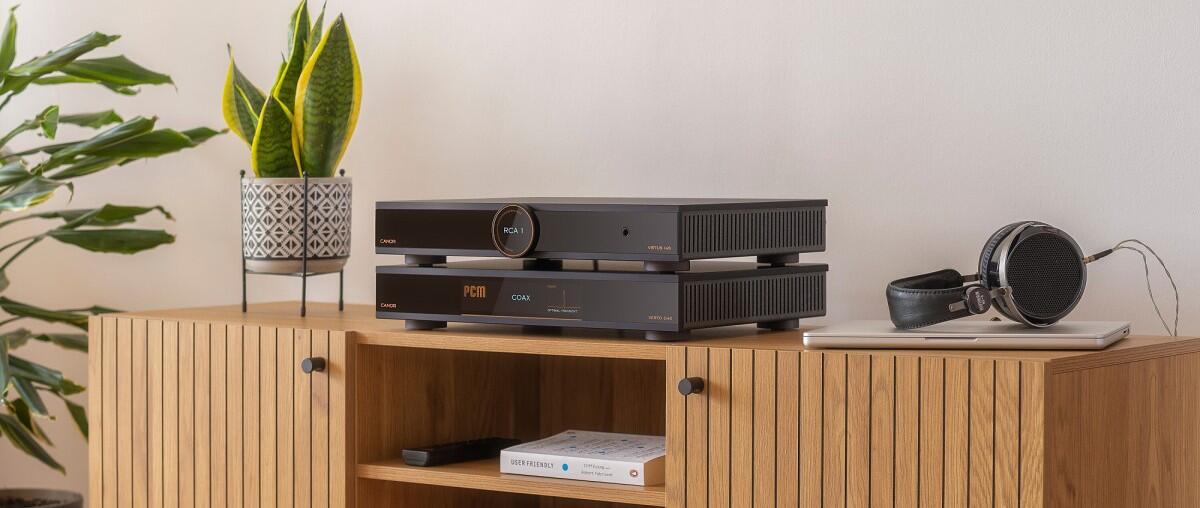
The Virtus I4S integrated amplifier is a slimline, sleek-looking, svelte design which comes in three colour palette options. Black, silver and bronze. I received the black version with the matching Verto D4S DAC. Virtus is a Latin word meaning valour, manliness, and excellence. It comes from vir, the Latin word for “man”. In ancient Rome, it was an ideal trait representing bravery in battle, moral strength, and good character.
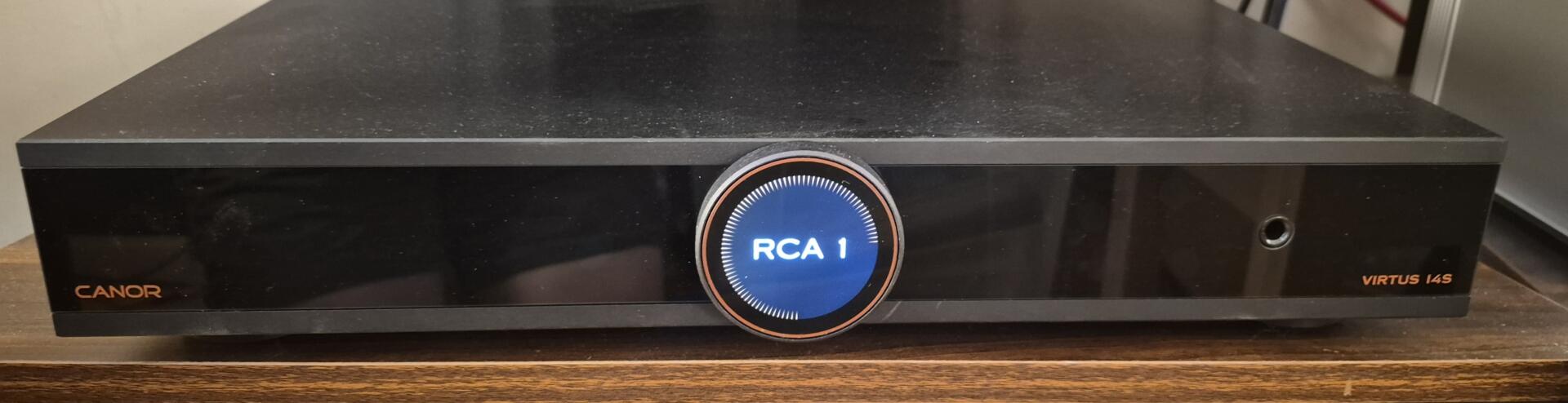
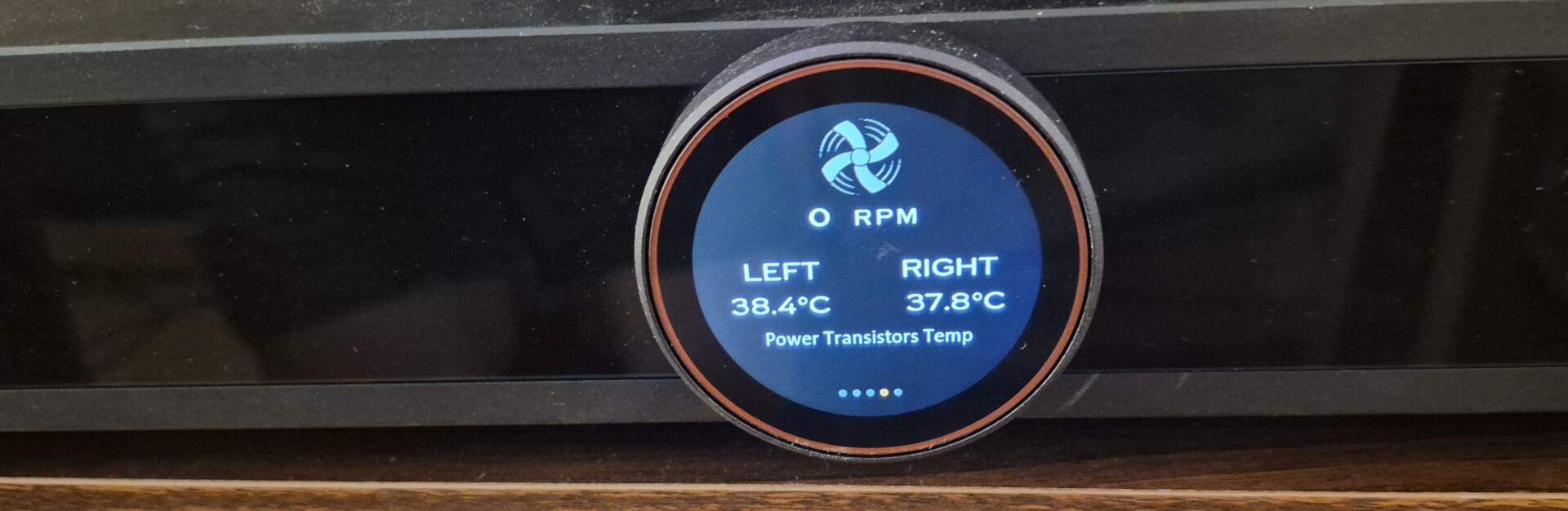
What made me salivate was the fabulous central knob, which has an integrated 1.8-inch display with a dual-bearing design, which is super smooth when rotated and an innovative CCD- based position sensing for precise and tactile control.
The amplifier circuit is a fully discrete and dual-mono circuit to maximise clarity and separation, along with a discrete built-in headphone amplifier accessed on the front panel. It is not an afterthought add-on facility and has a top-spec design which should drive most high-quality headphones out there. If a listener is so particular, then a dedicated stand-alone amp can be used. I am not an avid headphone user, so this built-in option is ideal for me.
The phono section really impressed me. A fully discrete, top-notch amplifier that handles both MM/MC with gain adjustment and a wide range of capacitance and impedance settings via the front display and remote.







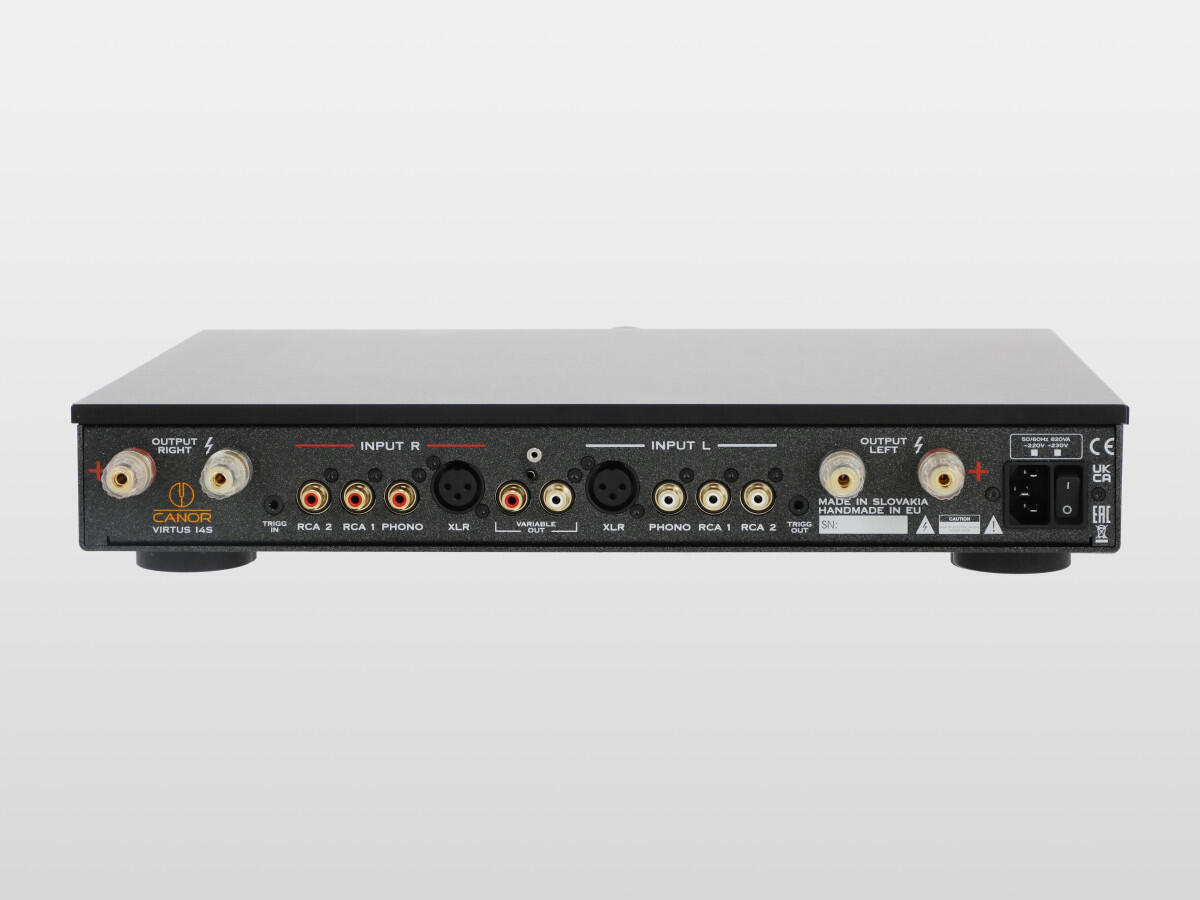
The amplifier uses 40,000 µF of filtering capacitors per channel in the power supply, so the Virtus I4S won’t run out of steam quickly and delivers controlled, precise bass. Another useful feature was a low-distortion variable RCA output specifically for subwoofers or an additional power amplifier. I used this with my Totem Storm active sub to great effect. The low output impedance of the amplifier’s circuit enhances the sound because it uses oversized output transistors in an unconventional design, according to Canor’s website. Trickle-down technology from Canor’s reference line Virtus I4S uses well-tried and proven “error correction technology”. Canor’s website goes into detail about how the very clever circuit design balances the output stage and reduces, if not eliminates, transient distortion. At this point the circuit design becomes fairly involved, so I will spare the non-technical reader the deeper detail. In simple terms, Canor’s design team has done a sterling job in creating a superbly engineered amplifier.
The amplifier’s display has two colour theme options, which allow the user their preferred choice of orange or white, a nice touch. Finally, the Virtus I4S supports wireless firmware updates for the software control interface.
Tour de Force Integrated Amplifier
The result of all this very clever technology is a real tour de force integrated amplifier that is surprisingly grown up and sophisticated. Behind the beautifully simple and elegant fascia lies a classy animal that is lithe and agile. The initial switch-on was a delight as the Virtus I4S went through all its checks (a far cry from my early days in hi-fi when switching an amplifier on could mean a thump through your loudspeakers as the power supply kicked in !!).
The moment I played the first CD through the Virtus I4S a bold and confident sound emanated from my Totem Signature ones filling my living room. I played a Phil Collins CD, Both Sides, that he made in the nineties, and he played every instrument on it apart from the drum machine that was added after. He has an air of confidence in his songwriting which sounds easy on the ear, but I’m sure a lot of angst went into the lyrics and music. The excellent production of this album was rich and warm, which the Virtus I4S lapped up. A lot of keyboards are used, and the delicate effects in the background of the songs are very clearly defined. I didn’t have to struggle with trying to pick each instrument out as they floated in space but were locked in position precisely. A well-written and produced album or song will always make me smile and is what draws me back again.
I played LP’s as well, of course, and put on Earth, Wind and Fire’s Faces from 1980. Maurice White said this was his favourite album of the many they did. (Raise is my personal favourite). EWF were at the height of their fame, and they experimented more on this album. It’s a mix of funk, R&B and fusion numbers expertly crafted, mixed and produced to excite the listeners. Always expect lush production with the Phoenix horns highlighting many of the tracks, backed by a strings section and session musicians of the finest order. Phillip Bailey is the lead vocalist with his distinctive falsetto vocals, and they need to be tamed. A lot goes on in an EWF album, and not all systems cope well with the complexity. The Virtus I4S revels in the production. The soundstage from my Technics SL1300G was rich, with good depth and delineation. The Virtus I4S has an excellent phono stage as mentioned earlier and is versatile. MM and MC are catered for, and there are several options within the settings. My Shure V15 Type 3 was very happy with the MM options and very quiet with no hum, hurrah (not all phono sections are this good). The MC option was also excellent with my Hana SL Mk 2. All the setting changes are easily controlled from the excellent remote-control handset.
The Canor Virtus I4S solid-state integrated amplifier retails at £2,499; it is Class AB with Stereo Output Power 2 x 120 W / 4 Ω and 2 x 75 W / 8 Ω. Full details here.
The Canor Verto D4S DAC is a further £2,299. Full DAC details are here.
These units are distributed in the UK by HEA Distribution, which loaned them.
Canor Verto D4S DAC – Let’s go digital.
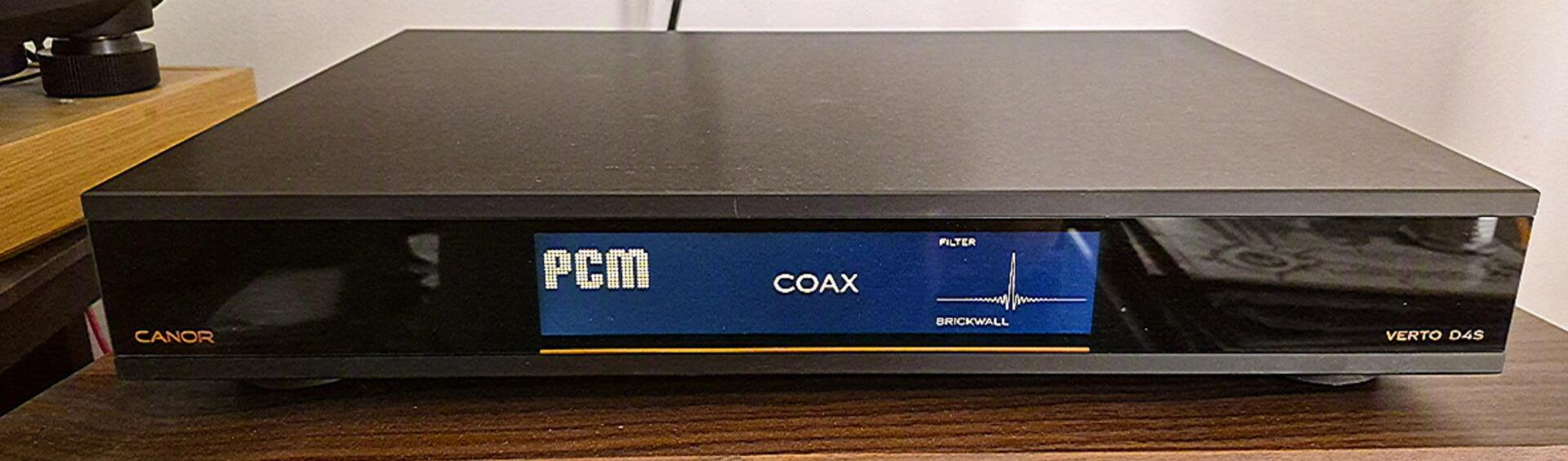
The Verto D4S DAC matches the Virtus I4S in using the same chassis with an even cleaner front fascia. Verto is a Latin verb meaning “to turn,” “to change,” or “to transform.” It serves as the root for English words like convert, divert, and invert.
The glass fascia is luxurious, and the display is beautiful to look at with superb graphics and is a 7” touch screen. The Verto D4S employs a true dual-mono architecture, with a dedicated ESS Sabre 9038 DAC chip for each channel. The analogue output stage is fully discrete and symmetrical, free of operational amplifiers, delivering high dynamic range with ultra-low noise performance.
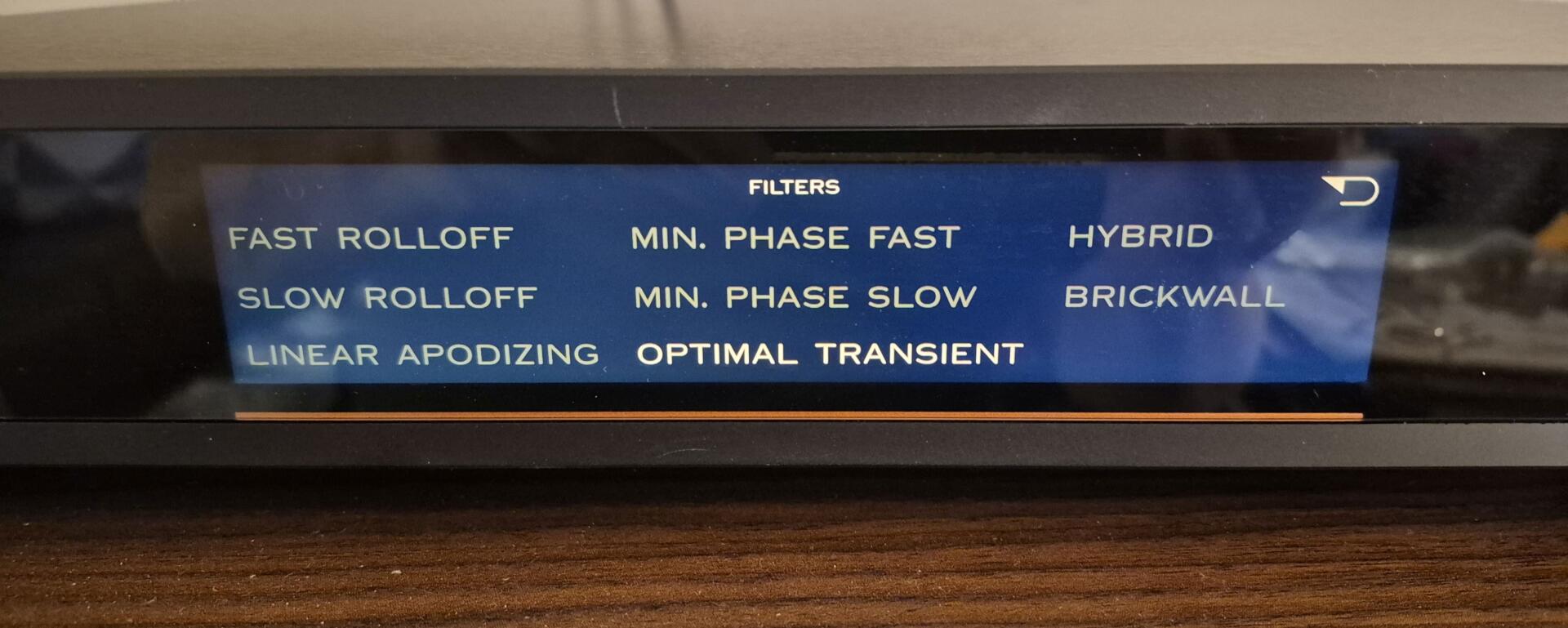
Coaxial, AES/EBU, USB and optical inputs are galvanically isolated, ensuring clean signal transmission and minimising interference from the source device. The display is very informative but uncluttered, not bombarding you with too much information. You can see what input has been selected, sampling frequency, and which digital filter has been chosen, of which there are eight!! All in all, very comprehensive. Like the D4S, there are two colour themes for the display (orange and white), and it supports a wired firmware update. The DAC configuration is 2 x ESS9038Q2M (Dual mono). The build is superb, and it is very substantial at 8 kg. The same remote control as the amplifier allows full control with ease.
This is clearly a very sophisticated DAC, and its internal complexity is way beyond my electronic understanding, but that is why we leave it to the experts to sort all that out. We simply use it and enjoy. With DACs, I plug it in if it’s a separate unit and hit play. The filter options on the Verto D4S go way beyond that. I tried all eight, and this is where I struggle personally to tell them apart. I know many reviewers of old have made similar comments, and CD players I have owned in the past have also had switchable filters. Again, I tended not to bother with them. This is not a criticism of the Canor designers; they obviously felt their inclusion was important, but my ears said otherwise. I used the optimal transient filter mainly, and it was fine.
As well as connecting the coax out from my Audio Research CD5 player, I also used my WiiM Pro Plus streamer via coax output. The Audio Research CD5 was very good via its own built-in DAC even though it was from the early 90s. The WiiM Pro Plus is remarkably good for a modern budget unit, but the Virtus DAC had the edge for sure, and so it should have at ten times the price!!
I streamed Haevn’s recent new album Symphonic Tales II, and the lavish production, as always, was a pleasure to relax to. The lush strings wash over you, and it’s an effect I never tire of experiencing whether it’s at a live concert hall or on a recording. The ebb and swell really touch my emotions, as I’m sure it will for most people when they hear it. Any good digital source will revel in these recordings because they are so well done, but the Virtus amp and Verto DAC did their bit as well.
The Verto can handle TV sound via an HDMI connection and really enhance your living room experience if you hook your TV and soundbar up for concerts and films. It is a neat and easy way of enhancing your enjoyment through two channels if you don’t want the hassle of full surround sound and multiple speakers in your room. The Verto is a lovely DAC that you can use simply with one filter setting, as I did mostly, or you can play around to your heart’s content with all eight filters.
Overall
In conclusion, the pairing of the Virtus I4S amplifier and Verto D4S DAC is only natural; if you need both components, they’re an ideal match. I understand Canor are developing other items to complement the Foundation series soon, including a CD transport, power amplifier and possibly a phono stage. Canor’s thirty years in producing and designing top-quality audio components not just for themselves but other companies as an OEM (original equipment manufacturer) is amazing. Having seen pictures of their factories in Slovakia, they are state-of-the-art and world-class.
The star of the show for me was the Virtus I4S integrated amplifier because it is an item I am sorely tempted to buy for so many reasons. It ticked all the boxes for an ideal amplifier in my system, covering all bases with the added bonuses of superb build and value for money. The Verto D4S is a fabulous DAC, and if I ever need a stand-alone quality DAC in the future, it would be at the top of my list (if the CD transport promised is released soon, then the Verto D4S is a no-brainer to complete the dream).

Canor Virtus I4S & Verto D4S DAC Highlights
Related Posts

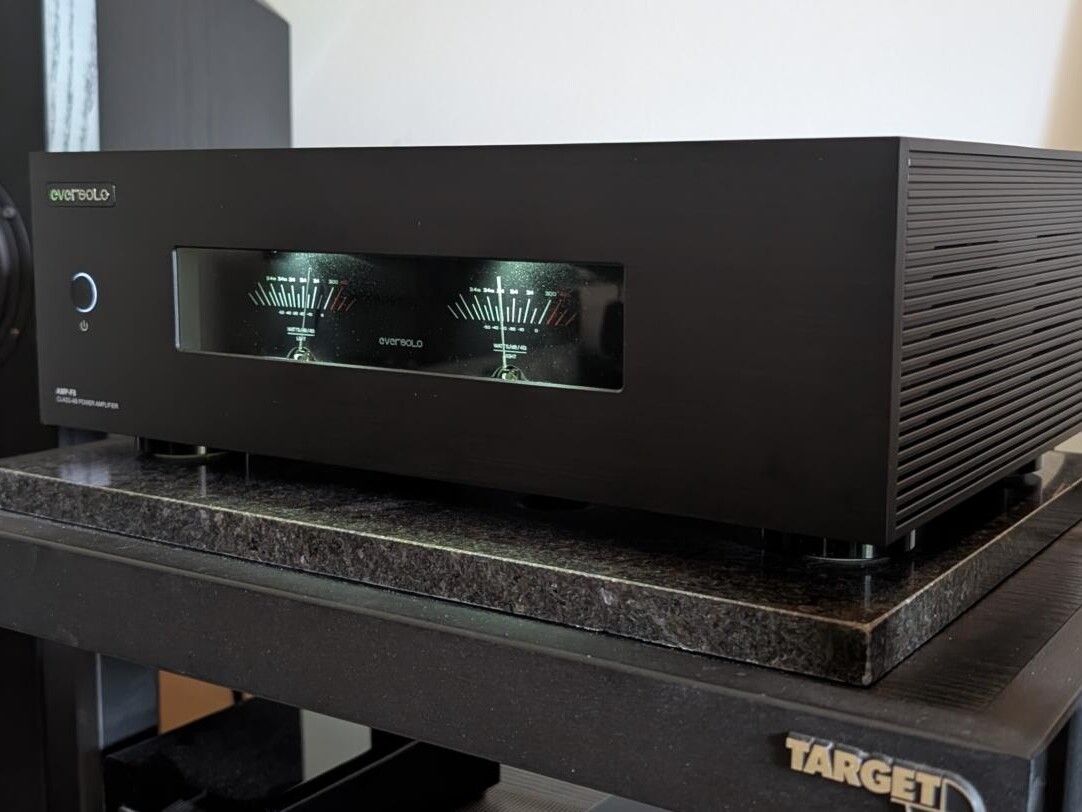
Eversolo Introduces the AMP-F8 Class AB Power Amplifier
The Eversolo AMP-F8 is a high-performance Class…
Musical Fidelity M5xi & M6xi Integrated Amplifiers Announced
Henley Audio has announced the Musical Fidelity…

Ultrafide Announces Accessible Power Amplifier
The SP500 amplifier is a more affordable…


