Introduction
This is the first UK look at the dorpo DMP-A1 (dorpo, not Dorpo), a streaming DAC to take on Eversolo (and the rest of the pack, including FiiO) at their own game. The advantage dorpo has is that they have a pedigree with their lead designers coming from the old Oppo stable. Oppo were glorious for several years. About five years ago, they pivoted to focus on mobile phones, and the audio side fell by the wayside.
We recently had the dorpo X3 here, an 8K Media Player. As an audio-focused reviewer, the music side of this player was of most interest to me, as was the Melco access in my TV Room.
This DMP-A1, which debuted at Munich last year, appears to target the more expensive Eversolo products, and its price point suggests as much. Though they are 18-24 months behind Eversolo in product progression, weekly updates are promised (I’ve had two in the last couple of weeks), so when they say Tidal is coming, I believe it.
Design
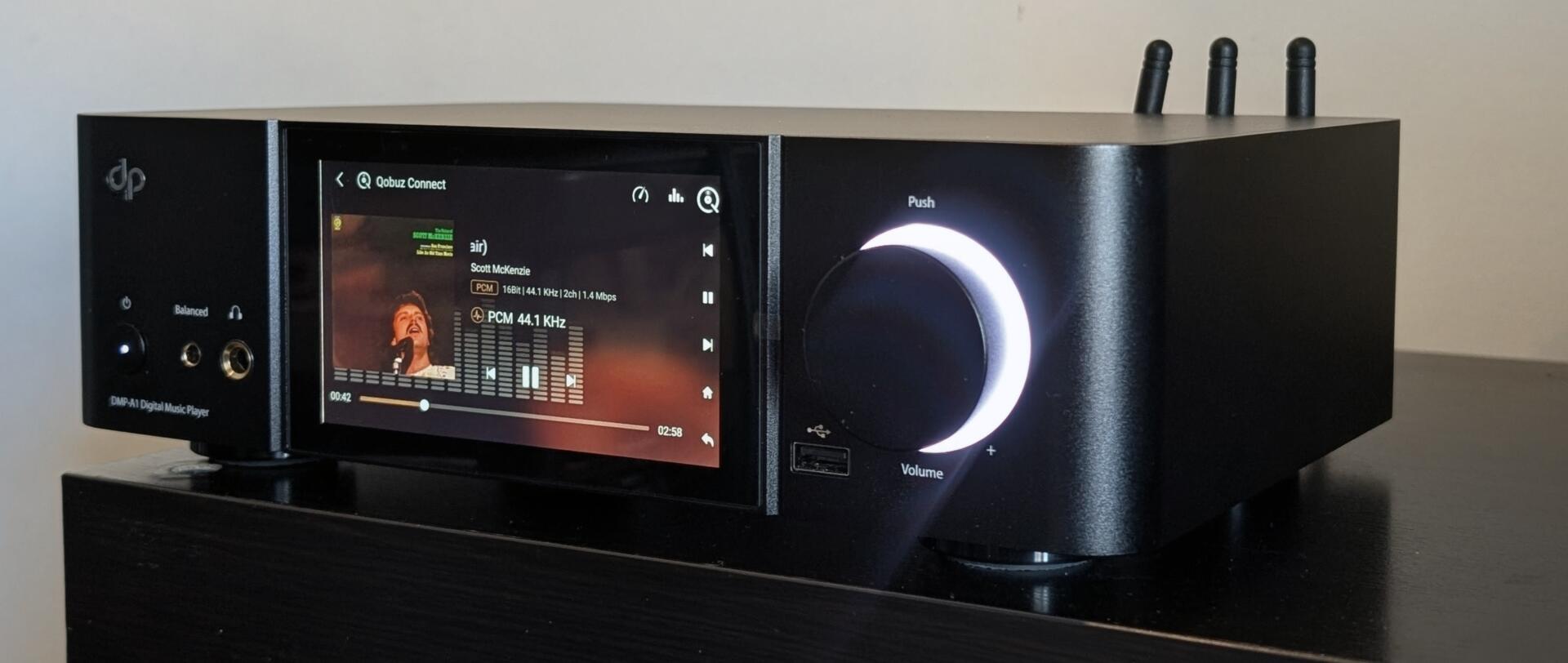
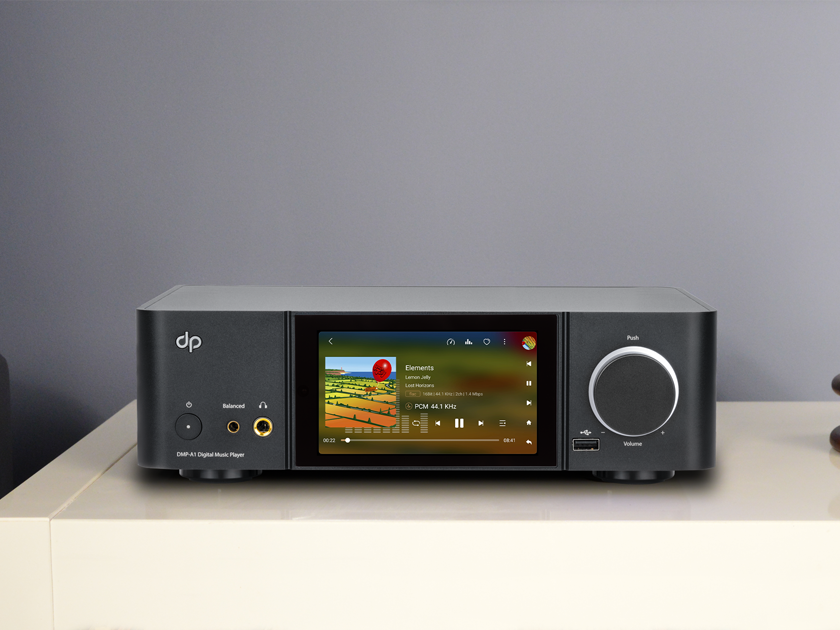
The dorpo DMP-A1 is designed as a streaming DAC and preamplifier for powered or active loudspeakers, BUT it also has a built-in premium headphone amplifier (6.35mm + 4.4mm balanced). This also means it could be an excellent desktop companion.
The dorpo DMP-A1 features a flagship ESS ES9039S Pro DAC paired with the third-generation XMOS 316 audio processor, with a fully balanced preamplifier (XLR + RCA). It supports DSD512 / PCM768 32-bit playback and full MQA decoding. Two high-precision crystal oscillators (45.1584 MHz and 49.152 MHz) provide multiple sampling frequencies of 44.1 kHz and 48 kHz, effectively reducing jitter for more accurate audio decoding.
It features hi-res streaming via Qobuz and Spotify Connect, with more to follow (Tidal and other streaming services will be added over time via over-the-air firmware updates, depending on certification progress). The A1 is Roon Ready, and has AirPlay, DLNA, Bluetooth 5.4 with aptX HD/Adaptive/Lossless, LHDC, AAC, SBC, and LC3.
Storage includes a built-in M.2 SSD slot (up to 8TB). There is CD ripping too (to the M.2, a USB, or storage over LAN).
The DMP-A1 has a dual-power-supply design that combines a linear power supply with a low-noise switching power supply. The low-noise regulated power module primarily supplies digital circuits, while the professional linear power supply is specifically designed for analogue circuits. Additionally, the entire power module features fully enclosed metal shielding to effectively isolate interference between power and signal circuits.
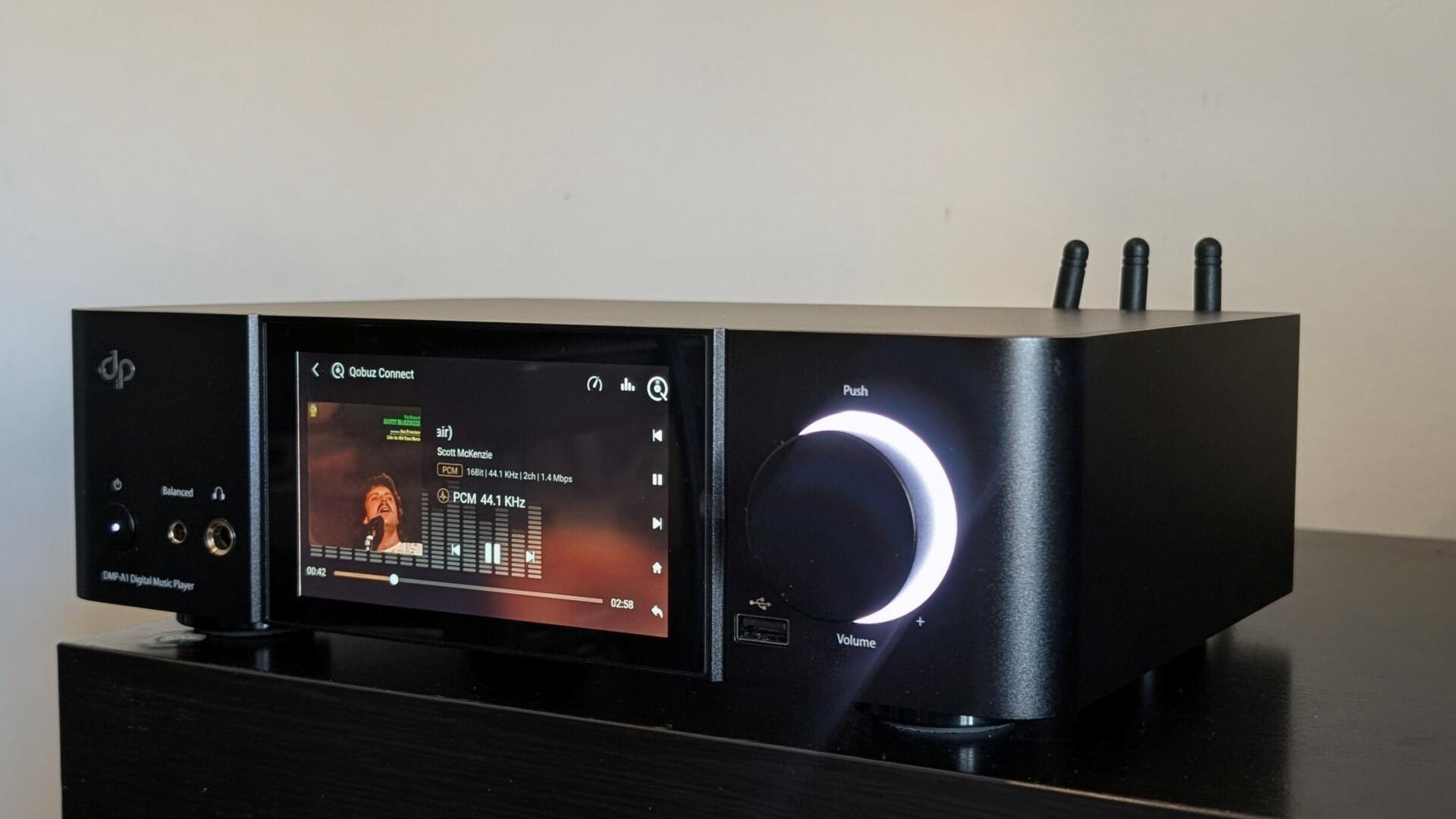
On the control side, there is a 5″ 1080p HD touchscreen, and the Android 12-based FunplayUI system with the dp SmartController app for full remote management. Finally, there is a smooth volume knob with customisable “Smart Ring” Dynamic Light Ring LED effects.
Quality
The thickened full aluminium alloy chassis is CNC-machined and features an integrated middle frame finished with a soft matte metal surface texture. The rounded corners have a premium feel, and the included metal remote control is classy.
Specification and Price
Model – dorpo DMP-A1
Core – Quad-core 64-bit Cortex-A55 processor
Memory – 4G DDR4+64G eMMC
Display – 5-inch FHD touch LCD
Front panel control – Volume knob, colourful “smart ring”
Audio DAC – ESS 9039S Pro
Audio interface – 3rd Generation XMOS XU316
WiFi – WiFi6 (2.4G+5G dual band)
Ethernet – Gigabit RJ-45 (10/100/1000Mbps)
Built-in SSD port – Support M.2 NVME 3.0 2280 protocol, up to 8TB*1 (SSDs aren’t included)
USB port – USB 3.0*1 (rear, HOST/DEVICE); USB3.0*1(rear); USB 2.0*1 (front)
Power Supply – Linear Power Supply + Switching Power Supply
Operational Amplifier – TI OP1612
Audio resistance – Nichicon, Wima, Omron relays, high precision resistors
Clock – Ultra-precision clock design
Operating system – dorpo FunplayUI based on Android 12
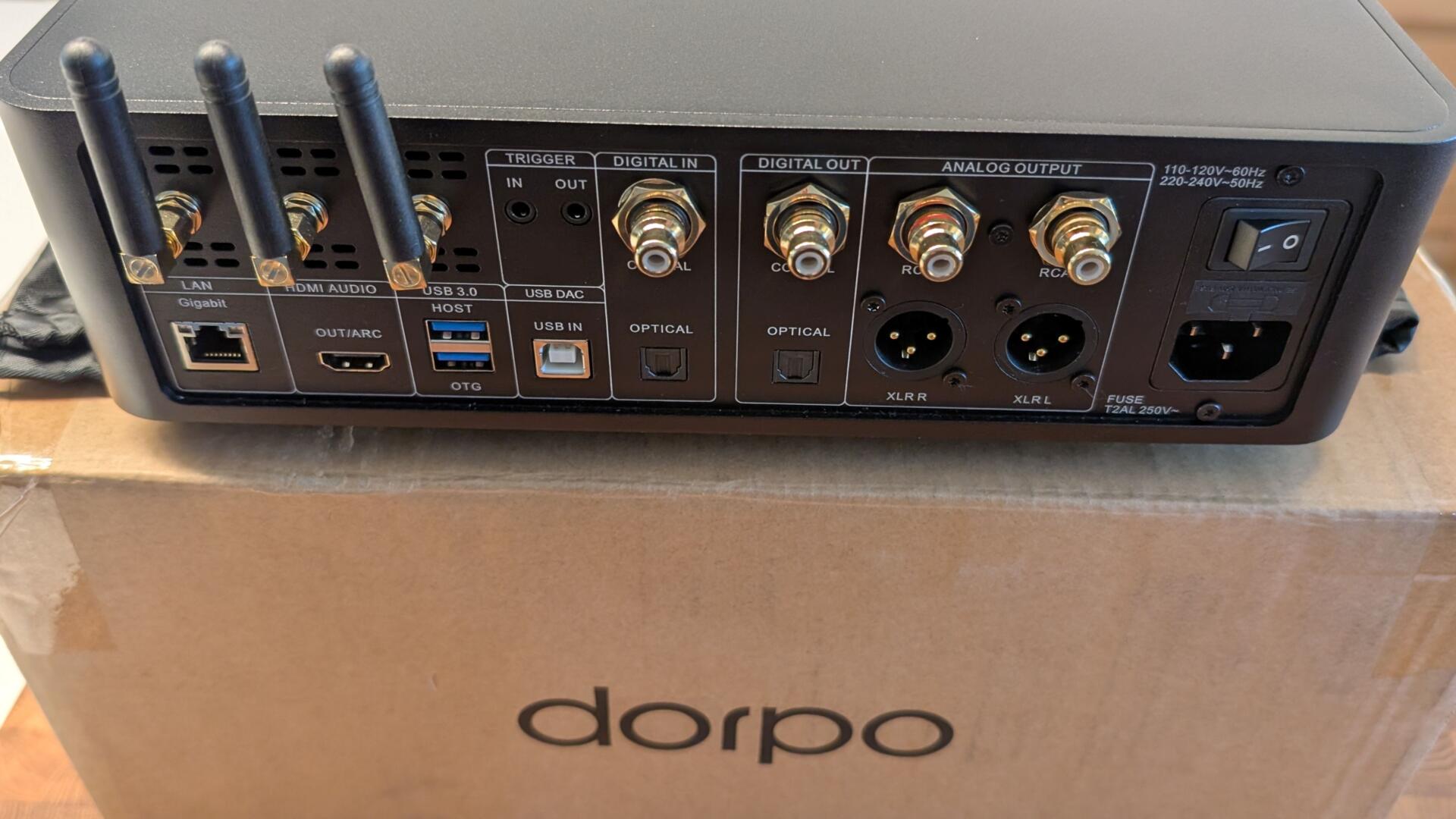
USB -B Audio in – Up to stereo DSD512, PCM 768KHz, Windows, Android, IOS
Optical/Coaxial Audio in – Up to PCM 2.0 192KHZ, DOP64, MQA
HDMI ARC Audio in – Up to PCM 2.0 192KHZ
HDMI Audio Out – Video: 4K; Audio: up to PCM 192khz 5.1 and bitstream
USB Audio Out – Up to stereo DSD512, PCM 768KHz
Optical/Coaxial Audio Out – up to PCM 2.0 192Khz, DOP 64
Analogue audio out – XLR balance stereo, RCA single-ended stereo output, Headphone amplifier output: 4.4mm balanced, 6.3mm single-ended
Music services – Qobuz, Spotify, Amazon Music, Apple Music, WebDAV, UPnP
Network streaming – Spotify Connect, Qobuz Connect, Roon Ready, Airplay, DLNA Control, and dp SmartController support iOS and Android smartphone apps
Support remote wake-up, 3.5mm 5-12V Trigger IN/out
Infrared Radiation remote control
Net weight – 3.4kg
Dimensions – 290mm x 200mm x 78mm
List of Dealers via Distributor here;
Full details are on the company’s site.
Price – £1799







Performance
Review Equipment
I’m using the HF&MS Reference System; the loudspeakers are now on eight Node Audio SS-1 isolators, making the system sing like crazy. I’m centred on the Atlas Mavros loudspeaker cable for this review rather than the Tellurium Q cable, as discussed on the Reference page.
For the headphone section, I have used the A1 on the desktop with my DELL laptop and Meze Audio Elites.
Physically
The A1 looks great for a start, with the App and screen mirroring doing most of the control work. That said, the remote control is great when you are in preamplifier mode. It is particularly striking on the desktop.
Fixed Output as a Streaming DAC
In the App, you can select Volume Pass Through, which is great if you are connecting to a preamplifier, as I am. I’m using the internal DAC as this seems appropriate. With Qobuz Connect, the DMP-A1 is absolutely sparkling.
Spotify Connect is there, but you need Spotify Premium for it to work properly (which I don’t have), but I can use AirPlay, which is, of course, not HiRes. On the Android Pixel 8 Pro, Spotify can be streamed in LDAC, which should be an improvement on AirPlay. Tidal can be used with AirPlay, but I’m told it will be built in very soon with Tidal Connect.
The DAC is clean and brisk, but has a nice natural tone. I like it. It is quite clearly a low-noise environment, which bodes well overall; the two power supplies will play a role here. Raw reference tracks like Lake of Fire (Qobuz 16-bit, 44.1kHz) by Nirvana, or the atmospheric A&W by Lana Del Rey (Qobuz 24-bit, 48kHz), have all the detail you want with the bass lines coming through strongly. Tonally, I’m used to the manaDAC (which is three times the price, by the way) with a heftier delivery, but this has a lighter touch, which works for me.
There is the usual array of DAC filters, but if I’m honest, nothing exciting is happening to me; see below in the headphones section.
As a Transport (USB DAC) Fixed Output
I might prefer generally to use a device like this as a transport, as I do every day in my Reference System with the Eversolo DMP-A6. I see no reason to doubt this. This A1 will be a fine transport for me; the Melco is indexed and works well. Qobuz is fine, and the M.2 storage I have inserted is warp speed.
As a Headphone Amplifier
With the A1 in my Reference System and headphones inserted, the output to the preamplifier is cut nicely; the volume is set to -25 dB, so the headphones do not blow your brains out. The Meze Audio 109 Pro I’m using isn’t balanced, but its output is excellent.
Moving the A1 onto my desktop with a pair of balanced Meze Audio Elite headphones, I needed to swap networks; fortunately, it was seamless.
Using Qobuz Connect on my Dell with tracks like “Walkaway” by Cast (Qobuz 16-bit, 44.1kHz), the A1 has an open headstage with the Elite headphones. This is at least as good as the FiiO K19 that is also on my desktop. I note too that the DAC filters are, in the words of some reviewers, ‘nuanced’. This is a word you will not find in my search bar, but I’m not hearing much between Linear Phase Wall or Phase Brick Wall if I’m honest.
Networked Melco Library
My 4TB Melco Library is pretty full, so I indexed it in the dp SmartControl App overnight. The 29,000-odd songs appear in the dpMusic Player. What is good is that the album artwork seems effective, and the track structure is accessible. I’ve encountered no latency in the playback process.
M.2 storage
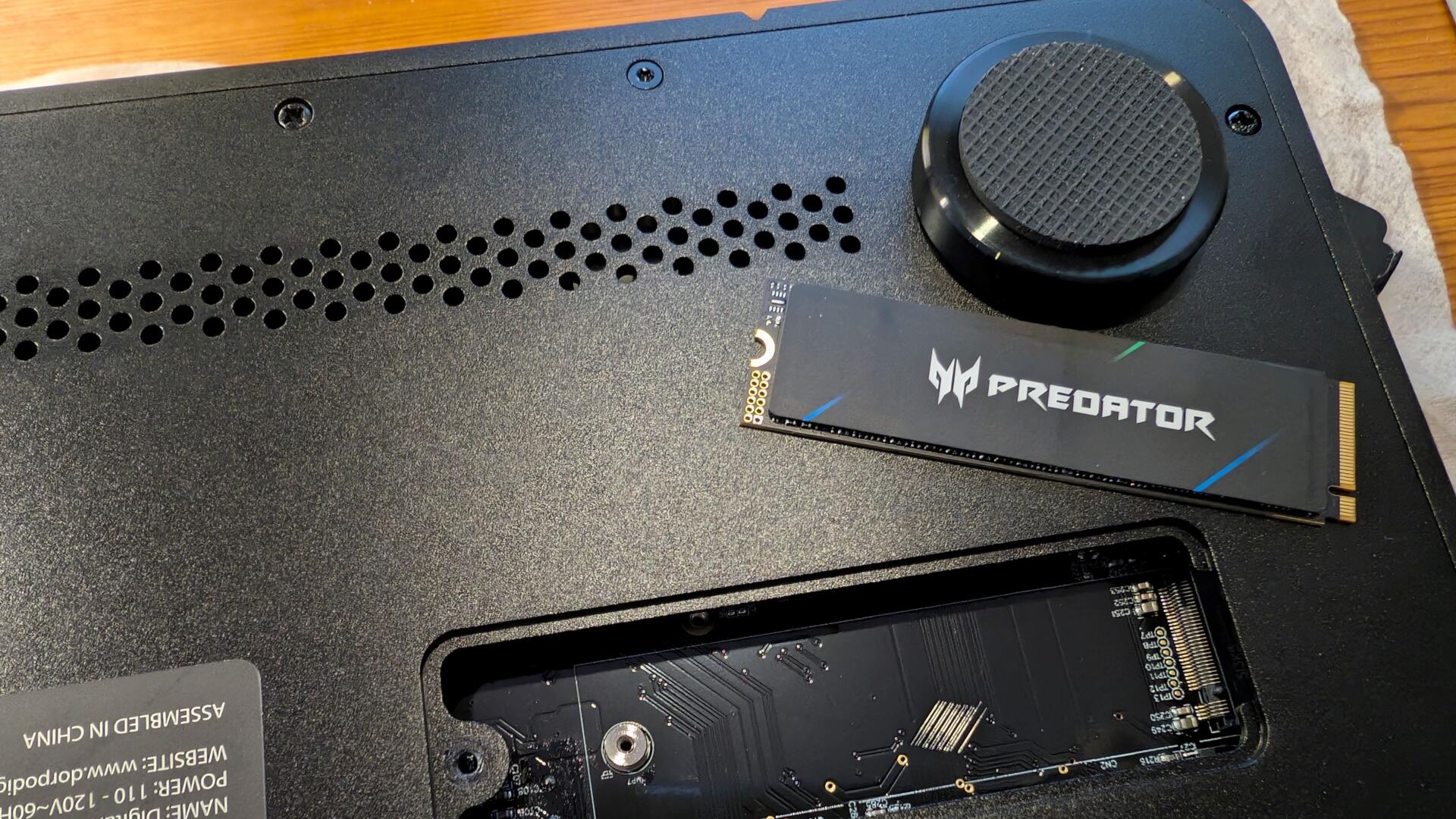
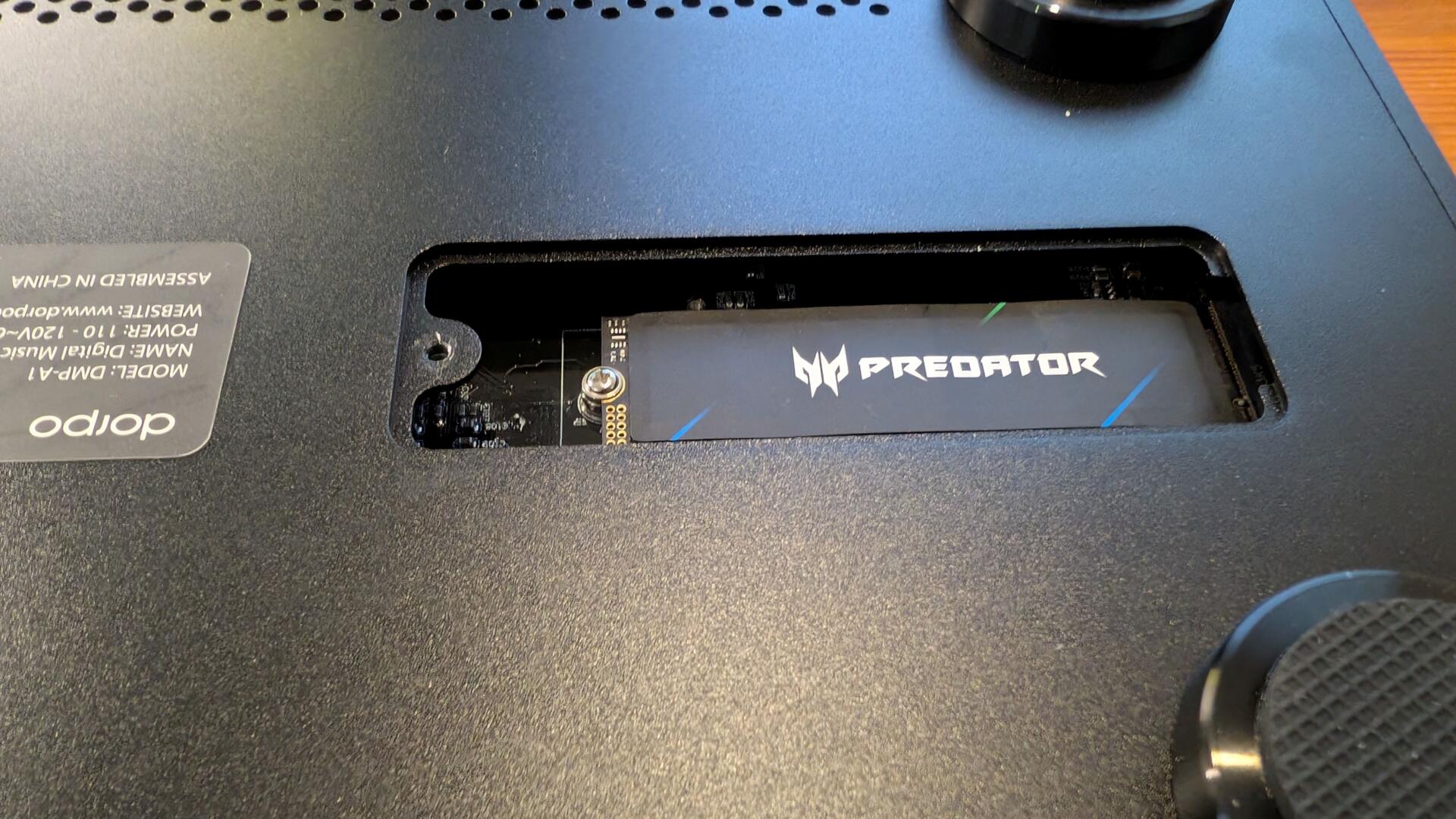
Inserting an M.2 1TB drive in the base of the A1 was a 2-minute job. I have been unable to see the drive across the network, so I copied a backup of my music files from an external USB SSD drive using a copy and paste on the screen. This 400 MB transfer took a long lunchtime to complete, with indexing taking the same amount of time. The M.2 is crystal clear and again has no latency issues for me. Searching in the dp Music Player could be a bit slicker, but given dorpo is catching up with the likes of Eversolo, this will come, I’m sure
External SSD USB storage
Using a Lexar external SSD in the front port, file access was instant, which is remarkable, no indexing, messing about. Screen mirroring is ideal for this and is as seamless as the Eversolo. I’m currently not getting the artwork through on the App, but I expect this is a low priority that will get fixed.
CD Player
I plugged my rudimentary USB optical CD player into the Host USB port at the back, and it worked perfectly. The CD Play button is on the home screen. Again, screen mirroring is great for this, and this is a nice touch.
Bluetooth
Bluetooth works fine, and Android LDAC at 96kHz with my Pixel 8 Pro works and is a nice-to-have, though wholly unnecessary these days.
Playlists
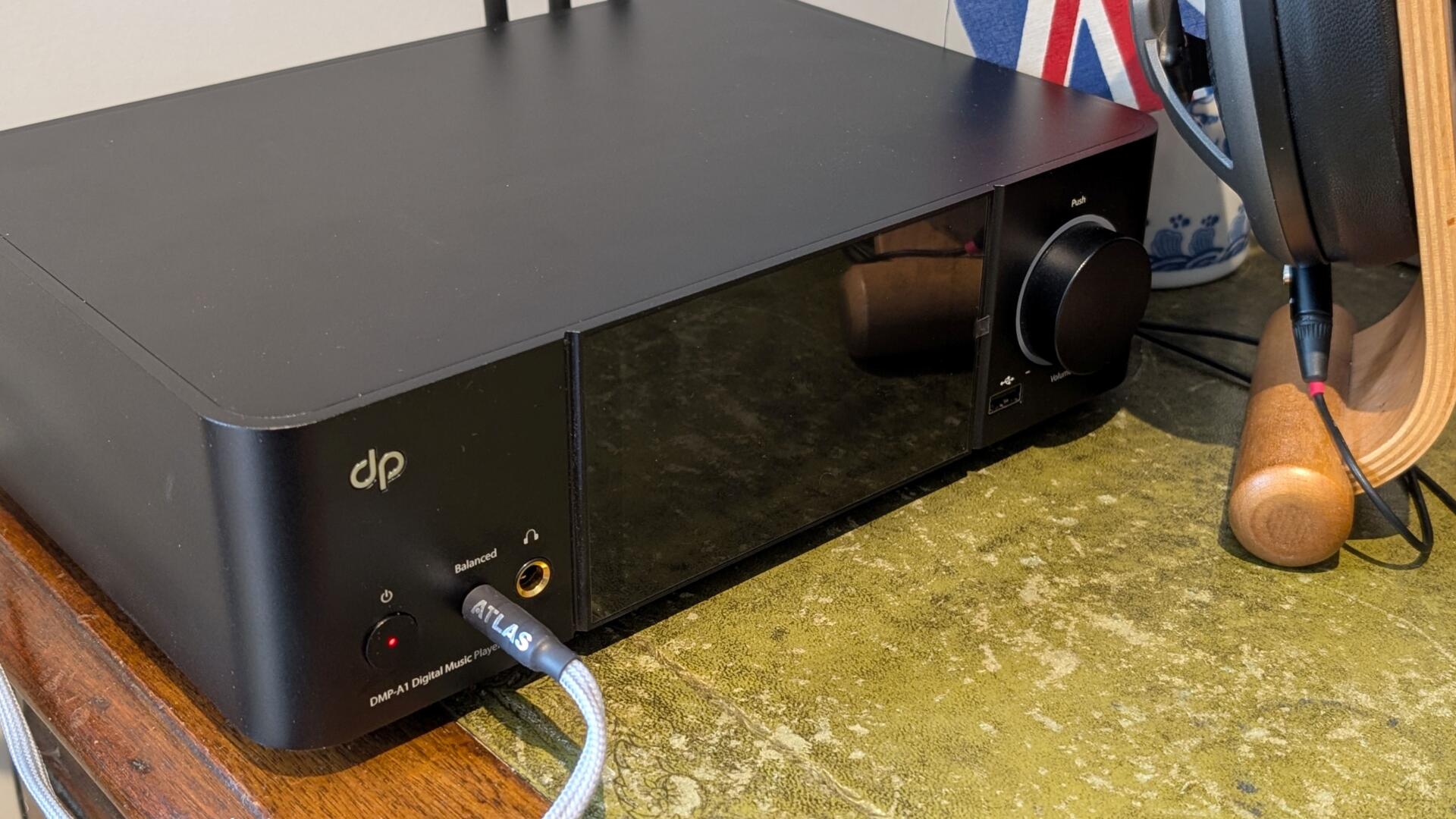
Playlists used in the evaluation of the DMP-A1



Overall
Compared to…
We are in a place where diminishing returns need to be considered. Yes, you need the best source you can afford, but there are many other factors to consider, such as your amplifier, loudspeakers, and, of course, your listening environment. This dorpo DMP-A1 is excellent value for money at £1799. Compared to the wonderful, long-term iFi Pro iDSD streaming DAC at £3249, it compares favourably, as it does to their Flagship iDSD Phantom (£4499), reviewed recently.
The ‘one to beat’, the Eversolo DMP-A6, is £799, but the DAC in this A1 is of a higher specification and level. The Eversolo DMP-A8, at £1899, is probably more comparable, but it does not have a stunning headphone output like the dorpo DMP-A1.
I have always favoured Auralic products, such as the Vega S1 (£1999) and the flagship Vega G2.1 (£6799). With all these comparisons, the dorpo DMP-A1 emerges as a good fit in this competitive electronics arena.
Overall
The dorpo DMP-A1 has the ESS flagship ES9039SPro chip, which offers a performance edge over many in this category. It also benefits from extensive low-noise treatment, such as dual power supplies, so it is a top chip, well implemented. When Tidal comes properly, this A1 is going to be the business. Tidal would take this Highly Recommended badge to a “Very”
With my system, I’m looking for an affordable low-noise, Auralic level streaming transport, and with the software updates coming, including Tidal Connect, this could be it for my system.

Love
- Headphone output stage
- Easy connection and setup
- Open delivery
- Neutral
- Styling
Like
- 5-inch touch screen
- M.2 option is excellent
- Hard off button at the rear
Wish
- Tidal Connect (this is due)
- Chromecast (I’ve asked about this and will update in the comments)
- More VU meters (!)
dorpo DMP-A1 Highlights
Related Posts

Eversolo Debuts DMP-A8 Gen 2 Series and T10 Transport
At Vienna, last week Eversolo Debuts their…
dorpo announces DMP-A1 Digital Music Player
Today dorpo is announcing their DMP-A1 Digital…