Introduction
Power conditioners are tricky, thorny and complicated. They may tackle RF and EM interference and can be passive, active or a blend of both. ISOL-8 has chosen the active route, with a measure of passive filtering too.
Design
The ISOL-8 Minisub Wave treats the mains supply through multi-stage inline filter networks, including ISOL-8’s proprietary Transmodal filtering, to remove both common-mode (caused by Wi-Fi, cellular, and radio signals, for example) and differential-mode noise (caused by switch-mode power supplies, chargers, etc.).
Each of the six sockets (2 High-Current + 4 Low/Med-Current) uses custom-wound inductors, premium silver-plated wiring and internal ground management, helping isolate connected components from one another and prevent noise feeding back through the system.
ISOL -8 also has a second model, the MiniSub Axis; this features, in addition to the MiniSub Wave, a DC blocker. DC Blocking will eliminate mechanical hum (in a power amplifier, for example) in an audio system. There are several other very high-end solutions offered by ISOL-8.
If you want to know more about noise in your Hi-Fi system, read this absolutely excellent piece from ISOL-8.
Quality
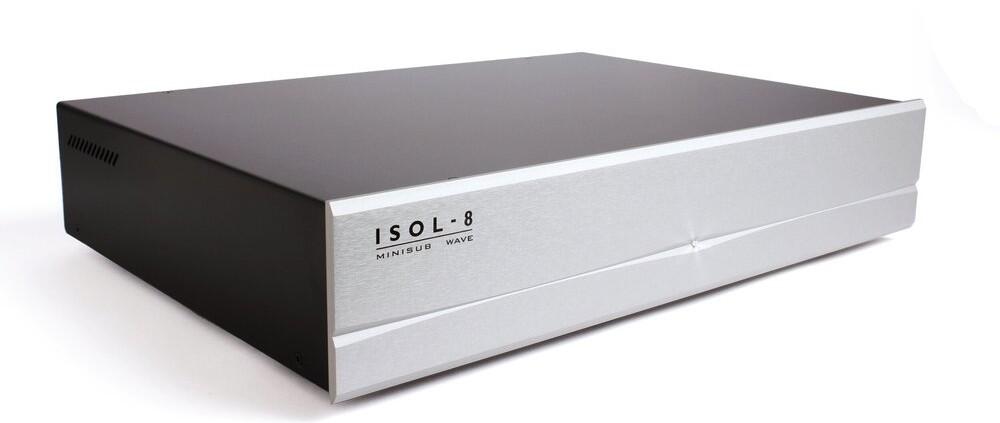
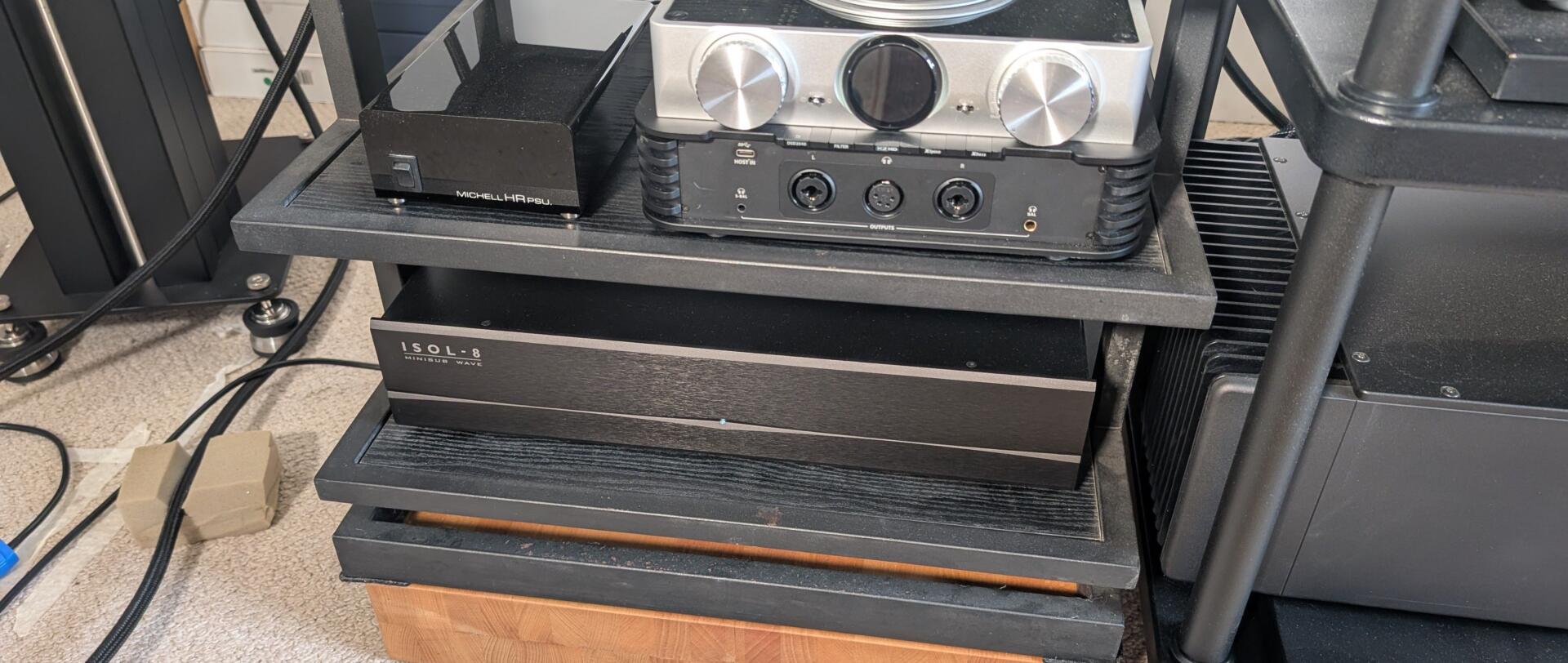
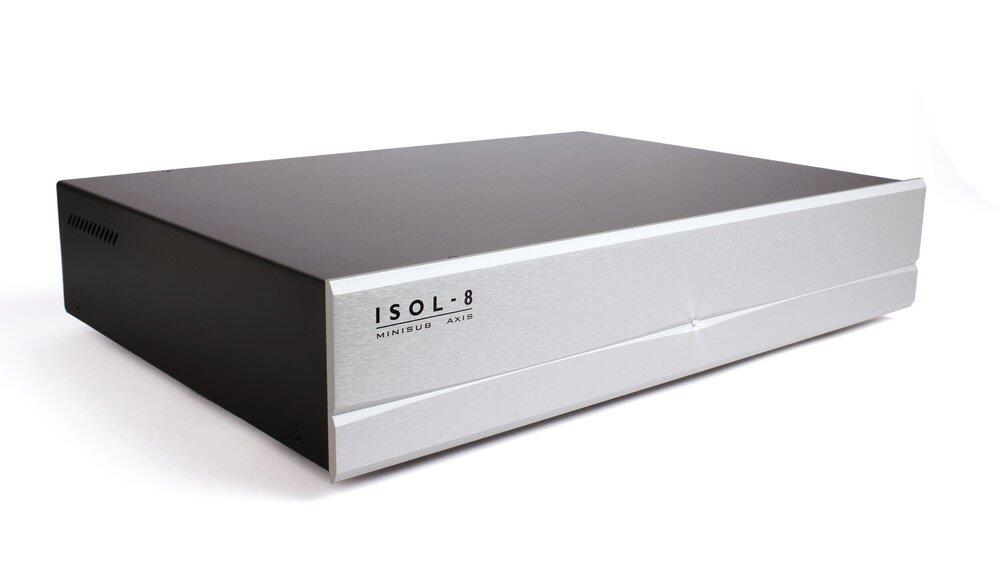
The MiniSub Wave feels like it has been engineered like an amplifier, and it looks the same. It has the full-width audio form factor, measuring 444 x 85 x 305mm (WxHxD), and it looks like part of your amplification system, though you’ll ideally need a rack or a place to place it.
It has a solid feel, with a CNC-milled aluminium fascia that can be supplied in black or silver. It just has a single LED on the front to show you it is on.
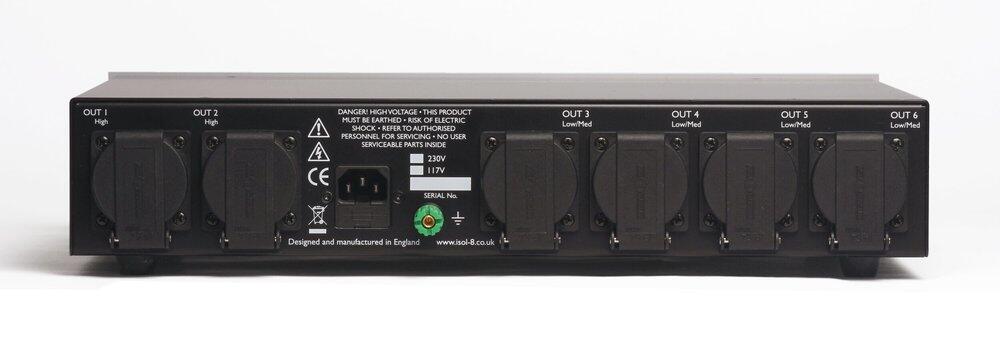
The six sockets at the rear have spring-loaded covers that fold down easily; the plug sockets are top-side down, and they can accommodate block transformers if required (see below).
Specification and Price
ISOL-8 Minisub Wave Power Conditioner
Number of available outlets: 6 (4 low/med current, 2 high current)
Type of outlets available: 13A British chassis sockets
European Schuko sockets, 15A US sockets
Standard Mains Inlet: 10A IEC fused at 10 Amps (cable not supplied)
Dimensions: 444 x 85 x 305mm (W x H x D) excluding connectors
Product Weight: 6.5Kg (MiniSub Wave), 6.7Kg (MiniSub Axis)
Construction: Steel chassis with black finish.Silver Aluminium front panel (Black optional)
Mains Voltage: 230VAC version for 220-240VAC, 117VAC version for 100-127VAC
Maximum Continuous Current: 6 Amps at any one low/med power outlet, 6 Amps across all low/med power outlets, 10 Amps at any one high power outlet, 10 Amps across all high power outlets, 10 Amps across all outlets
Full details are on the company’s site.
ISOL-8 Minisub Wave Power Conditioner – £1800
ISOL-8 Minisub Axis Power Conditioner – £2200







Performance
Review Equipment
I’m going analogue after a concentrated digital experience (as good as the Eversolo T10 with the manaDAC combination was). I’m using the new AVID Ingenium SE turntable, with the PELLAR II phono stage as a partner. The rest of the setup is as the Reference System. I currently have the digital side turned off completely, including the optically isolated switch, library and T10 transport. So, this is turntable, phono stage, preamplifier and power amplifier, with loudspeakers. Just how God intended music to be.
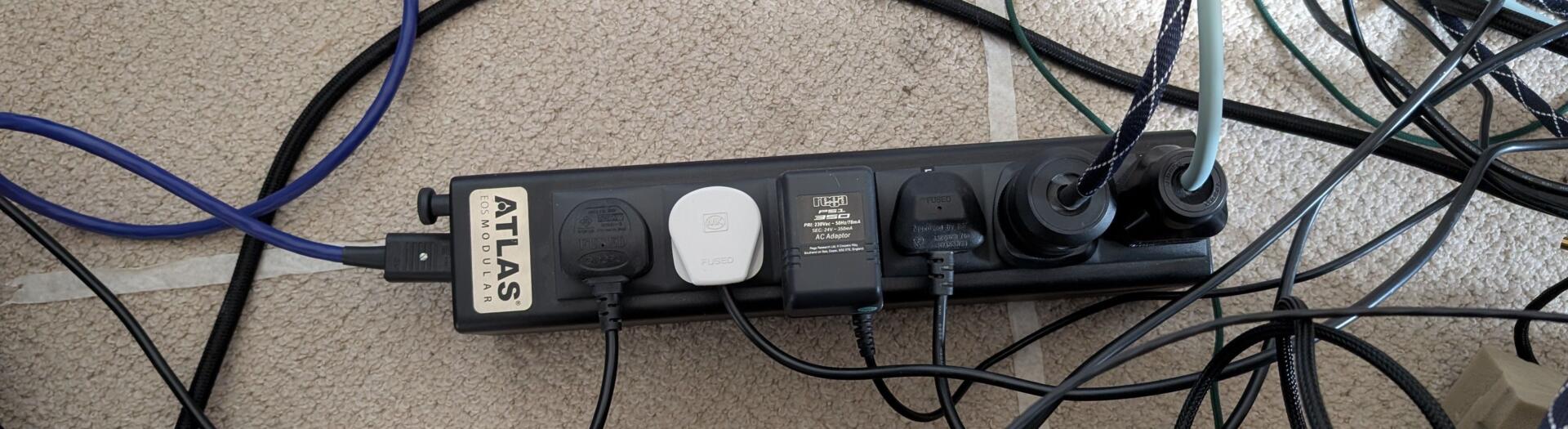
My Reference Setup usually has an Atlas Eos Six-Way passive power distribution block that has never let me down.
I’m going to compare the Atlas Eos and a budget Lindy ‘audiophile’ conditioned extension lead with the ISOL-8.

Physically
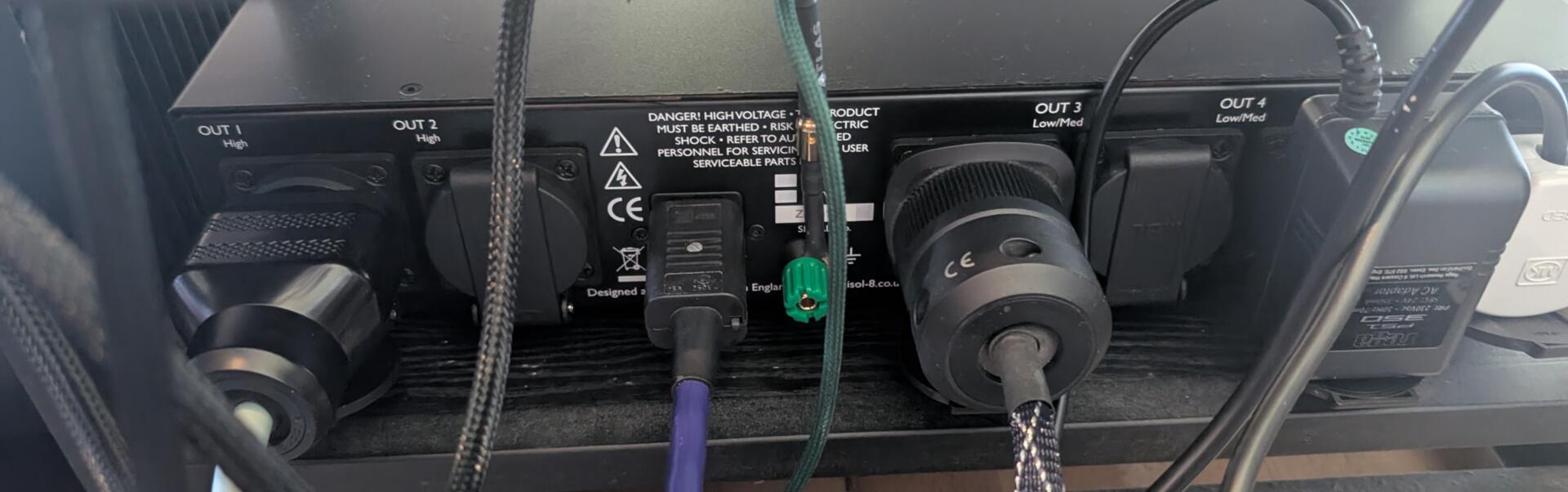
The rear of the ISOL-8 has 2 unfiltered outputs and 4 others with springy caps over the sockets when not in use. They pull down to stay out of the way. The mains feed input is to the side near the middle. The unit sits nicely and is very easy to set up. The single LED just says, Yes, I’m Here. It does look slightly menacing in black, which I like. Aesthetically, it is tidy, and it makes the power block thing look a fraction low rent, no matter what the performance upgrade is.
The plugs are easily accessible, and, for example, my Rega transformer box plug sits easily as the cover spring folds downwards out of the way when in use. Plugs with cables coming straight out are preferable, like my chunky Atlas Eos power cables and the ISOL-8 IsoLink Hi Res power cable that I have been loaned.
The ISOL-8 IsoLink Hi Res power cable is chunky, pliable and is a welcome addition to my preamplifier setup.
Lindy extension lead + Moor Amps into the Wall
This is a slightly unfair comparison, but these budget extension leads, like this Lindy one, have a purpose. I would not under any circumstances plug my Angel 6 into this Lindy as it passes current through a single shared choke network. Plugging in the high-current Angel 6 into this budget block will severely bottleneck the instantaneous current it can draw, which will kill the amplifier’s dynamics and ruin its agility.
So, I’ve decided to go with the Angel 6 into the wall; if Tim Narramore plugs his Angel-6 into the wall, that’s good enough for me. I’ve not experienced any mechanical hum with my Angel. A DC blocker is therefore not really needed for me; if it was, you might opt for the bigger ISOL-8 Minisub Axis.
Swapping out the ISOL-8 to the Lindy extension is actually not as bad as I thought it would be. The problem is my vinyl source is pristine and energetic, and the extension lead is just tangibly not doing it for me. What’s missing? The soundstage feels not quite as wide as before, and it’s all a little bit thinner, but not by miles. Really if the extension is restricting current delivery, it only to a passive preamplifier and a stable turntable power supply (to the Ingenium SE) so there shouldn’t be a huge difference, but it is still noticeable with such a transparent source and amplifier. Plugging in the Angel-6 power amplifier was not a useful experience.
Conclusion – the ISOL-8 is necessary with this revealing system. And plug your power amplifier into the wall if you have a good supply.
Atlas Eos Six-Way passive power distribution block
The Atlas Eos Six-Way is a passive, genuinely audiophile power distribution block that features 4.0mm² high-purity OCC copper with PTFE dielectrics. It is effective, and I can plug my Angel 6 into one of the configurable unfiltered sockets without harming performance. Atlas focuses this block on reducing RF and EM interference and grounding management.
Switching to the Atlas returns my excellent soundstage and the presence in the room, thank goodness. Even with the Angel plugged in.
Conclusion – With a revealing system like this, plug your Angel 6 into the wall. If your system is worthy, think about a power conditioning upgrade.
ISOL-8
Returning to the ISOL-8, my system returns to balance. I am unable to report any tangible difference between the Atlas solution and the ISOL-8 if I’m being honest. This is an excellent outcome, showing that a stereo system can sound great and look classy.
I personally would favour the ISOL-8 solution based on the aesthetic and performance; I do have a spare rack shelf available to tidy things up.
Thoughts
I must note that I have a pretty clean electricity supply here that is, in fact, deliberately separate from the main house. This means I’m isolated anyway from the usual fridge, freezer, charger-type electrical noise that predominates in modern houses. This ISOL-8 MiniSub Wave is their entry level to smooth, consistent power, so possibly some of the other ISOL-8 products might deliver that incremental frisson for this HiFi system.
Installing a power conditioner like this achieves at least one useful thing: it forces you to tidy the cabling, which has value in itself. I already have the passive Atlas solution and remain very happy with it, as I have been for some time. Would I pay the extra? Probably not with my own money, simply because I do not have the budget. If I did, I would buy the ISOL-8 to improve the system’s appearance, gain a worthwhile performance lift, and put the Atlas to good use elsewhere.
The only other premium audiophile power solution I have experienced is the Chord Company PowerHAUS S6. This uses a heavy aluminium chassis, with three isolated internal bus bars (keeping earth physically separated from live/neutral), alongside their proprietary MainsARAY technology, which dissipates high-frequency noise outside of the direct signal path. It is, however, also quite expensive.
What Three Words
Clean – Menacing – Effective
Overall
The ISOL-8 MiniSub Wave delivers precisely what a premium power conditioner should: clean, uncompromised signal delivery wrapped in a chassis that looks right at home among high-end hi-fi separates.
By effectively isolating components and stripping out mains noise without crushing dynamic range, it stands shoulder-to-shoulder with other top-tier solutions. While listeners on a tight budget with an already robust setup might struggle to justify the outlay, those with highly revealing systems will instantly appreciate the lowered noise floor, pristine soundstage, and sleek rack appeal. It is an exceptionally tidy, effective, and sophisticated upgrade for any serious audio setup.

Analogue Music
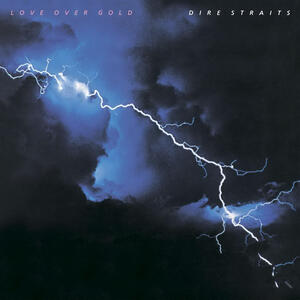
I mainly listened to three albums for this review: side A of The Stone Roses’ debut for rhythm, timing, and sheer enjoyment; Arooj Aftab’s Vulture Prince for atmosphere and detail; and Dire Straits’ Love Over Gold (side B, controversially), a notably dynamic and engaging recording.


Love
- Cleans mains noise efficiently
- Preserves full dynamic range
- Aesthetic
- Outcome
Like
- Fits standard audio racks
- In black
- Menacing light
Wish
- It was a biiiit cheaper! But you get what you pay for these days.
ISOL-8 Minisub Wave Highlights
Related Posts
Degritter Mark II – ultrasonic record cleaner

The Degritter Mark II is an ultrasonic record…
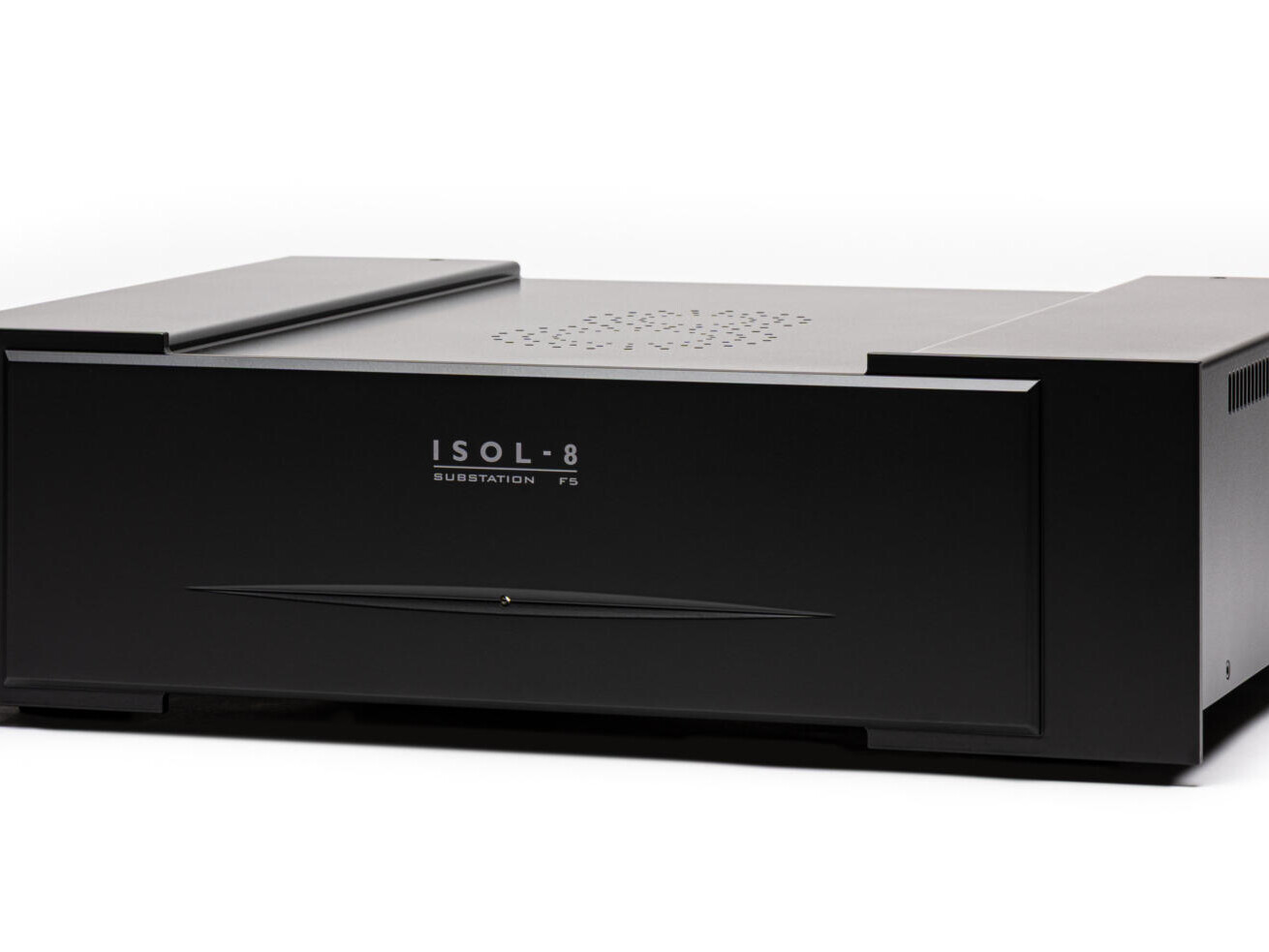
ISOL-8 launches new power conditioning range
ISOL-8 designs mains conditioning equipment to…


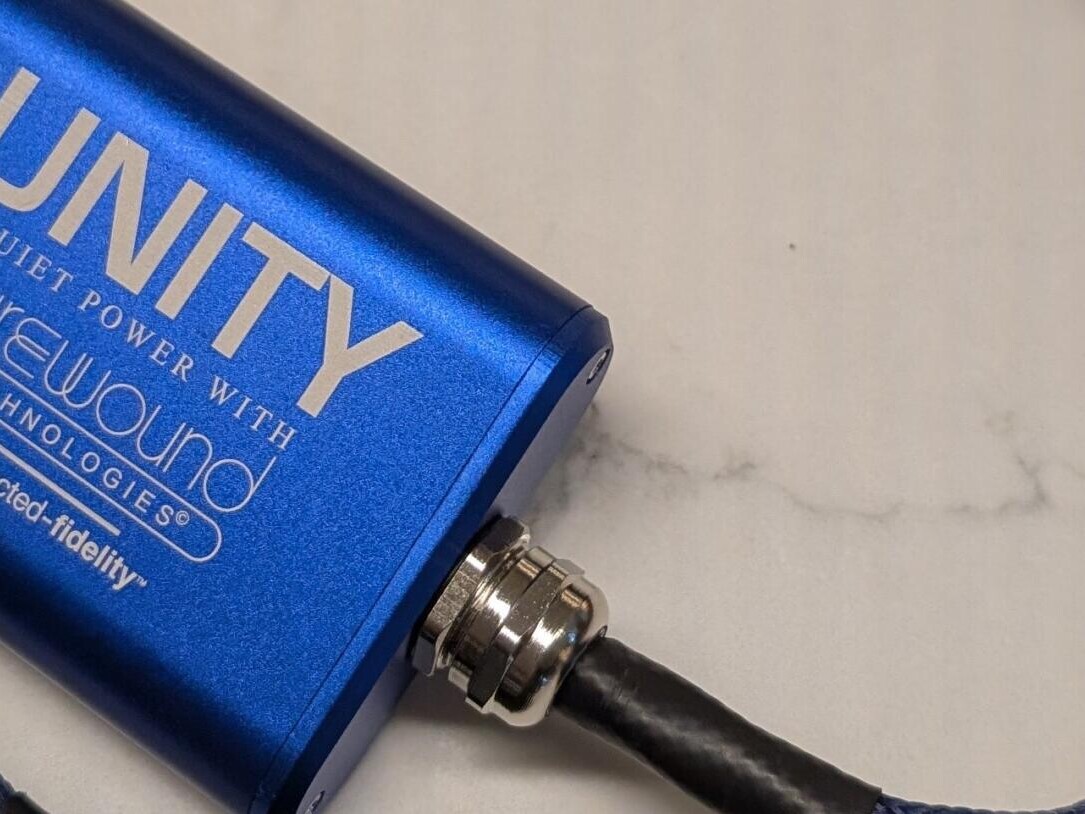
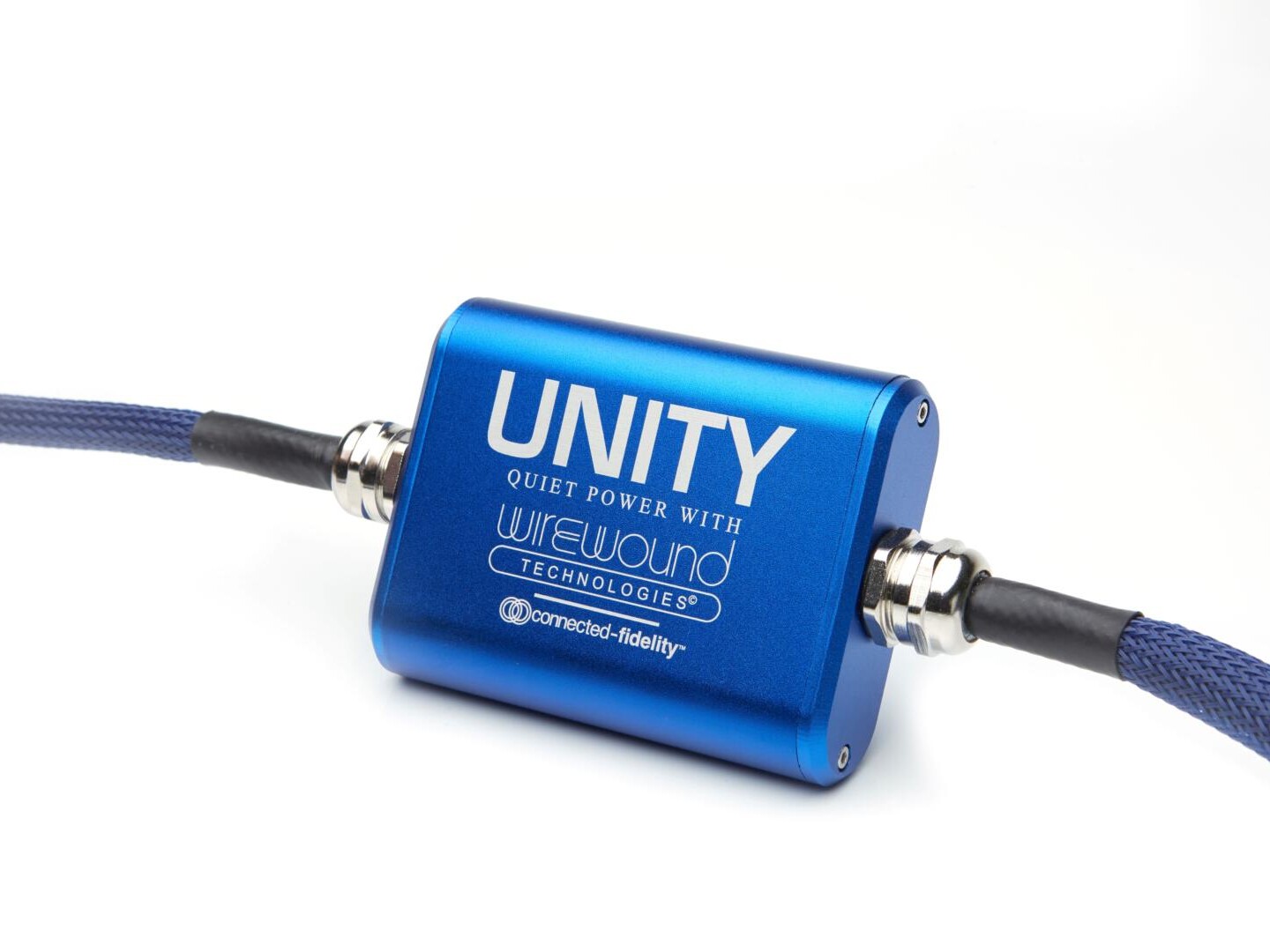
Connected Fidelity UNITY mains power cable
Connected Fidelity is introducing their UNITY…
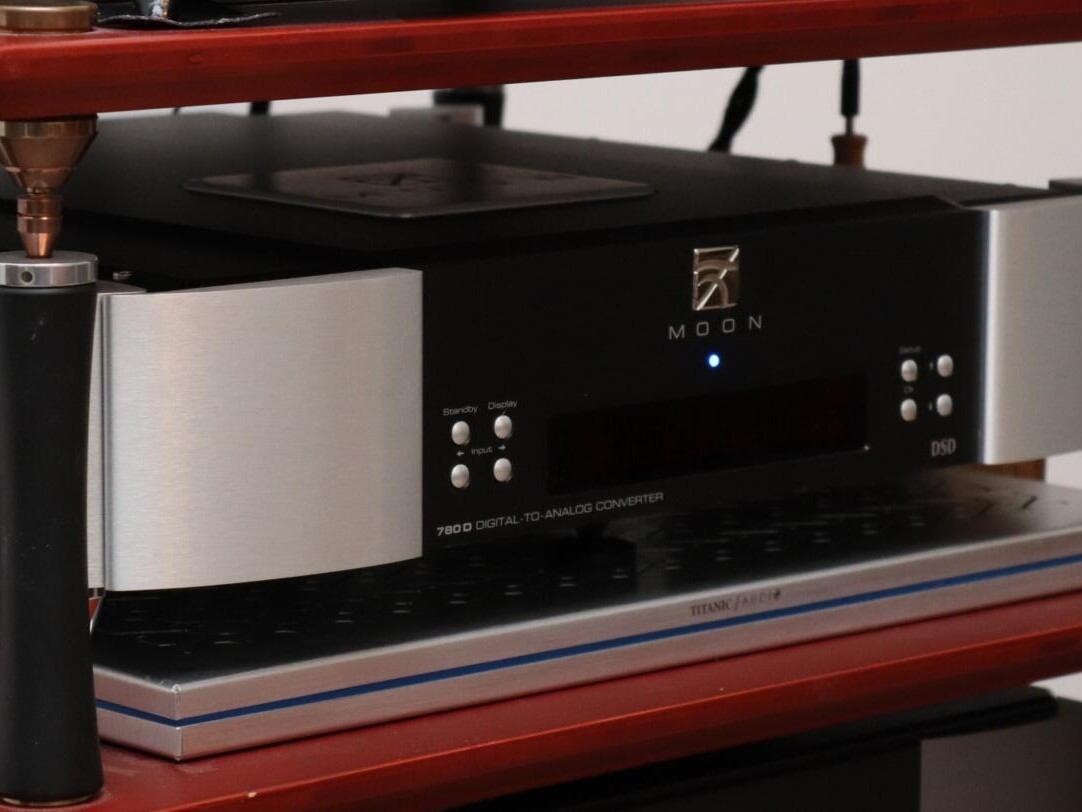
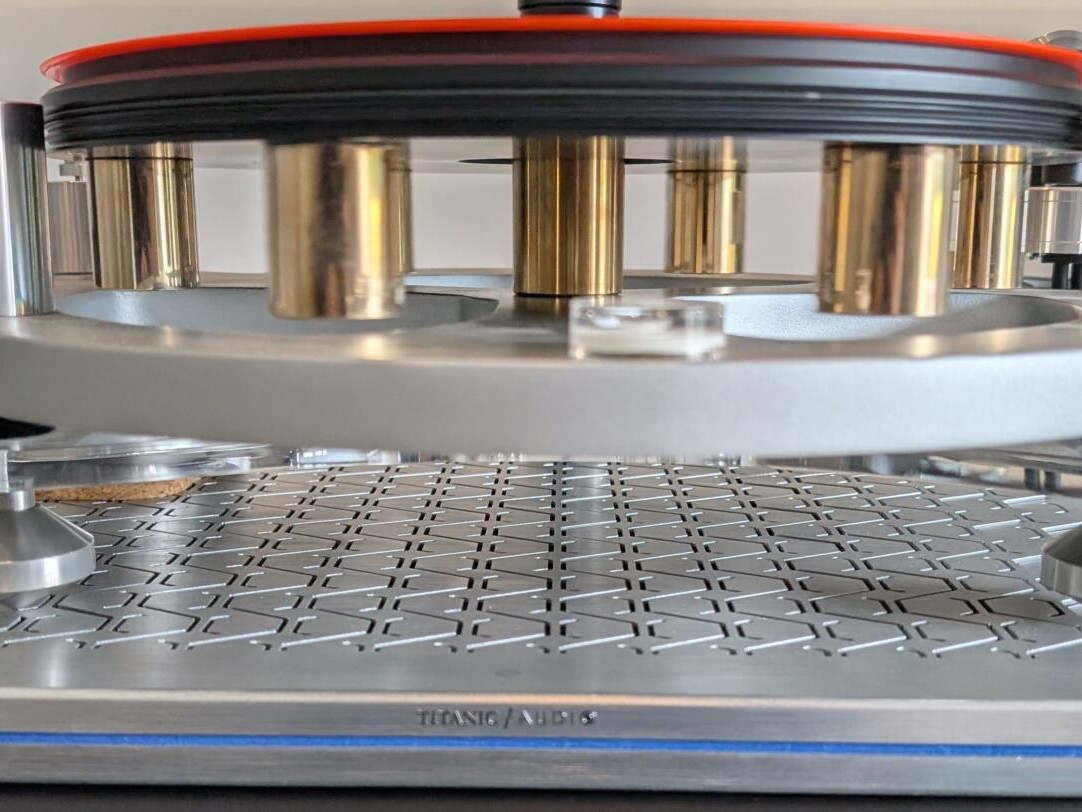
Titanic Audio Anchor Plate Isolation Platform Review

Titanic Audio Anchor Plate - The top plate is…
Titanic Audio Anchor Isolation Platform Announced
News of the new Titanic Audio Anchor Isolation…