Introduction
The Rega Brio holds a legendary status in the hi-fi world. It has long been the trusted analogue heart of countless starter, and other, systems, celebrated for its musicality and synergy with vinyl. Until now, its design has been a proud declaration of analogue purity.
However, the relentless pace of innovation has transformed the sub-£1000 price point. The rise of versatile streaming amplifiers from brands like WiiM, Bluesound, and Eversolo has fundamentally changed what customers expect. An analogue-only approach, however brilliant, was facing a new generation of digital competition.
With the arrival of the Brio Mk 7, Rega has answered the call. This pivotal release equips the beloved amplifier with a much-anticipated digital offering, blending its celebrated analogue warmth with the connectivity today’s listeners demand.
Design
This is a review of the Rega Brio Mk 7 integrated amplifier. It sits towards the value end of Rega’s amplifier offerings. Think of it like a Rega Planar 3 in amplification terms in a range that rises to the Planar 10 (the Osiris being the reference Rega amplifier). The Brio Mk7 promises 50W/ch into 8 Ohms and features a MM phono stage, a full PCB upgrade, and a new digital input, over the all-analogue Mk6.
The DAC stage in the Brio Mk7 is similar to that in the ELEX, however, the Brio implementation is with an integrated OP amp, as opposed to a discrete line driver stage in the ELEX. The OP amp is really a self-contained module where the discrete line driver is made of individual components; we’re talking about costs at this level.
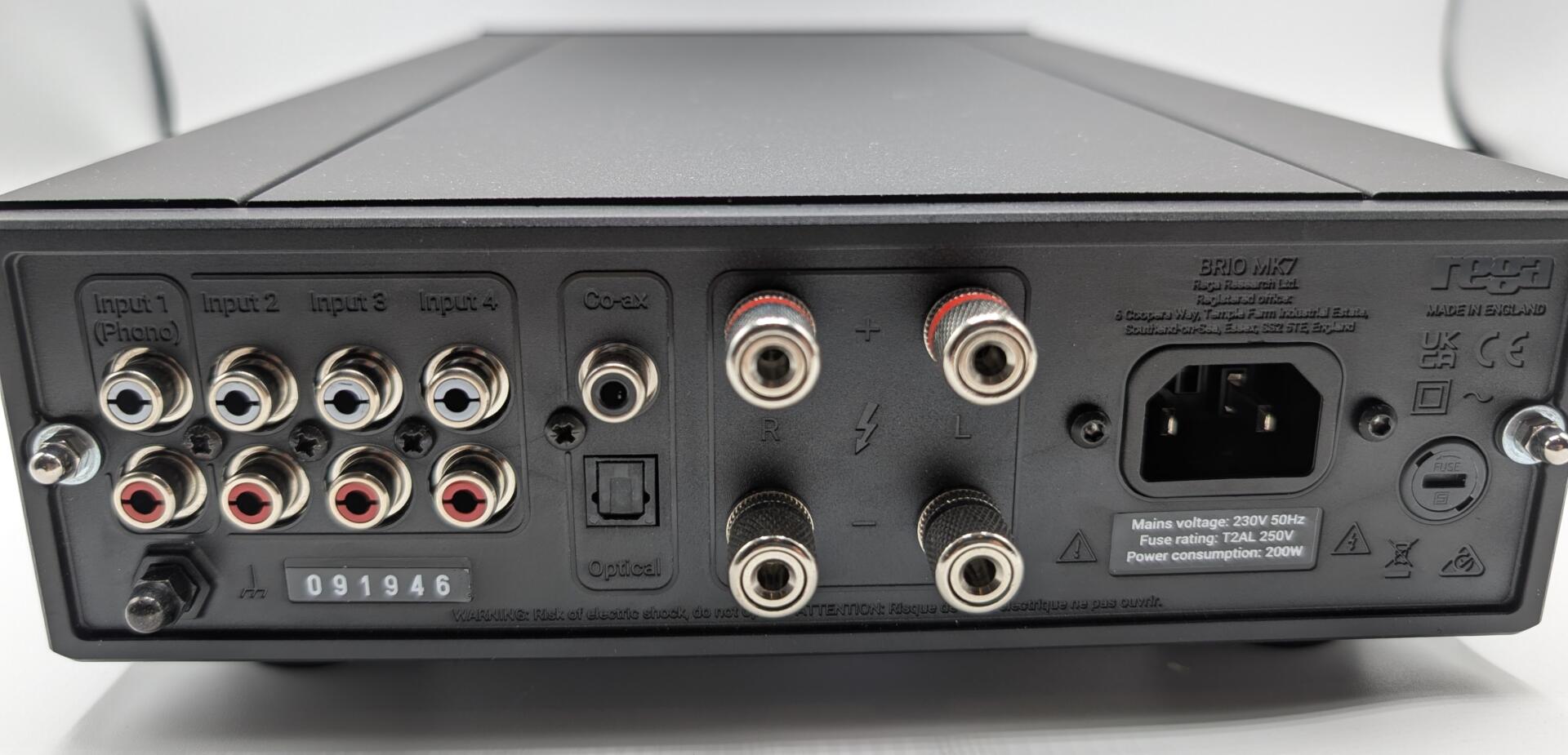
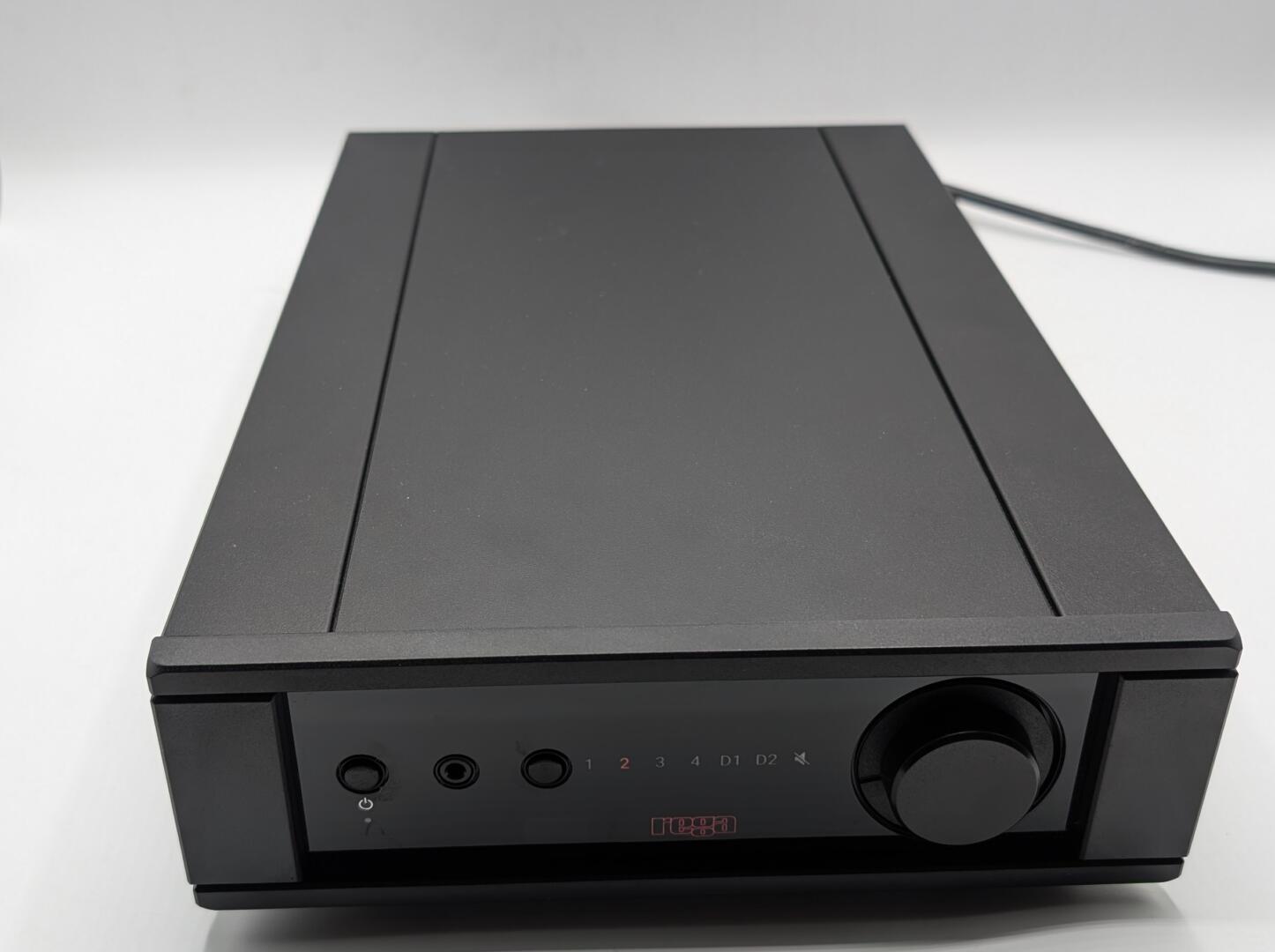
On the input side, the Brio Mk7 has a MM phono stage, three RCA inputs, and two digital inputs: one optical (S/PDIF Optical Toslink) and one Coaxial (S/PDIF isolated 0.5V 75Ω Co-axial). The supported digital sampling rates are 32, 44.1, 48, 88.2, 96, 176.4, and 192kHz. There’s no DSD here at this price level.
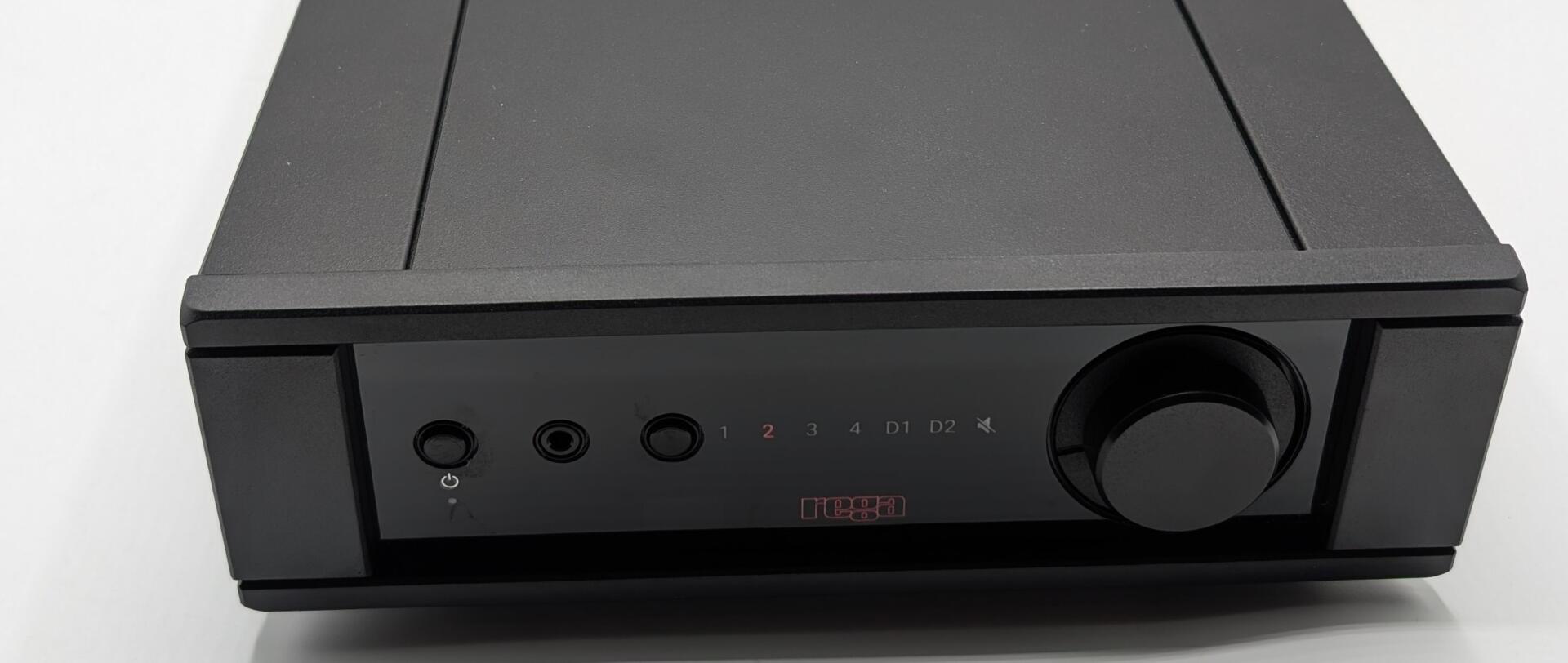
There is a headphone output, the 6.5mm jack in the Mk6 has gone, in favour of a 3.5mm jack. The separate headphone stage cuts the main speaker output on insertion. There is a functional remote control that includes mute and the usual controls you’d expect. Rega has implemented a standby function that kicks in after about an hour of inactivity, which is great, as well as thermal and short-circuit cut-out protection.
Quality
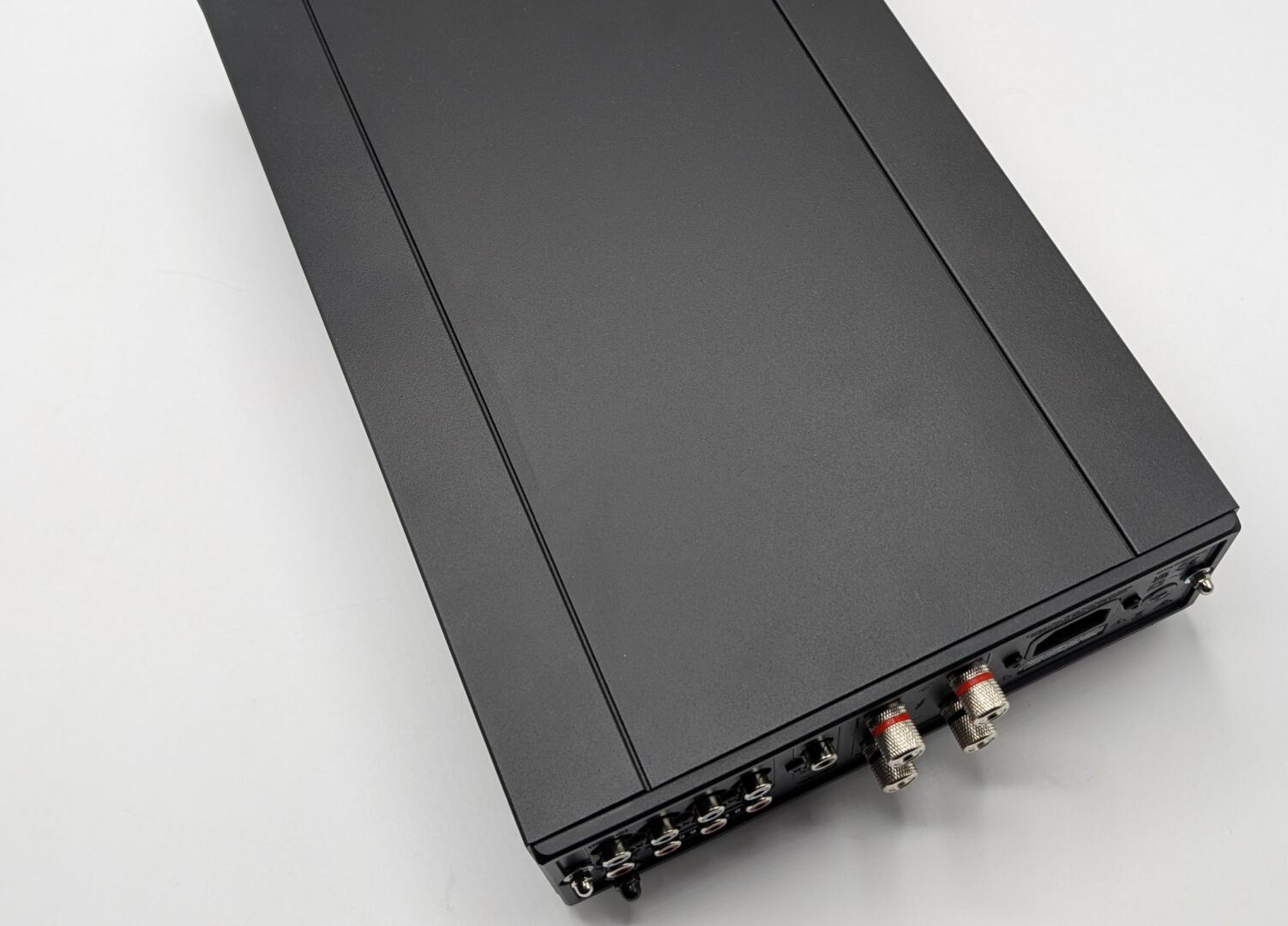
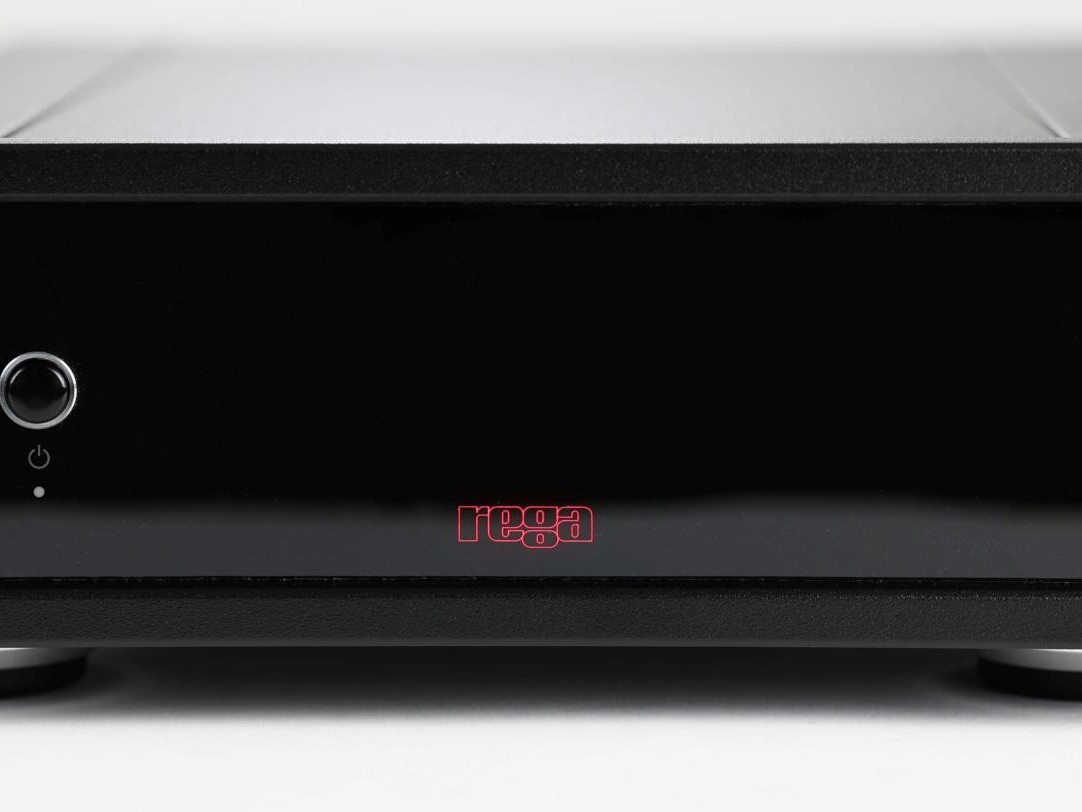
The Brio Mk7 retains Rega’s contemporary functional design in a compact half width aluminium chassis, delivering Rega’s established commitment to durability and build. With a soft touch matt finish and classy front facia, this product is every bit Rega.
Specification and Price
Rega Brio Mk 7 – Specification
Power Output, 50 W per channel into 8 Ω, 72 W per channel into 4 Ω
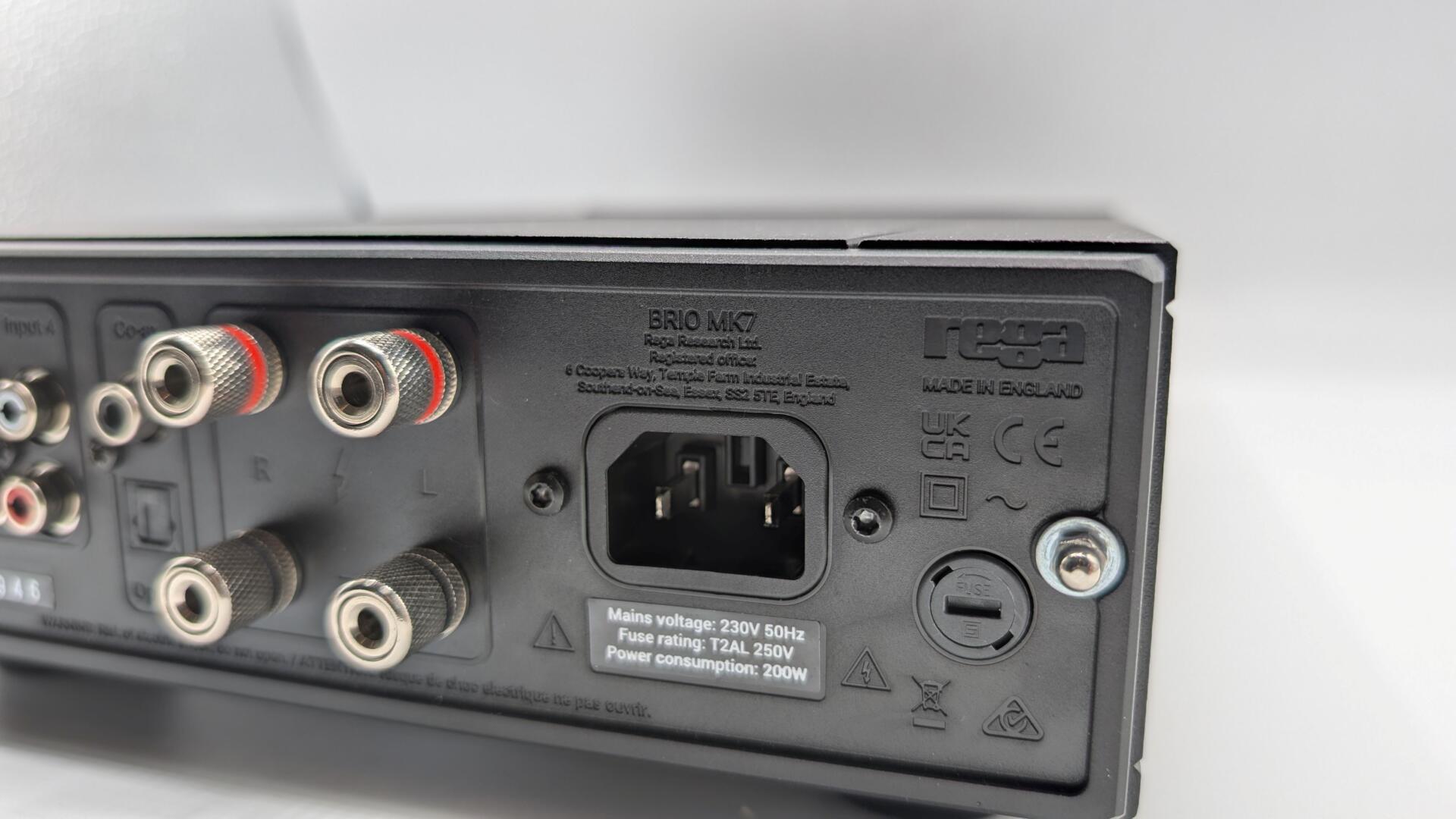
Power Consumption, 200 W
Power Consumption in Standby, 0.4 W (activated automatically if no signal present after 1 hour)
THD+Noise (A-weighted), typically 0.005% at 1kHz
Dimensions (W x H x D), 216 x 79 x 365mm (8.5 x 3.1 x 14.4in)
Weight, 4.9kg (10.8lbs)
List of UK Dealers here.
Full details are on the company’s site.
Price – £799







Performance
Review Equipment
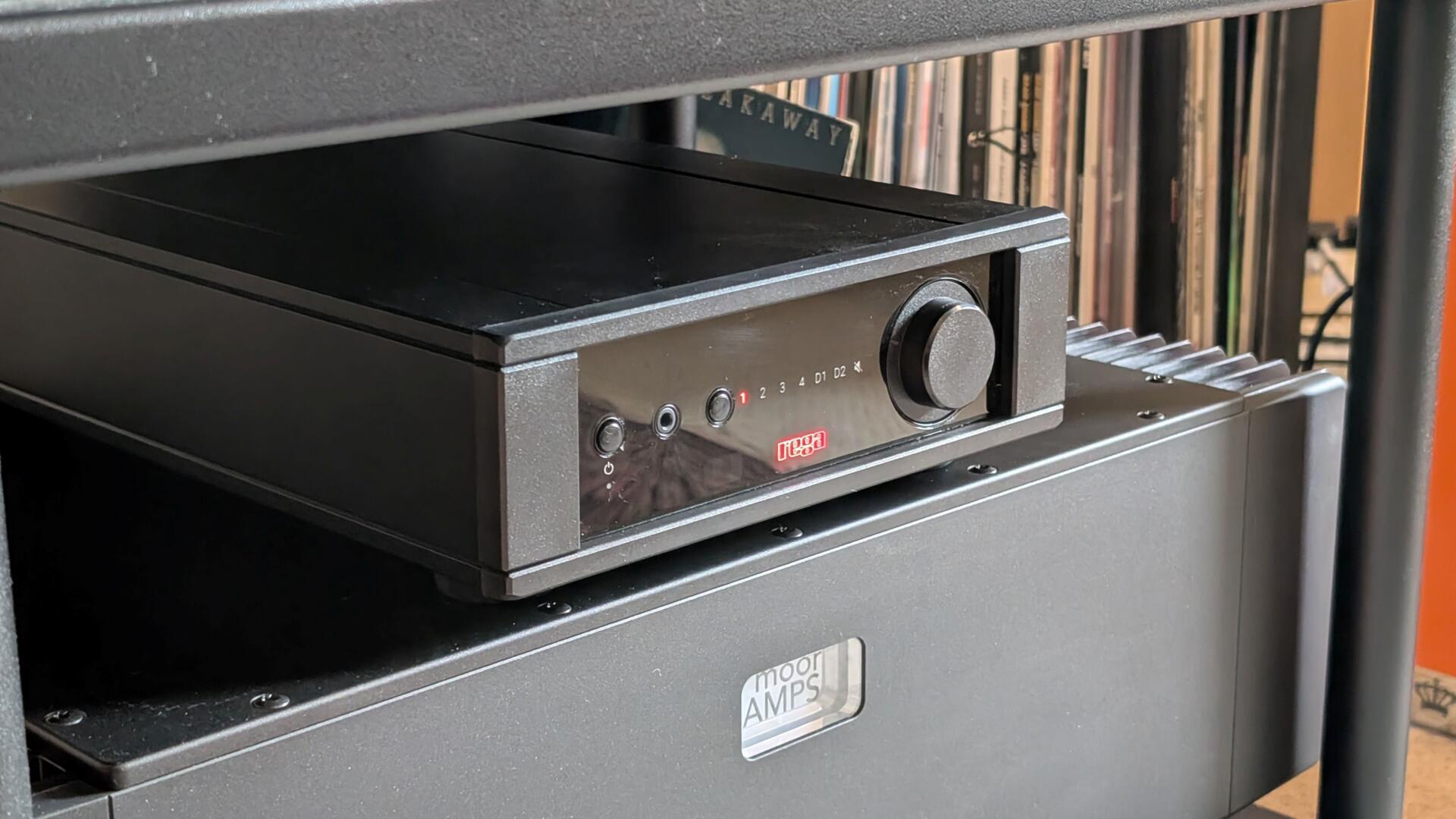
I have the Rega Brio Mk 7 on top of my very expensive isolation plinth, called a Moor Amps Angel 6! I have an Atlas Eos 4.0 dd power lead (2.5em is the latest power upgrade) into the Brio. I’m using a pair of excellent ELAC Carina bookshelf loudspeakers on my new Atacama Nexus 700 loudspeaker stands.
For the MM phono stage input, I am using a Michel GYRO SE with a Rega Exact cartridge on a Rega RB330 tonearm.
For the digital input, I’m using a Chord Electronics 2Go/2Yu streaming transport connected to the Brio’s optical input.
For a single-ended RCA input, I’m using an Audiolab 7000CDT with a FiiO K11R2R DAC. It is as crisp as an apple. I’ve also used the Coax from the CD transport into the digital input.
Physically
The Rega Brio Mk 7 has plenty of room at the back despite being a half-size. The MM phono stage (input 1) is the first input, followed by the three others (2-4). Then the coax and optical are stacked on top of each other (D1, D2). There’s plenty of room around the binding posts that are perfectly snug with my banana plugs. I feel the binding posts appear to be wider-spaced than the slightly cramped Mk6, based on my former review of the Mk6.
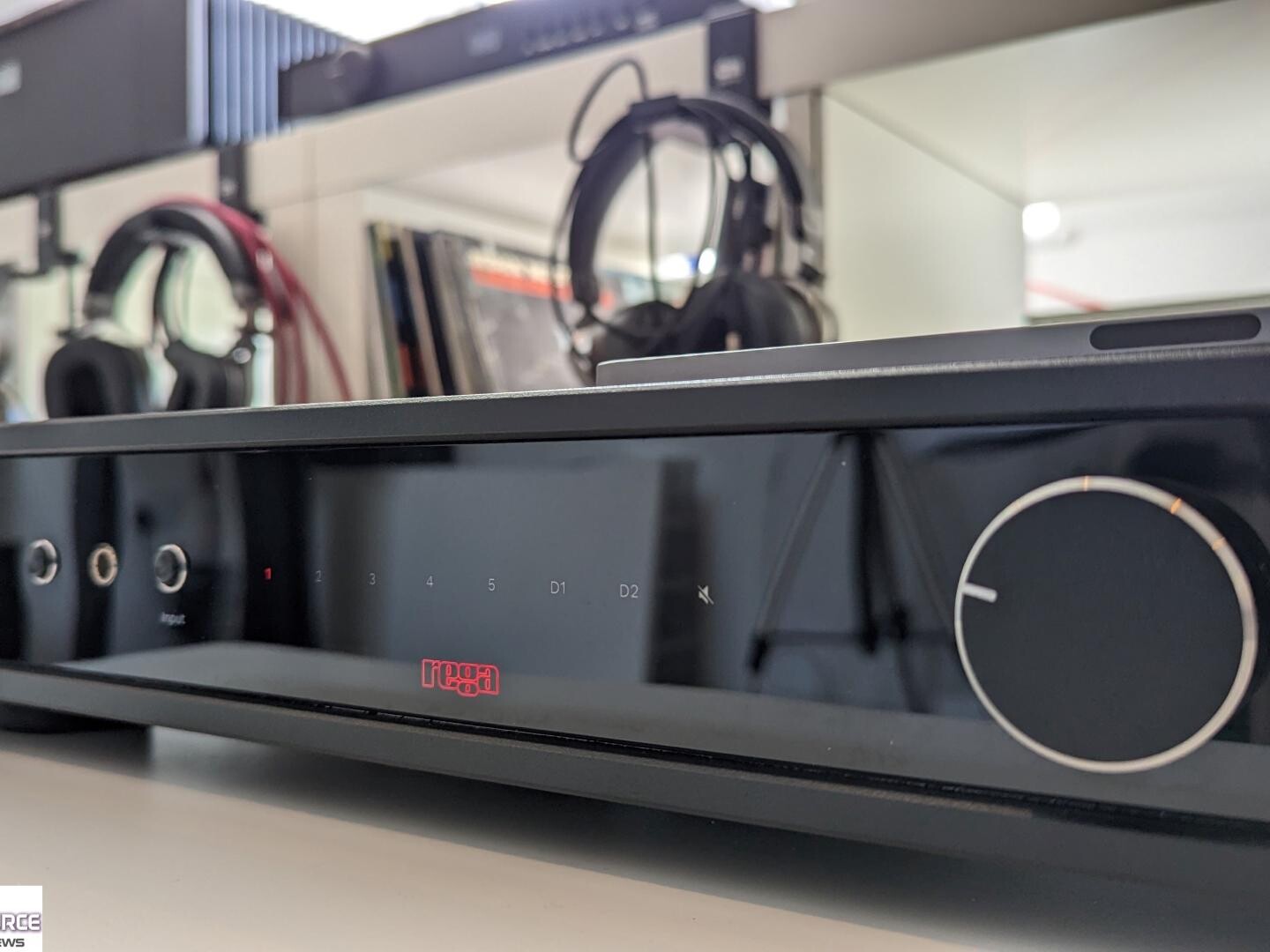
Inputs are selected on the front, the input choice skips along left to right, if there’s no input signal the front light flashes which is a good touch.
The remote control is functional with all the controls you’d expect, including mute.
Performance
Rega Exact cartridge (on a Michell GYRO SE) into the MM Phono input
Sound-wise, the MM Phono input is a great performer, with enough detail to satisfy this listener; there’s no hint of anything missing in the vibrant presentation. The presentation is warm, clear and expansive, and there can be absolutely no complaints at this level. I felt my noise floor was pretty low in this setup with no discernible hiss or hum.
2Go/2Yu streaming transport into the Brio optical input
The 2Go/2Yu streaming transport, with the rudimentary mConnect App, is deliciously clean and a reminder of the quality of the electronics on offer from Chord Electronics. The Melco library pulls through perfectly, though there is no DSD support in the Brio at this level. The digital presentation is suitably clean, and the energy in the midrange is clear to discern. There’s no hint of harshness in the treble, reflecting the warmth of the amplifier.
The same vibrancy comes with the Audiolab 7000 CD Transport connected via the coax input, and the CDT seems equally as energetic as the optical input.
FiiO K11 R2RDAC into the RCA input
Using the 2Go/2Yu transport into this external DAC offers a step change in clarity and performance, though the Brio’s DAC is a perfectly good starting point. The output becomes more musical and livelier, with improved bass response in the Carinas. The Brio can deliver a particularly impressive step up in performance. This setup is the best the Brio has sounded in my view.
Headphone Stage
With a pair of Meze Audio 99 Neo headphones, the output is suitably warm, clear and energetic. There is a commensurate performance boost with the newer 105 AERs, a solid testament to the headphone stage’s capabilities. Fortunately for the Brio, I couldn’t find an adaptor for the Meze Elites!
Acoustic Energy 320²
Since I have these very attractive-looking (and sounding) floorstanding loudspeakers here, it feels only right to plug them in whilst moving the ELAC Carinas to the side. At a friendly 92dB sensitivity quoted versus the slightly stickier ELACs at a difficult 85dB, I’m expecting a nice little bonus at the end of this review period. Sure enough, the AE320² are coming through wonderfully. I have the Brio at barely 9 o’clock, and there’s tons of headroom here. A touch of Lang Lang’s Chopin Nocturne No. 2 in E Flat Major from his new Piano Song Book 2 (Qobuz 24-bit, 96kHz through the optical input) is as articulate and as delicate as you could want.
Thoughts
The Brio can be your starting point in HiFi with an upgrade path to look forward to. Alternatively, in a second room, this would be a great option. An aspiring teen/student audiophile couldn’t really do much wrong with this as a start. In my view, the Brio Mk7 could equally be your amplifier of choice; it is most likely you might end up upgrading the limits of your analogue and digital sources before the Brio might then get an upgrade, such is its quality.
Overall
The key takeaway from this review should be of a vibrant and surprising integrated amplifier; it completely belies its size and demands a listen. This is as easy a recommendation as I’ve made all year!

Rega Brio Mk 7 Highlights
Love
- Understated brilliance
- Vibrant
- Digital and analogue inputs lead to a cable tidy HiFi experience
Like
- Easy to set up
- Perfect start in HiFi
- MM Phono stage is excellent
Wish
- For nothing at this price
- My entry to HiFi was as good as this!
Related Posts
Rega Introduces the “Replay” Plug-and-Play Turntable

Rega is tackling the setup anxiety of vinyl…


Best of 2023 – Rega ELEX Mk4 integrated amplifier
The next award for this year goes to the…