Introduction
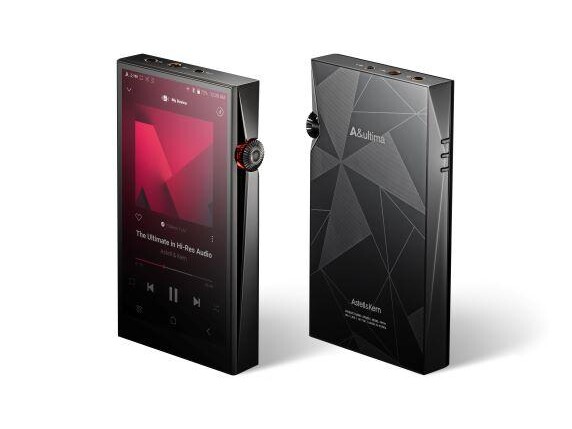
Astell&Kern is a South Korean brand renowned for its luxury portable high-resolution audio players. Since 2012, Astell&Kern products have been celebrated for their meticulous craftsmanship. They have frequently featured distinctive, angular designs and used premium materials, such as aircraft-grade aluminium and stainless steel.
Astell&Kern has offered an uncompromising, studio-quality listening experience for audiophiles on the move by incorporating advanced third-party Digital-to-Analogue Converters (DACs) and powerful amplifiers with a myriad of features to match.
Design
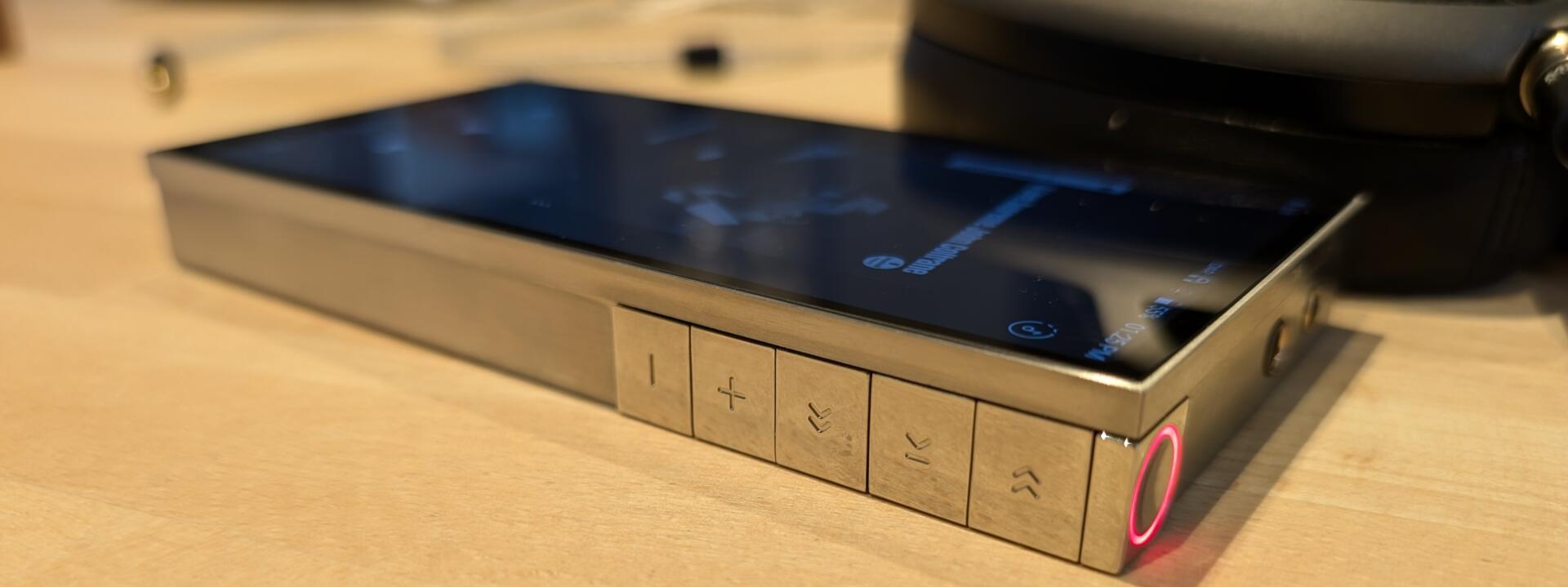
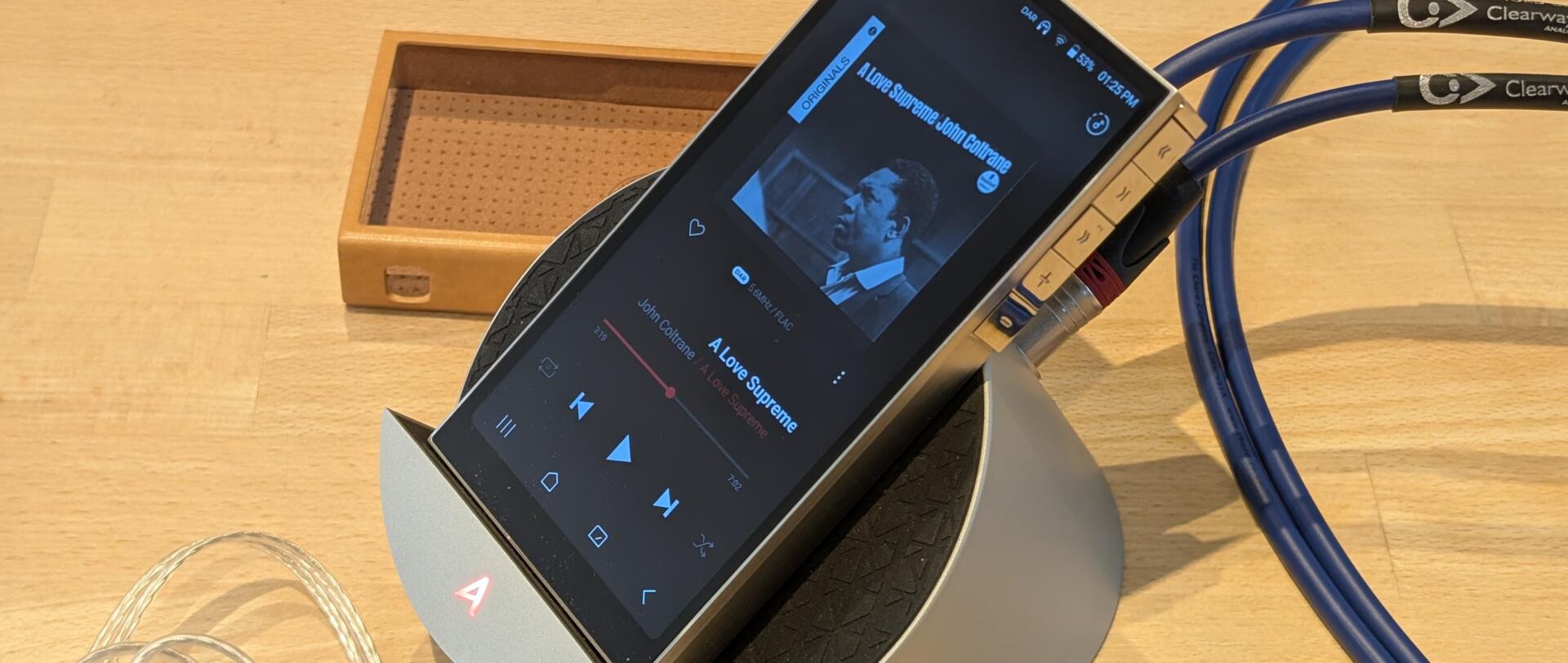
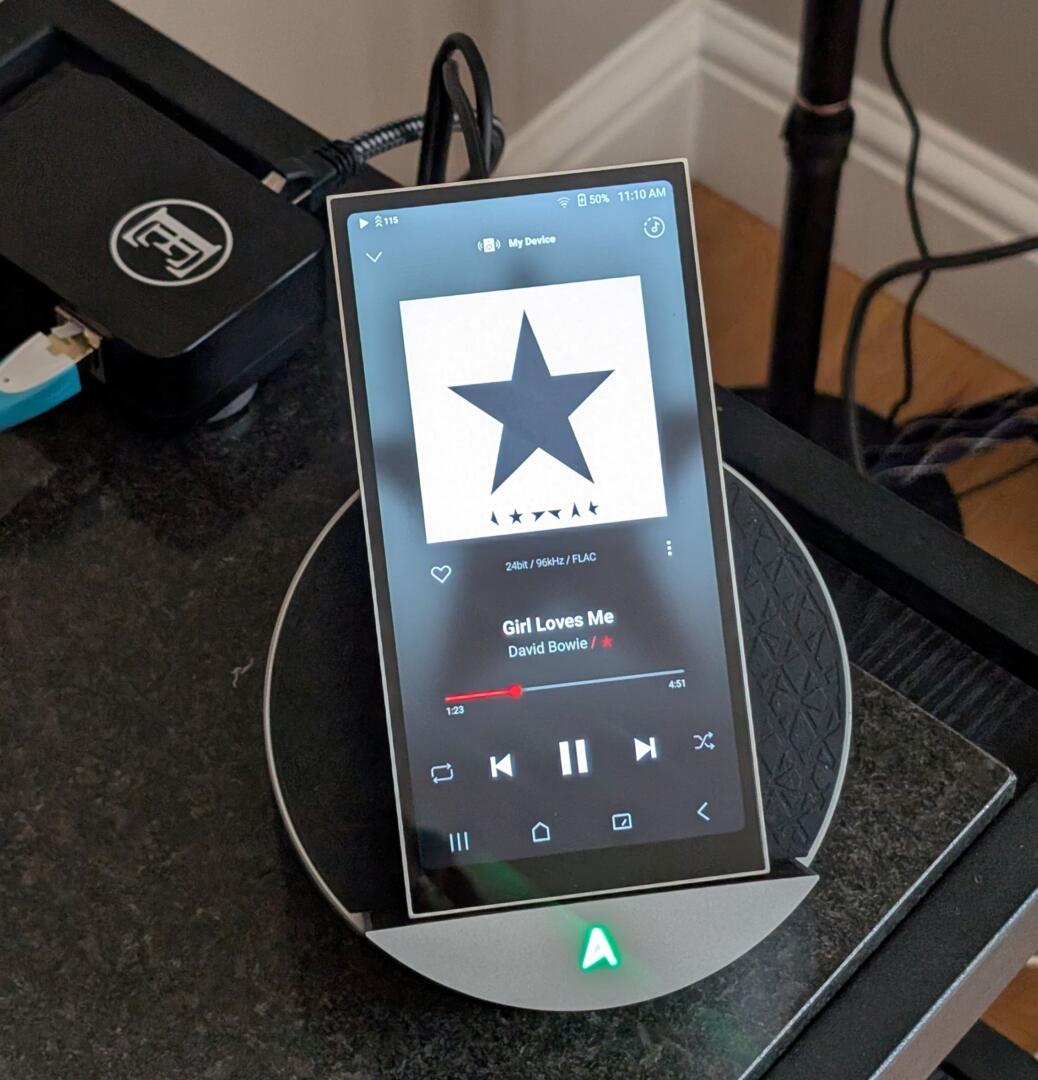
This review pertains to the portable PD10, which is paired with a custom-made cradle. Effectively, you have an audiophile-grade portable digital audio player (DAP) and a high-quality streaming device for home use in one.
The PD10 features AKM’s (Asahi Kasei Microdevices) latest DACs, in a HEXA audio circuit structure, that separates the analogue circuit from the digital. This circuit features two AK4191EQs for processing digital signals and four of AKM’s latest AK4498EX DACs. This is combined with Astell&Kern’s TERATON ALPHA technology, which they claim delivers noise removal, efficient power consumption, stable amplification, and a perfectly converted audio output interface. TERATON ALPHA is Astell&Kern’s unique technology.
The Astell&Kern PD10 boasts a range of features, including six DAC filters* and its Advanced Digital Audio Remaster (DAR) technology, which upsamples the incoming digital signal for added clarity. It also features a crossfeed option and an innovative gain-matching system that can automatically detect the load and adjust the output accordingly.
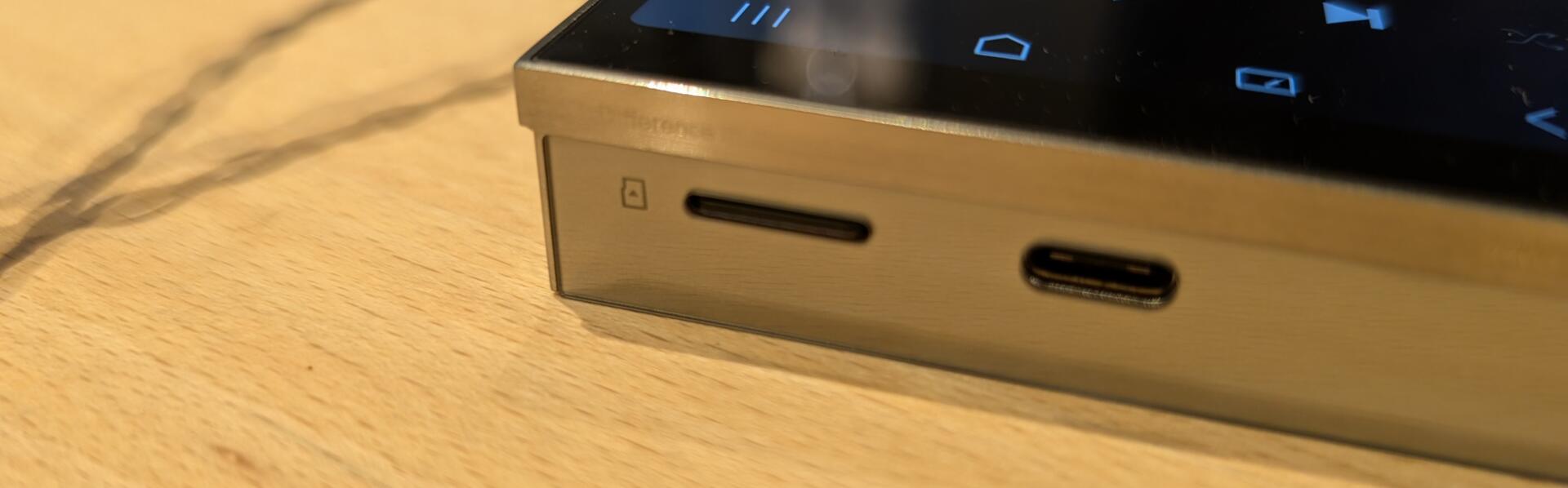
The Astell&Kern PD10 features a 5,770mAh high-capacity battery that can be charged in the cradle upon return from an outing or directly through a USB-C connector.
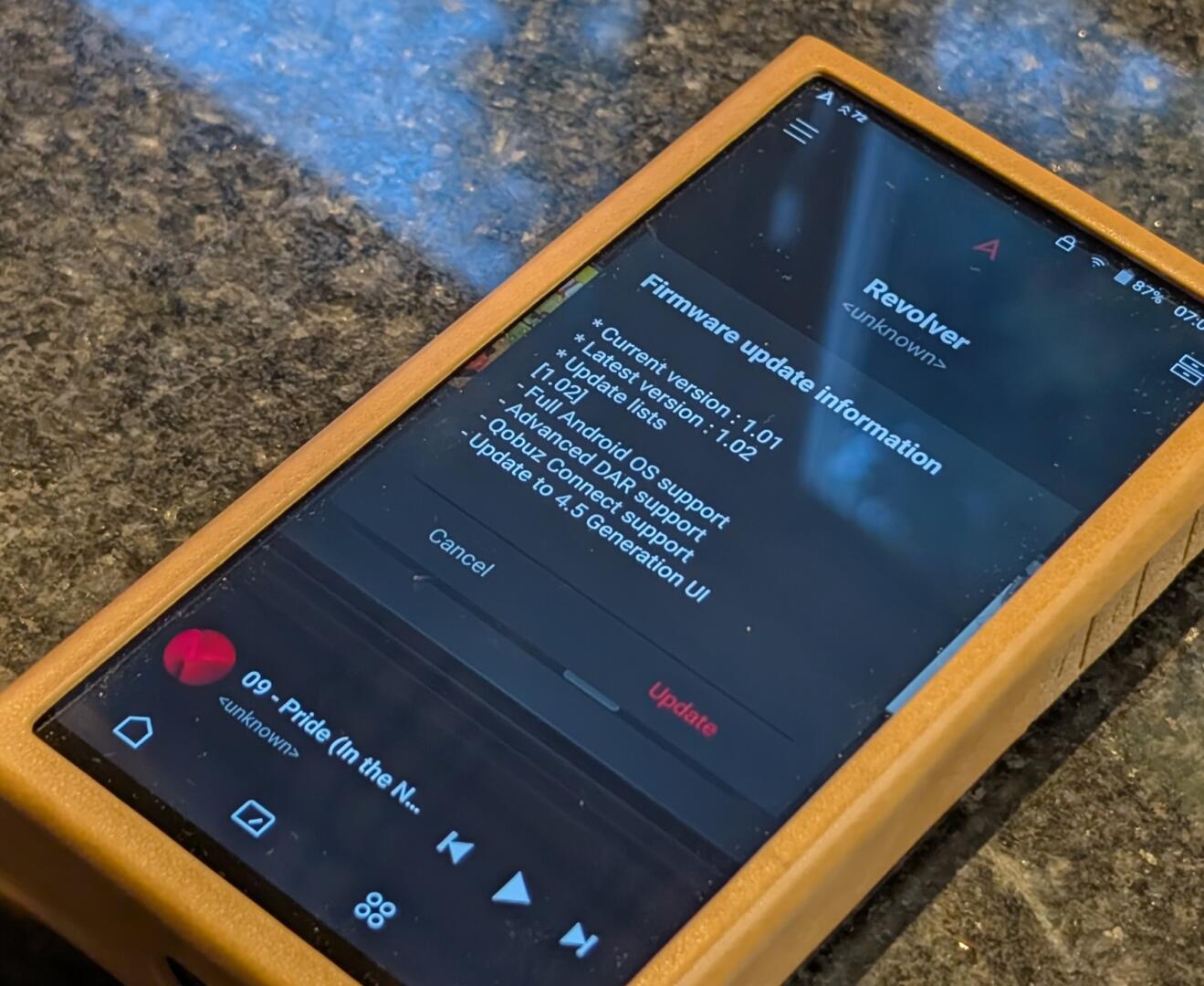
On the input side, the PD10 can do it all with AirPlay, Qobuz Connect (firmware update in the last few weeks†) and AK Connect, which can handle Tidal, and the files stored on the microSD card (which can be up to a staggering 2TB† of storage) or the internal storage (256GB). You can drop files to the device with a feature called AK Drop.
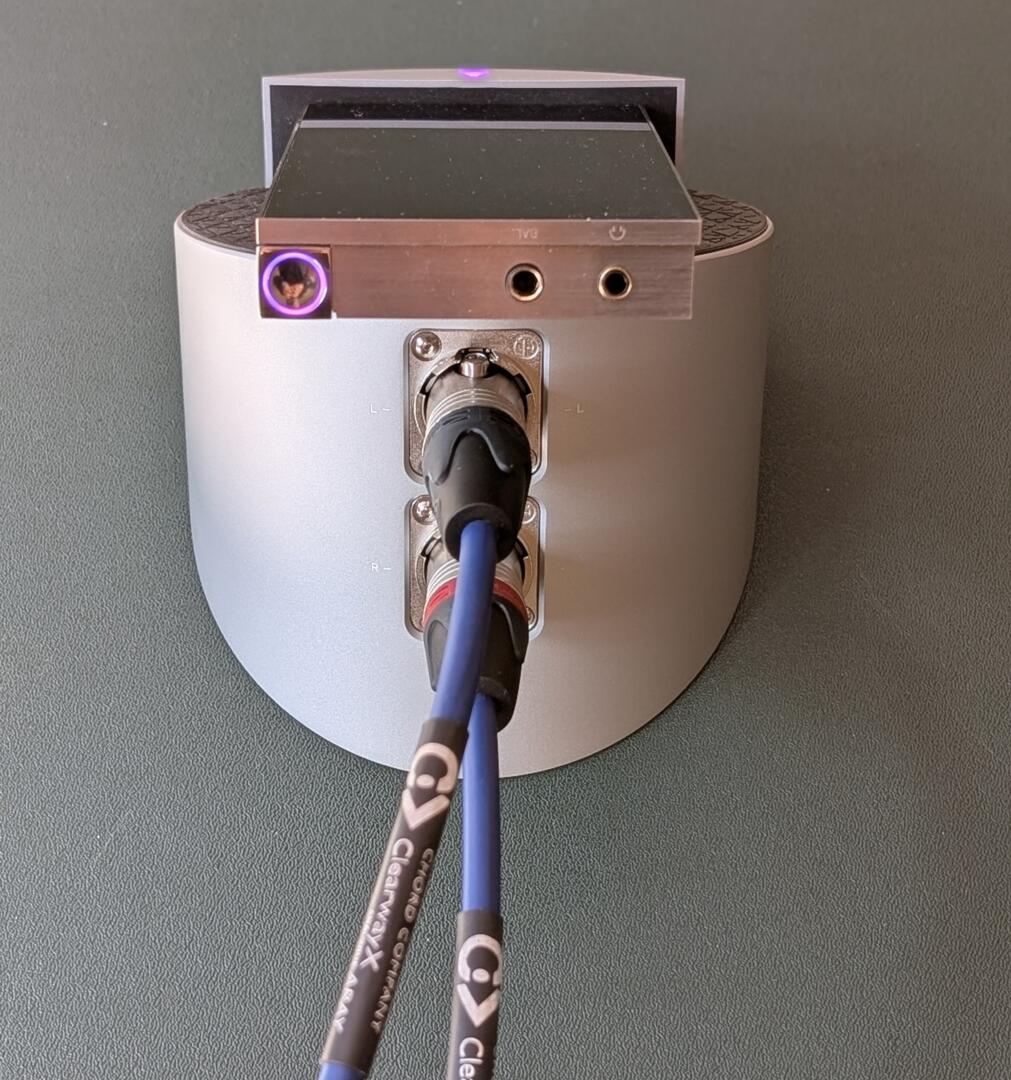
Outputs from the PD10 are a 4.4mm balanced headphone output and the standard 3.5mm jack output. In the cradle, the output is an XLR pair.
* The filters are called Natural Tone, Acoustic Tone, Traditional Tone, Harmonic Sound, Acoustic Sound (default), and Traditional Sound
† The September 2025 update included the Advanced DAR upgrade, which was introduced in the flagship SP4000 player. The firmware update also introduced Qobuz Connect, the SP4000 GUI, and an upgrade to the microSD capacity to 2TB.
Quality
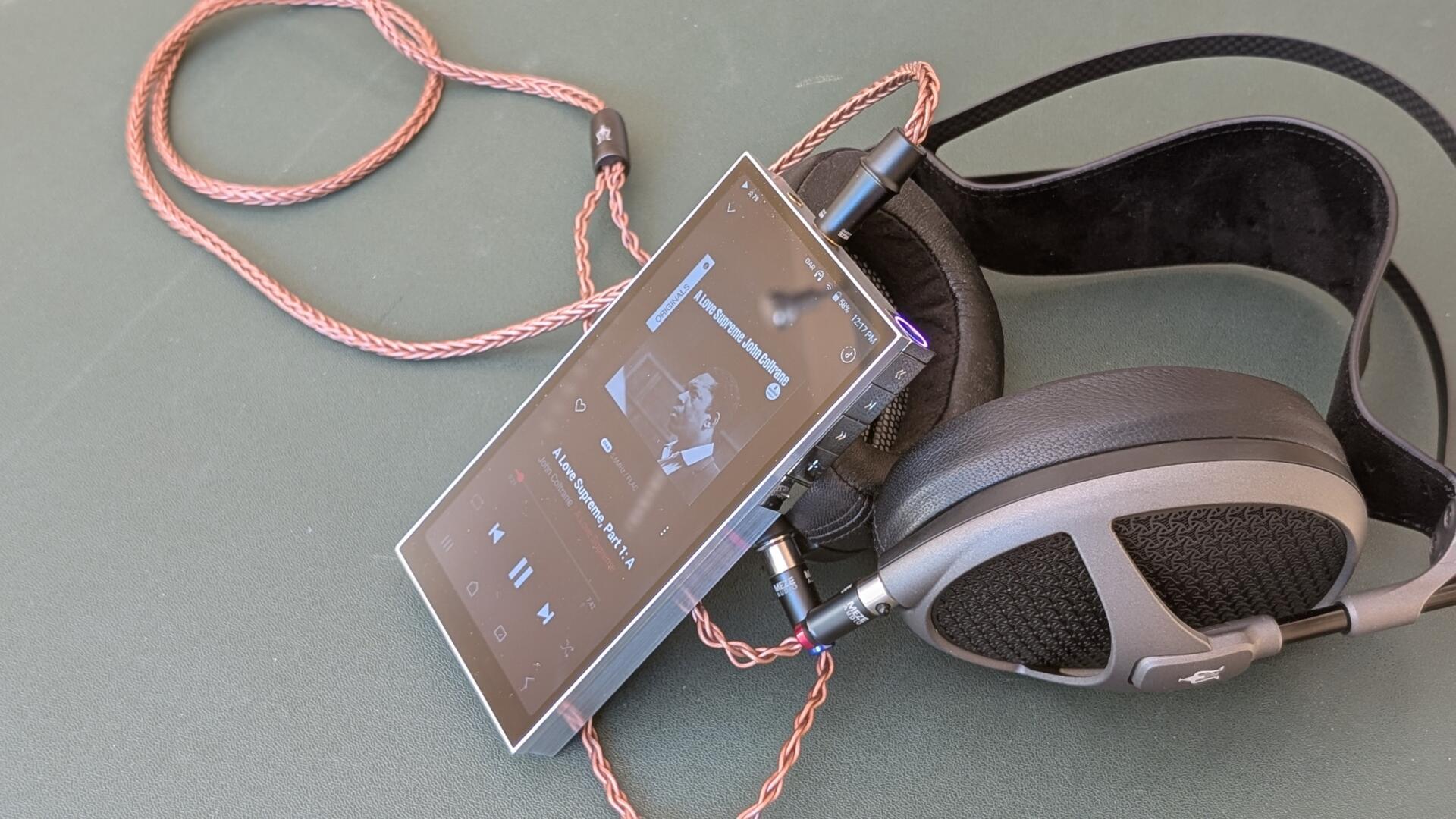
The PD10 has a broader and higher-quality 6-inch screen display. It is crisp and clear. In the box, there are several screen protectors provided, which is a nice touch.
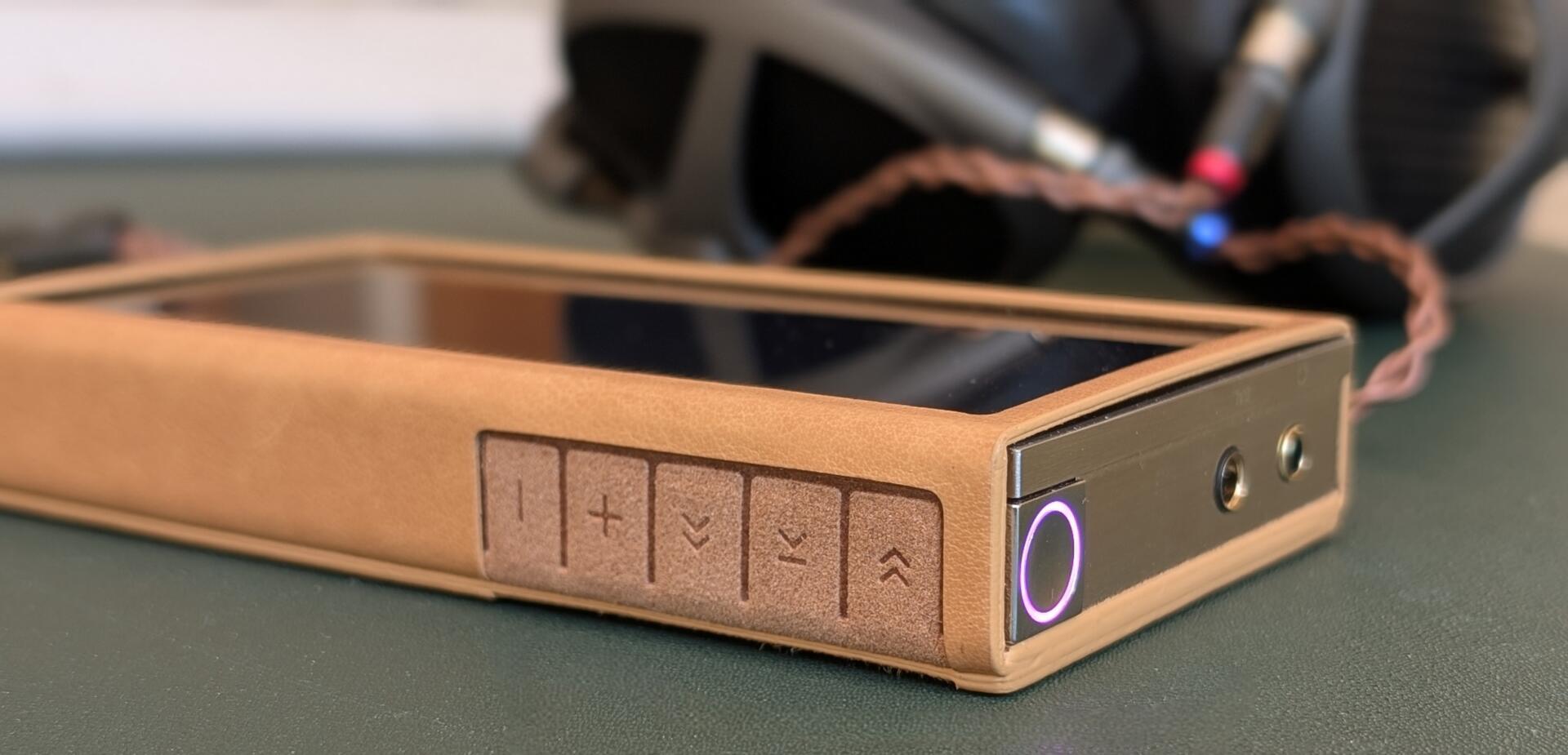
The PD10 bundle features a leather-like case made from polyurethane fabric by the Italian company Synt3. The leather-look case is apparently made from an eco-friendly material certified under RCS (Recycled Claim Standard) version 2.0, which verifies the use of recycled materials throughout the production process, from raw materials to the final product.
Specification and Price
PD10 Dimensions 75.4mm W x 149.5mm H x 17.3mm D
Weight: About 435g
Cradle Dimensions 126mm W x 97.1mm H x 166.4mm
Weight: About 565g
Full details are on the company’s site.
Price – £2499 (UK Sept 2025)


Performance
Review Equipment
I’ve had the PD10/Cradle combination in the Reference Moor-Pre preamplifier, driving both Kudos Titan 505 loudspeakers and these impressive new UNITRA 401s. Separately and more permanently, the PD10/Cradle combination has been in the lounge with my ‘Old’ Naim Classic equipment, which many of you will know doesn’t easily support Qobuz (my NAC N-272 doesn’t, anyway; the New Classic stuff does, of course). From here, I have been picking it up in the morning during the dog walk, selecting an album, and having as good a time as you’d want to.
Physically
It is very fair to say the PD10 is physically chunkier than the compact A&K 3000M, it does not really go in your back pocket (it is a solid half a kilo), but it has no undue angles like some of the flagship funky cool A&Ks, other than the corners; also, there is no watch style volume wheel, relying on just buttons. There is a useful lock button switch that is necessary. I’ve been using the PD10 on the move with a passport-style ‘man bag’, it’s useful for IEMs and the like too.
The leather-feel case, which slips over the PD10, is a nice addition. Still, you have to take it off with the cradle. I think this is a bit of an error since I’m using this daily, but I need to slip off the snug-fitting case (with a chopstick), which is not ideal.
PD10 Sound Quality
I would say the performance is quite spectacular, considering the compact nature of this product. This is premium on-the-move music, and it is the same on the sofa. The tone feels nicely neutral to me with no noticeable noise floor. With the Meze ADVAR, the sound/head stage is solid and centred at the middle of the head. To me, it may be a little more forward with the DAR option on, which gives you that fraction ‘more’ heft in the sound. I have Crossfeed, which I generally prefer with headphones.
I have a pair of 4.4mm balanced Campfire Alien Brain IEMs. They are the best IEMs I have here; they are exceptional. They have more bass, more energy than anything else I have on the move. The PD10 offers an intricate and detailed acoustic in the Alien Brain IEMs; it is a delight.
The PD10 is good enough to pick out the subtleties between the few IEMs I have, including the FiiO FA19s and the ADVARs; the Alien Brain IEMs are miles better. Meze Audio are the king of headphones at this time, but they are surely due an upgrade in the IEM stakes (anyone remember their RAI Penta?). Using a high-end pair of headphones like the Meze Audio Elite, it’s clear that the PD10 has the power to bring out the finest details. Listening to The Staves’ Jolene, for instance, the level of resolution it delivers is a testament to the device’s capabilities.
On the filters, there are six; pick one and save yourself the headache. I’m using the default filter, which has a sharper edge; it describes itself as Short Delay Sharp Roll-Off.
Albums
What is particularly pleasing about any DAP like this is that I feel it demands a whole album approach. In other words, with my smartphone, I’m frequently listening to a streamed podcast or a Qobuz or Tidal radio playlist, rather than just an album. With my whole ripped library on the microSD, I’m rediscovering my old CDs. Does anybody remember Lloyd Cole’s Rattlesnakes? Then there’s Fear of Music (Talking Heads), or Kilimanjaro (Teardrop Explodes). Incidentally, the bongo detail with I Zimbra, featuring Tina Hayward’s punchy bass, is a delight with this PD10. There’s also plenty of space onboard the PD10 (256GB) to download the latest albums.
AK Connect
AK Connect is an excellent App that is a DLNA-based control application. It allows you to control the PD10 (or another device, such as my Naim NAC N-272) with a chosen library from a smartphone, the PD10 itself, or Tidal if you log in.
With both AK Connect and Qobuz Connect (which is much easier), the PD10 becomes a high-quality streamer, allowing access to Tidal or Qobuz from the comfort of your sofa. I haven’t used AK Connect much, as Qobuz Connect is my go-to daily, but it works effectively. I’ve been reading about JPlay recently, and I imagine it could be a possible upgrade for the PD10.
BBC Sounds, etc.
Since the PD10 runs on Android, you have access to the Google Play Store. This makes the PD10 a high-quality hub for any audio service with an Android app. In the store, you can find the Qobuz App, the Tidal App, and others, in particular, BBC Sounds. For me, this means I can download Jamie Cullen’s weekly Radio 2 Jazz show before the dog walk, and I’m good. If the show finishes before I get home, I can always connect my smartphone via Bluetooth to the PD10 and enjoy this incredibly expensive device as a Bluetooth dongle; at least I can choose LDAC between them, which is a rare option.
Cradle
The cradle is just brilliant, with a rubber base; it is heavy enough to stay in place solidly, even with the female XLR output leads to your preamplifier. I have purchased some Chord Clearway 2 XLR-2 RCA cables for my Naim NAC-N 272, and all is well with the interconnection. This means that the A&K PD10 with Qobuz Connect is a game-changer for me as an old Naim Classic user. The sound quality is as good as the mobile reproduction, with the cradle seemingly neutral in its transmission of the PD10 signal to the preamplifier’s analogue input.
On the PD10, you need to select XLR out for it to know what to do. There’s a fixed output option, but the Line Out function can be overridden by the volume controls, which is not ideal; maybe I have it all wrong. I would like to utilise this feature and have the volume return to normal when the PD10 is unmounted. The XLR output disables automatically out of the cradle, however.
Musical Interlude
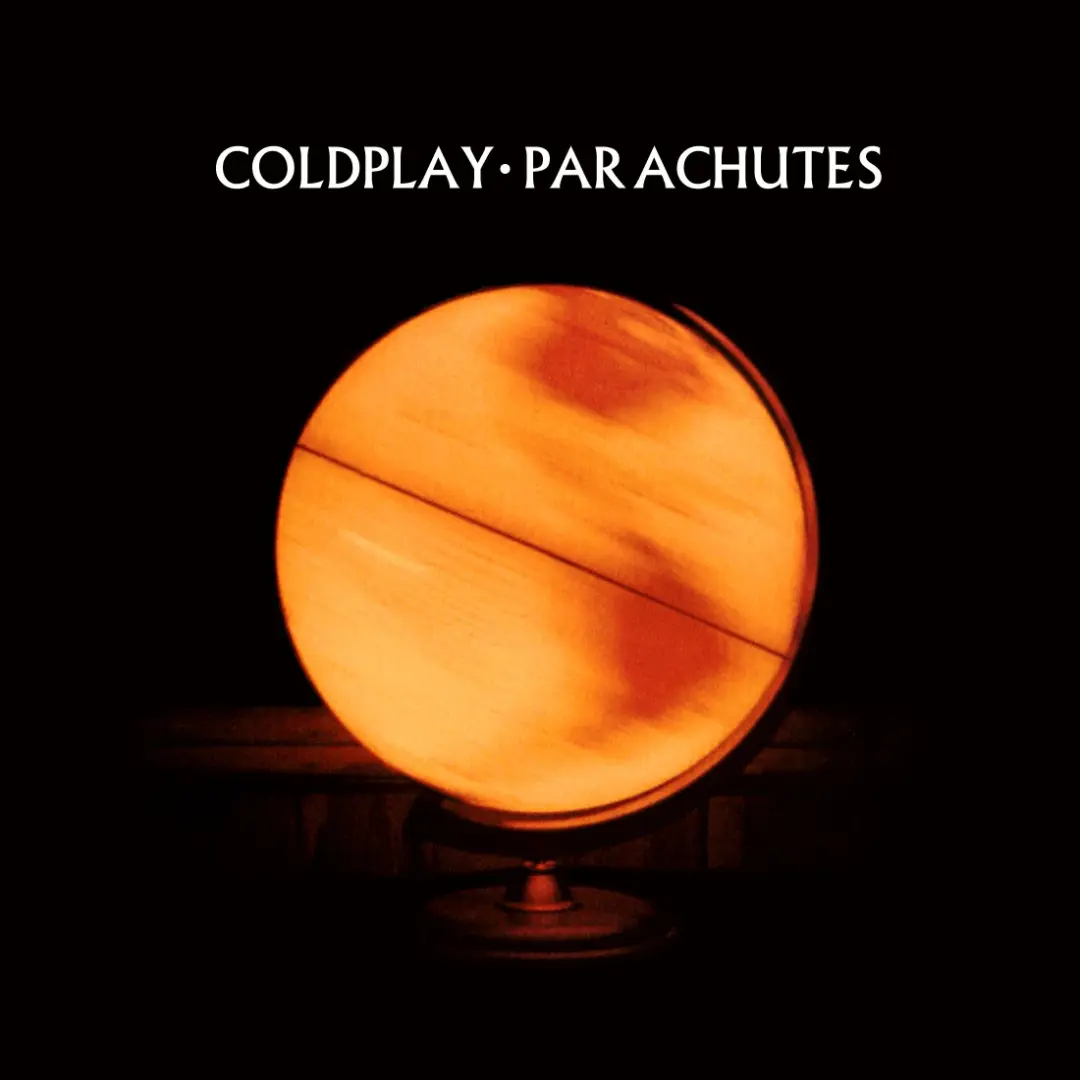
These are my top 10 Albums remembered on my walks this September, thanks to this PD10.










Thoughts
The Astell&Kern PD10 and Cradle offer me, as an owner of the Naim Classic (with green lights), the opportunity to upgrade to Qobuz Connect. Yes, at this price, I could look at an Auralic ARIES S1 streaming transport or a Bluesound Node (or an Eversolo) and pocket the difference, but the PD10 offers more. Not only does it look great, but it is also a constant talking point, and I can use it on the move comfortably (it is always charged, since it is in the cradle). The Campfire Alien Brain IEMs have been released from their homebound shackles.
At this price, thoughts will turn to a cheap transport with the Chord Hugo 2 or the iFi Valkyrie as a Qobuz solution for me, but this just looks great, is totally functional
Overall
I’d buy one of these as an owner of an old Naim Classic. I just want one of these. An excellent streaming platform, combined with Qobuz Connect, seals it as a dual-purpose winner.

Astell&Kern PD10 Highlights
Love
- Premium portable experience
- Premium streaming solution
- Old Naim Classic Qobuz Connect upgrade
- LDAC
Like
- The whole concept
- Balanced XLR Output
- Balanced 4.4mm headphone output
Wish
- The cradle worked with the leather-style case on
- Or the case was side loading like the 3000M
- The Cradle could take other models (firmware updates would be required, I guess?)
Related Posts

Astell&Kern Announce new Flagship SP4000
This is news from Astell&Kern about their new…
Astell&Kern SP3000M Copper Nickel Edition Announced
Hot on the heels of our A&ultima SP3000M review…
Astell&Kern SP3000M music player launched
Astell&Kern is pushing ahead with more high-end…
Astell&Kern introduces the AK HC3 USB DAC
News from South Korea; Astell&Kern has announced…