
Introduction
In the words of Adam Clayton, “it’s a musical journey”, and so it is that my Naim upgrade story continues.
I have written many times here that the New Naim Classic, though very good indeed, is simply unattainable for many who have sunk their money into the Old Classic journey only to realise that the paltry sums they’re getting on The Wild West of eBay wouldn’t cover the cost of a single New Classic Unit.
The Calculations Are Something Like This:
My System
Naim Audio XPS power supply to NAC, hopeful, hassle-free sale, approx (hhfsa ) £900
Naim Audio NAC-N 272 hhfsa £900
Naim Audio NAP 250 (not DR) hhfsa £900
Total Value £2700
The equivalent Naim New Classic setup is something like this
Naim Audio streaming NSC 222 £5700*
Naim Audio NPX 300 power supply £5700*
Naim Audio New Classic NAP 250 £5700*
Total Cost £17100
*Summer 2026
The shortfall of £14400 rests my case, m’lud!







The Journey so Far
So, an aspirational Naim fanboy like me is left just wondering and dreaming. I’ve implemented a bunch of worthy upgrades, including the Chord Company Burndy, SignatureX, and other upgrades to my system, and I have achieved tangible gains. My recent NAP 250 service was much needed but didn’t deliver a significant gain. I’ve implemented the following recently:
- Serviced the NAP 250.2; no DR upgrades are left at Naim Audio
- Node X, which has now given way to a Uniti Star (pre-out)
- Chord Company SignatureX upgrade between NAC and NAP
- Chord Company Burndy Cable between NAC and XPS
- Chord Company GroundARAY to mop up some high-frequency noise reduction
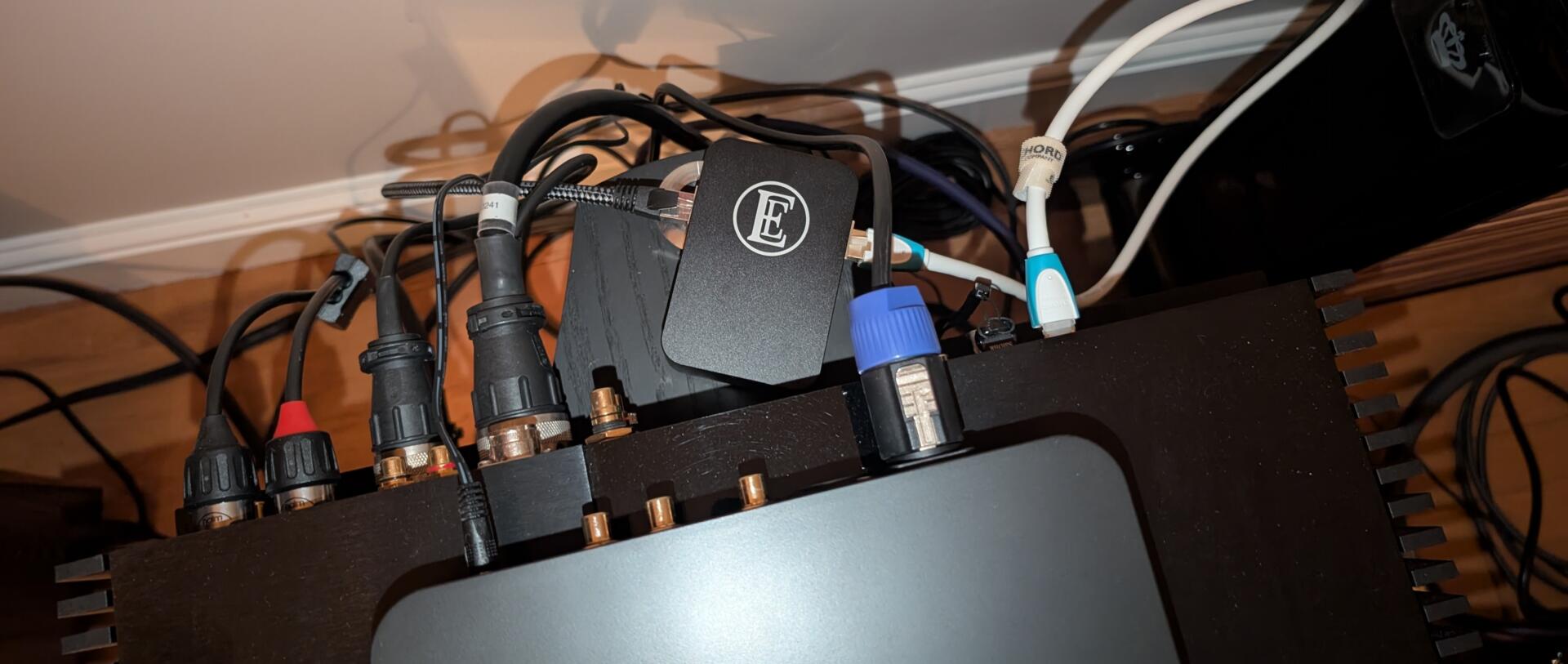
- English Electric (Chord Company) EE1 Plus Ethernet filter designed to eliminate network noise often generated by other household devices
I also swear by:
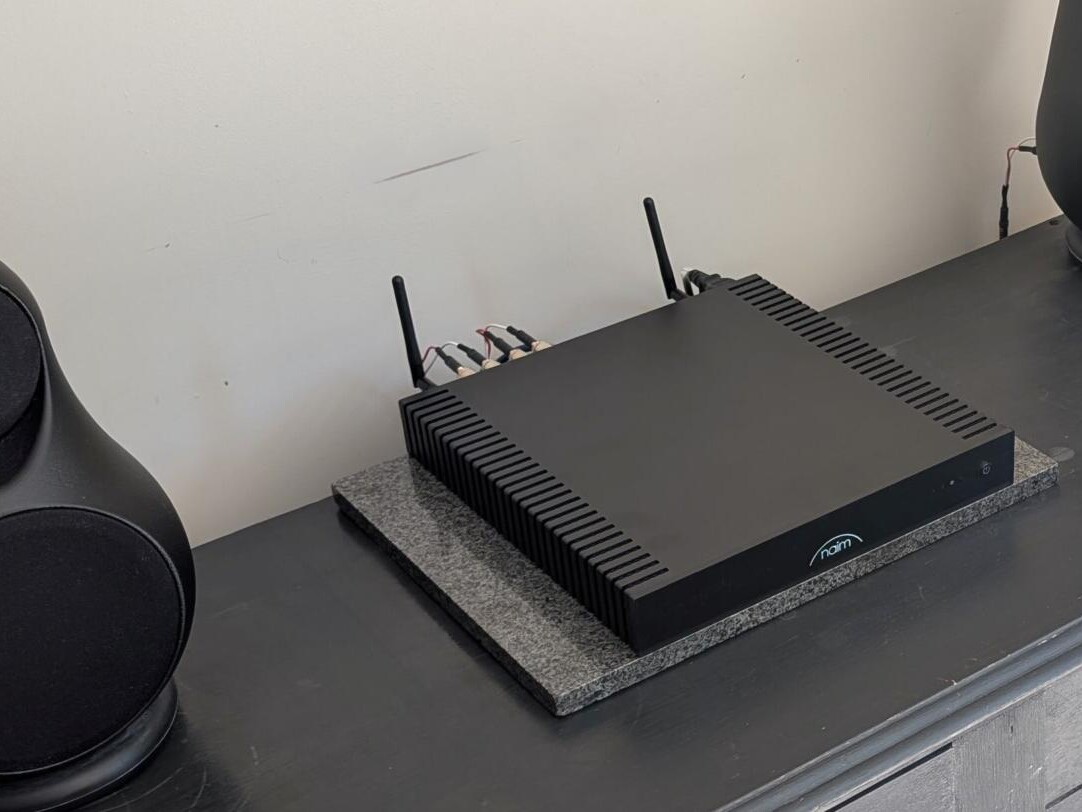
- Granite blocks under each of my units
- The Atlas EOS power distribution block
- Atlas’ shielded Ethernet cable
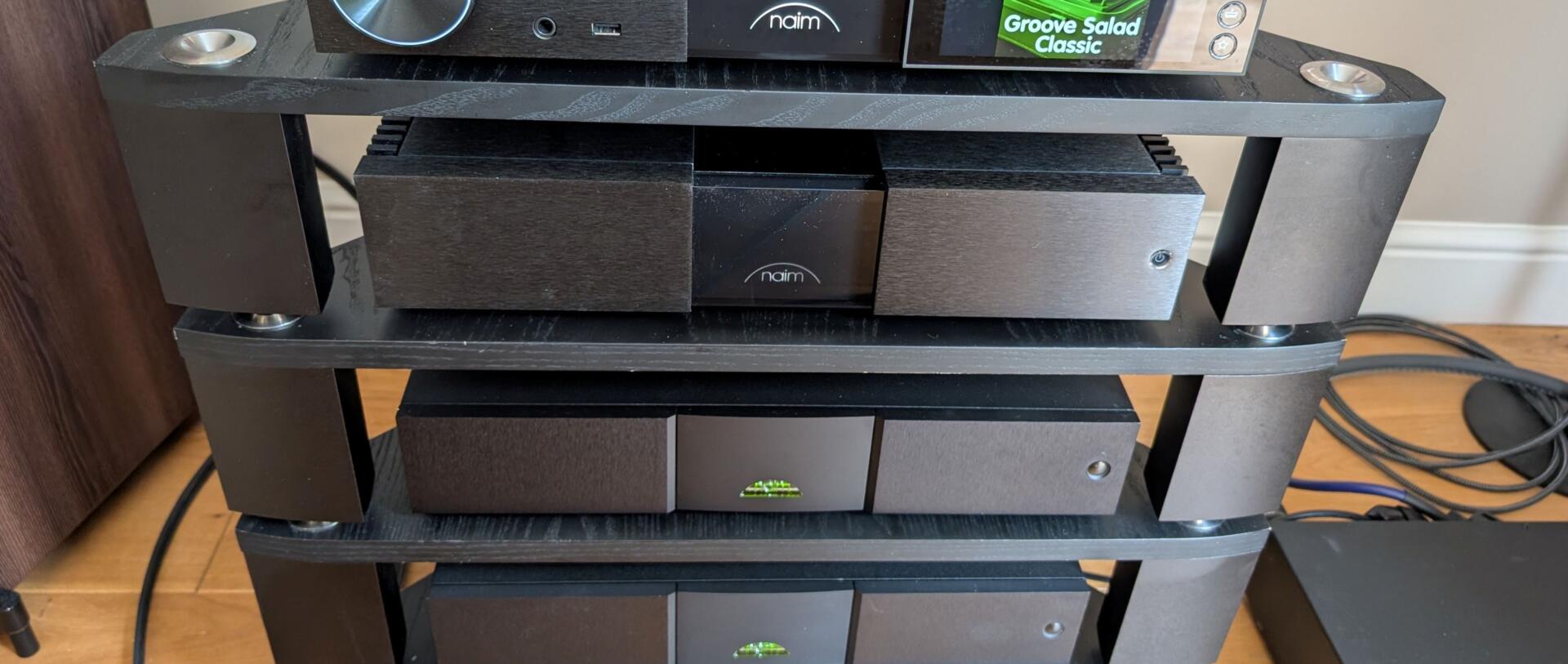
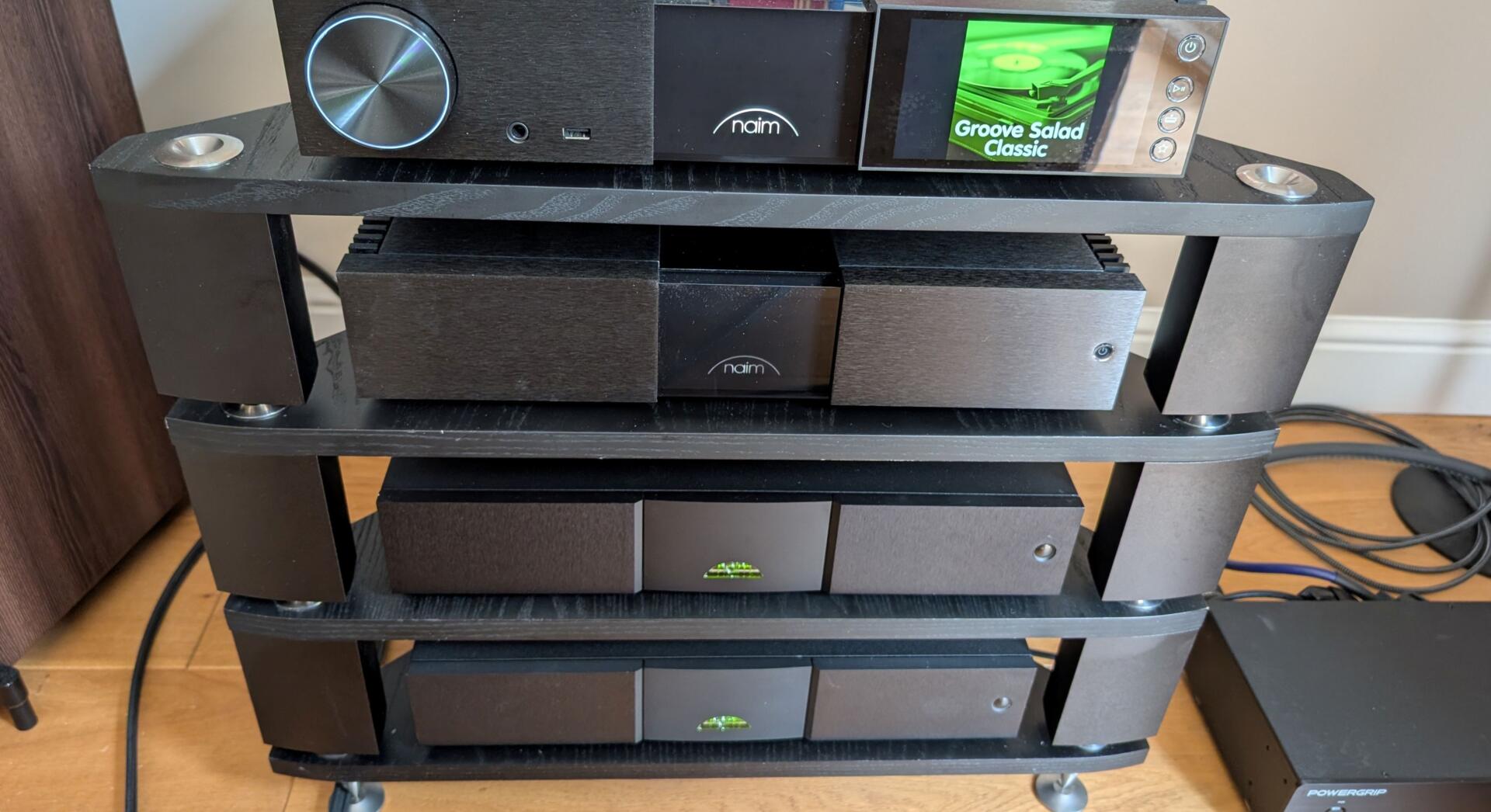
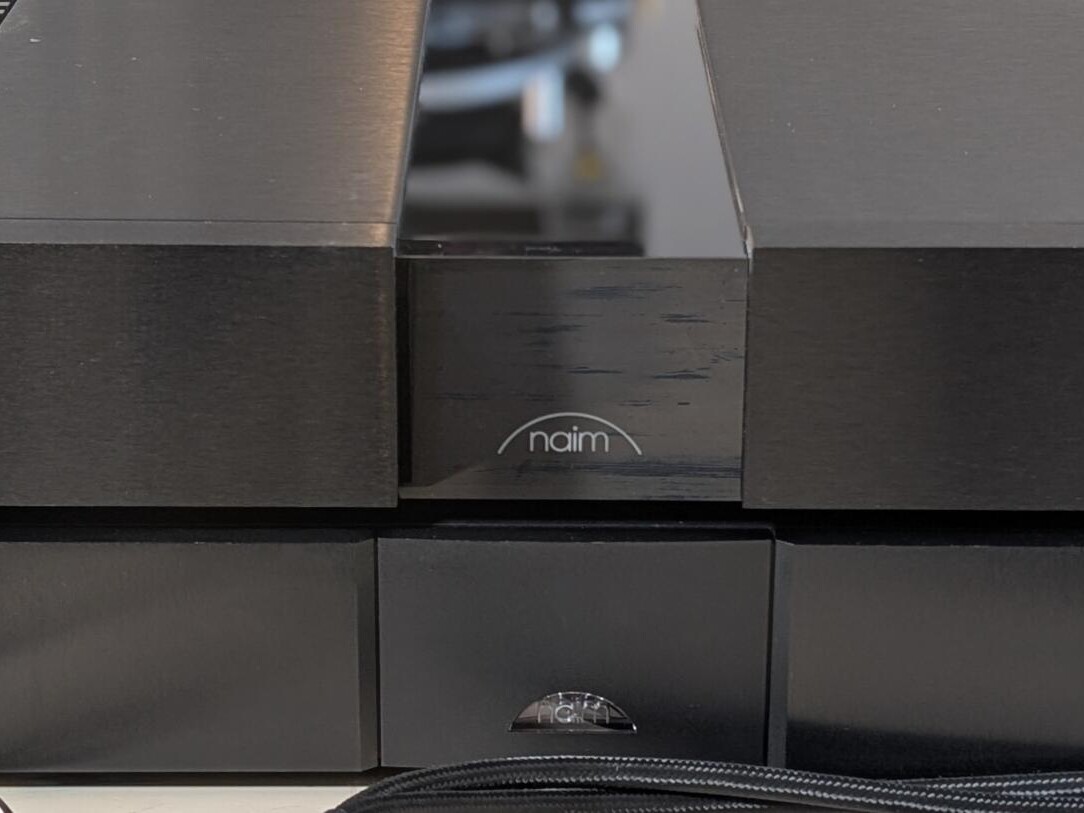
I have also purchased, from eBay, a rather nice second-hand black Naim Fraim Lite, which makes the whole setup look rather menacing in my view, and I like it, though the sonic uplift has been rather disappointing again. I wonder if I’ll ever learn.
For reference, the current system is as follows:
- Naim Audio XPS power supply to NAC
- Naim Audio NAC-N 272
- Naim Audio NAP 250 (not DR)
- Atlas Eos 4.0em Modular Power Distribution Block with Atlas Eos 4.0em power cables
- Tellurium Q Ultra Black II loudspeaker cables
- Acoustic Energy 320² loudspeakers; I have removed a REL T/5i Subwoofer I used to use with the KEF R700s
The more significant uplift in the last few days has been introducing a set of Node Audio SS-1s under my Acoustic Energy 320² floorstanding loudspeakers (on a substantial wooden floor). You need to hear it to believe it. That review is here, but as an upgrade, the SS-1s have been significantly thought-provoking.
Next stages at Bristol 2026, Inductance and Jason Gould
With all the above in mind, I was introduced at Bristol this year to Brand Ambassador and YouTube sensation Jason Gould, who is often dispatched to spread the Naim word to worthy customers.
Jason suggested at the outset that the NAP 250 should perform better with inductance-matched loudspeaker cable, as the inductance coils fitted to many, if not most, amplifiers are absent from Naim NAP amplifiers. The amplifier, therefore, benefits from having that inductance within the cable. To which, Naim recommends a minimum of 3.5m of their NAC A5 loudspeaker cable if they require 3.5uH of inductance load (the NACA5 is 1uH per metre, hence 3.5m is needed).
My Understanding of Inductance
Inductance story – An inductance coil (or inductor/choke) is added to an amplifier to stabilise electrical signals, filter unwanted noise, and protect components, particularly at the output stage or within the power supply. It acts as a passive component that lets low-frequency audio signals pass while blocking high-frequency radio-frequency (RF) noise and preventing instability. Naim chooses its speaker cable to manage this inductance, and generally recommends two separated 4mm2 copper conductors.
Adding in the NAC A5
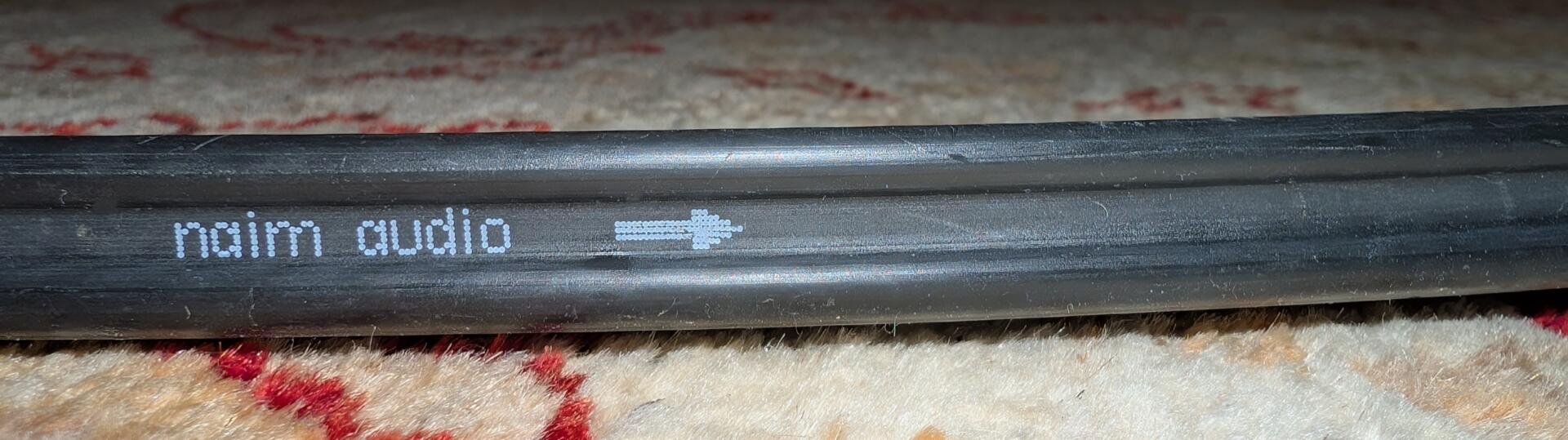
The NAC A5 cable did seem to lift the presentation; there was no more resolution than before, of note, but the amplifier did seem to have a little more grip in delivery. Jason suggested that the cable’s inductance relaxes the amplifier; that certainly seemed to translate to a fraction more grip and a softer delivery, maybe, than the Tellurium Q Ultra Black II cable it replaced.
The NAC A5 is a particularly rigid cable by design, keeping the two channels apart. Indeed, at the connection ends, the cable termination is stiffer, with a mechanical process apparently grabbing the solder connection extremely tightly.
Introducing the NSC 222
Replacing my Naim Uniti Star (the one with the CD Player) with the New Classic NSC 222 offered an instant improvement. I might have liked more, but it was not the step change I expected. However, the streaming module itself feels more responsive, and the soundstage is on a higher plane, so this is progress.
XPS with Legacy cable to NSC 222
Since I have the XPS, I can use it to power the NSC with an adapted legacy cable that powers both the analogue and digital platforms in the 222 together. The key to this is that I can get the external power supply without buying an NPX300.
The improvement is tangible, and I like this a lot. With a clearly reduced noise floor, the dynamic presentation is improved. My already excellent bass response from the 320²s is that bit smoother, and this feels like a step change.
Introducing the New Classic NPX 300 Power Supply to NSC 222
Introducing the New Classic NPX 300 is a simple affair. In this case, the analogue and digital platforms are separately supplied with two cables, unlike the legacy delivery with one. This, one would expect, will almost certainly add to the presentation, and it does; the upscaled performance is there to hear, and of course it looks better.
Swapping the XPS back in reveals there’s not a great deal in it in my room, and it makes me think there are savings to be made in this upgrade journey, not something Naim Audio will want to hear!
Introducing the REL Planar PL-1
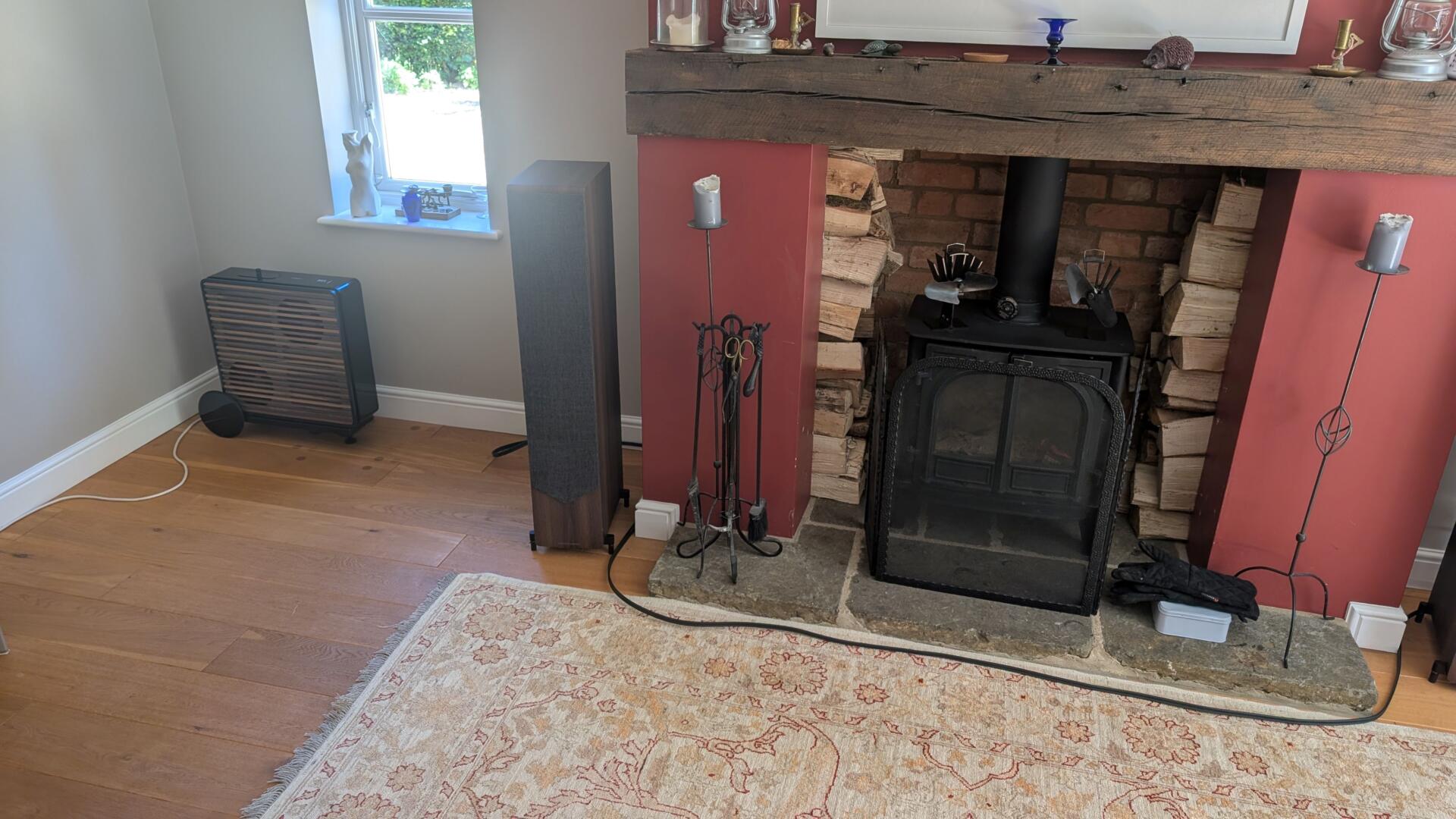
I have recently received the above REL Planar PL-1. In fact, I have two in a stereo pair: one hardwired to the loudspeaker (because of Naim’s quirks with REL subwoofers), and the other connected via the REL AirShip Direct Wireless system. Of all of the upgrades I have made, this one is possibly the most effective.
Having paired them up and dialled them in, in the usual way (Cosmo … Old Friend, now on Qobuz!), I ended up, given my room, with them both on a pretty low output level. The subwoofers simply complement the 320² loudspeakers perfectly, adding weight and scale to the room, without affecting timing and detail in the existing loudspeakers. If you want to understand bass, have a listen to Beyoncé’s bass-heavy, over-produced Partition (Qobuz 16-bit, 44.1kHz) and see if you can hear the bass in your room.
Thoughts
First, it has to be said that Naim is still supporting the Service Department, for which I’m grateful, and they deserve huge credit for that. They’ve repaired my 272 (twice), the CD in the Star and my ailing Uniti Serve, as well as the NAP 250, and they will willingly service other units. I have the excellent Stratford Music Matters, who can facilitate my Naim needs just half an hour away.
The NSC 222 is a worthy upgrade; using my legacy XPS elevates this incremental change, and for the cost of just the legacy cable, as opposed to buying a new NPX 300, this works for me.
In order, my Old Classic system (272, 250) has been significantly improved by the implementation of the XPS, the Node Audio SS-1s, and the Chord Company Burndy and Signature upgrades. Other upgrades have reduced my noise floor to some extent.
How do I reflect on the process? To my mind, I’d be minded to keep the XPS and consider the NSC 222, but I feel the New Classic NAP could be the game changer in my system, as I think amplification is key, whilst recognising the source is important. I am also a room-first convert, but in the lounge environment within which this system is, I have limited scope for improvement.
Related Posts

StereoNET London Hi-Fi EXPO 2026 – Highlights

The London Hi-Fi EXPO was busy, cosmopolitan, and…

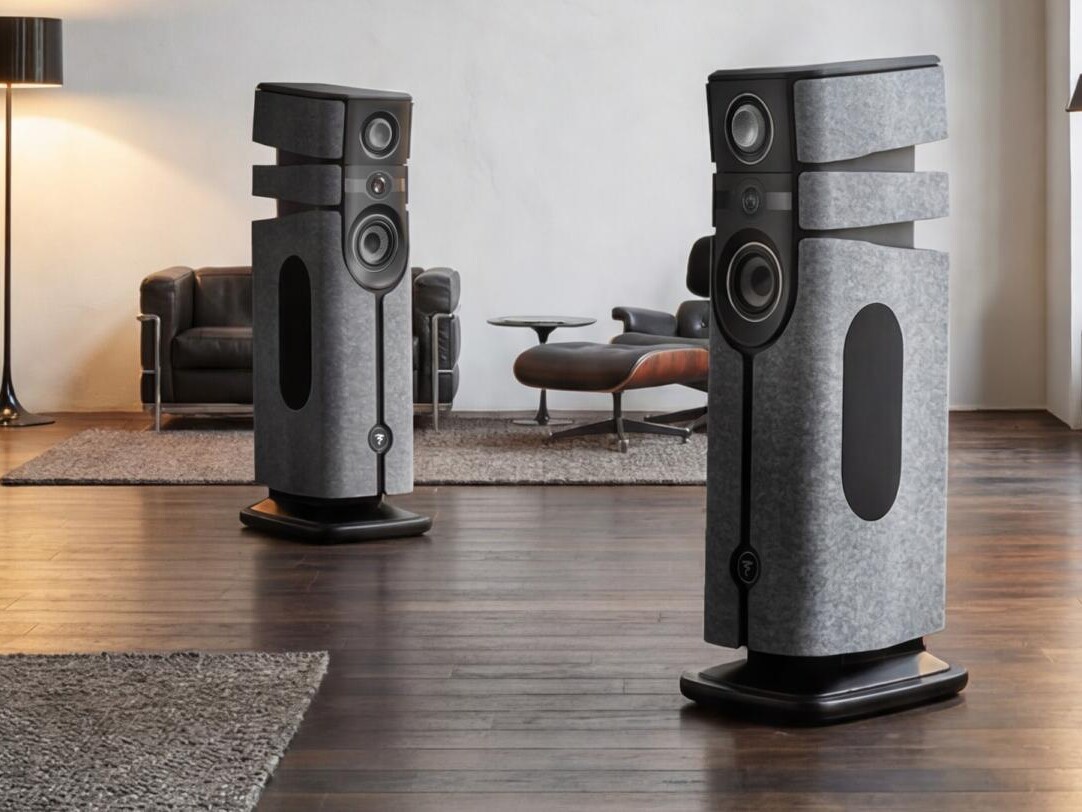
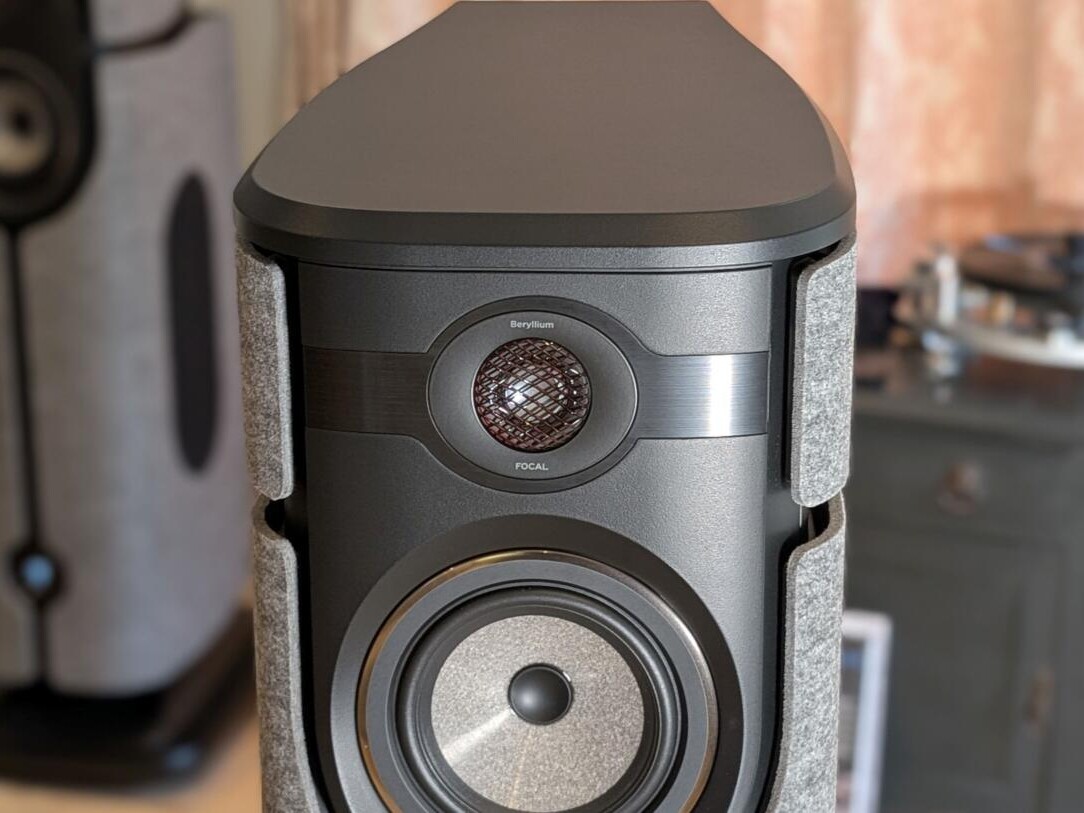
HF&MS Product of the Year – Focal DIVA UTOPIA
HF&MS Product of the Year - Focal DIVA UTOPIA


Best of 2024 Concludes with Outstanding Product of the Year
The HF&MS Best of 2024 Awards Season concluded…
Best of 2024 – Chord Company BurndyX Cable Upgrade
The BurndyX features multi-stranded silver-plated…


