Introduction
Rotel go back to the 1960’s, and I can remember seeing their products in Tandy as a teenager, piquing my interest in hi-fi. When I started in hi-fi retail in the 80’s, Rotel was a value-for-money brand aimed at the mass consumer market. In the mid-eighties, they suddenly brought out a fabulous range of high-quality separates that proved immensely popular (the RA820BX amplifier and RCD-965 CD player, to name two). I owned a couple of their amplifiers and sold loads of them for over 20 years. During that time, Rotel decided to enter the higher end by introducing the Michi range. It was a range I drooled over because it had those seductive red-lacquered wooden end cheeks, which the Japanese are so renowned for in their artistry of design. Having got married and a mortgage to pay for, luxury hi-fi was a no-no!!
Design
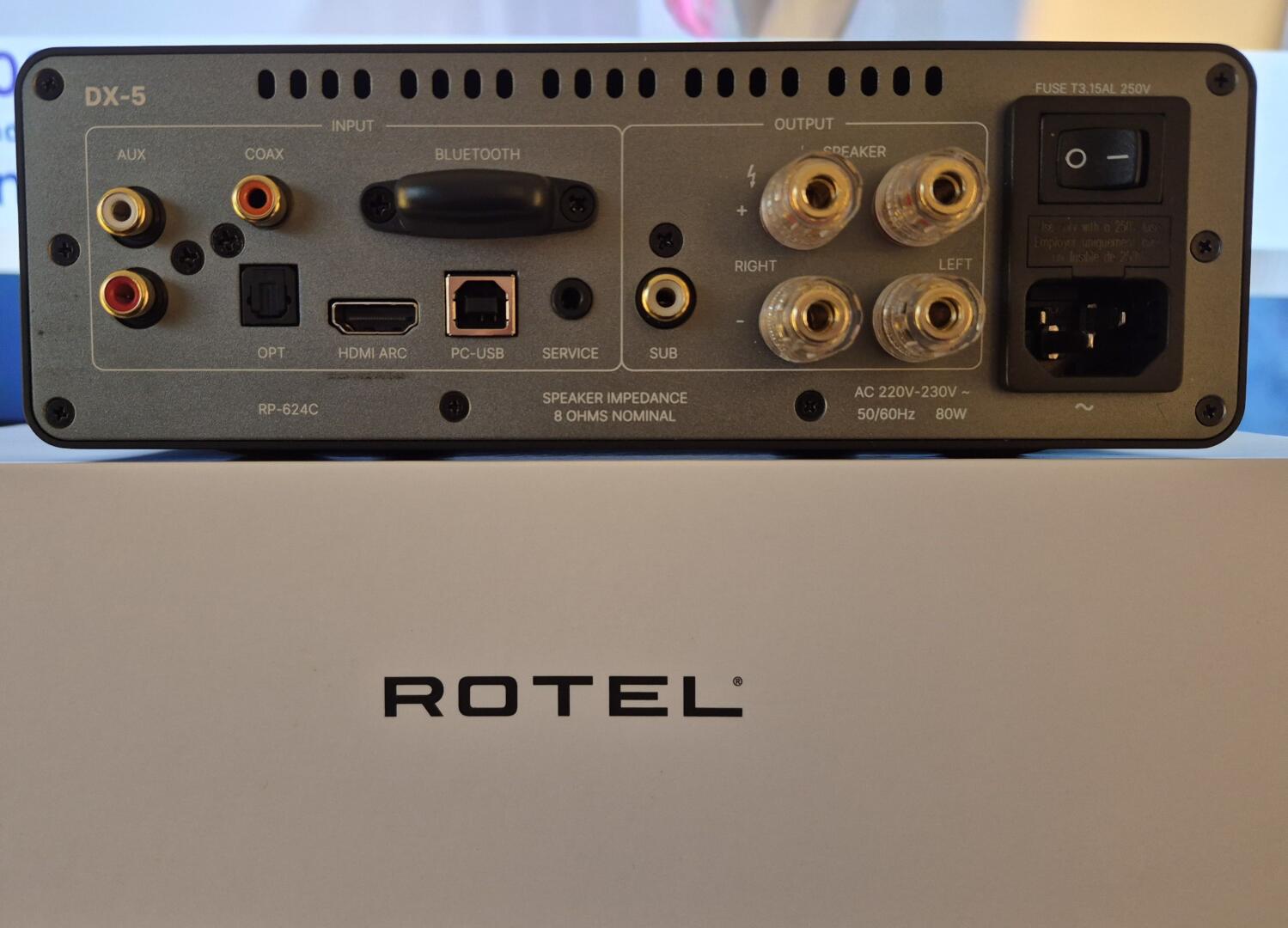
Powered by Rotel’s custom toroidal transformer, the DX-5 delivers 33 Watts per channel into 4 ohms (25W into 8 ohms), offering rich, detailed audio with plenty of punch. It’s ideal for personal listening or small room setups, combining classic Rotel amplification with modern convenience. The DX-5 supports a wide range of inputs, including PC-USB (up to 32-bit/384kHz PCM and DSD), Coaxial and Optical (up to 24-bit/192kHz), aptX™ HD and AAC Bluetooth, HDMI ARC with CEC, and legacy analogue RCA. It also includes a subwoofer output for added flexibility, which I did use with my Totem Storm active sub to good effect.
Rotel DX-5

As times have changed in audio, Rotel has adapted to the modern world, and the DX-5 reviewed here is one example. Rotel describe the DX-Series as a new era of compact, high-performance audio components designed for personal listening. Combining sleek aesthetics, versatile connectivity, and premium sound quality—all within an ultra-size-efficient chassis.
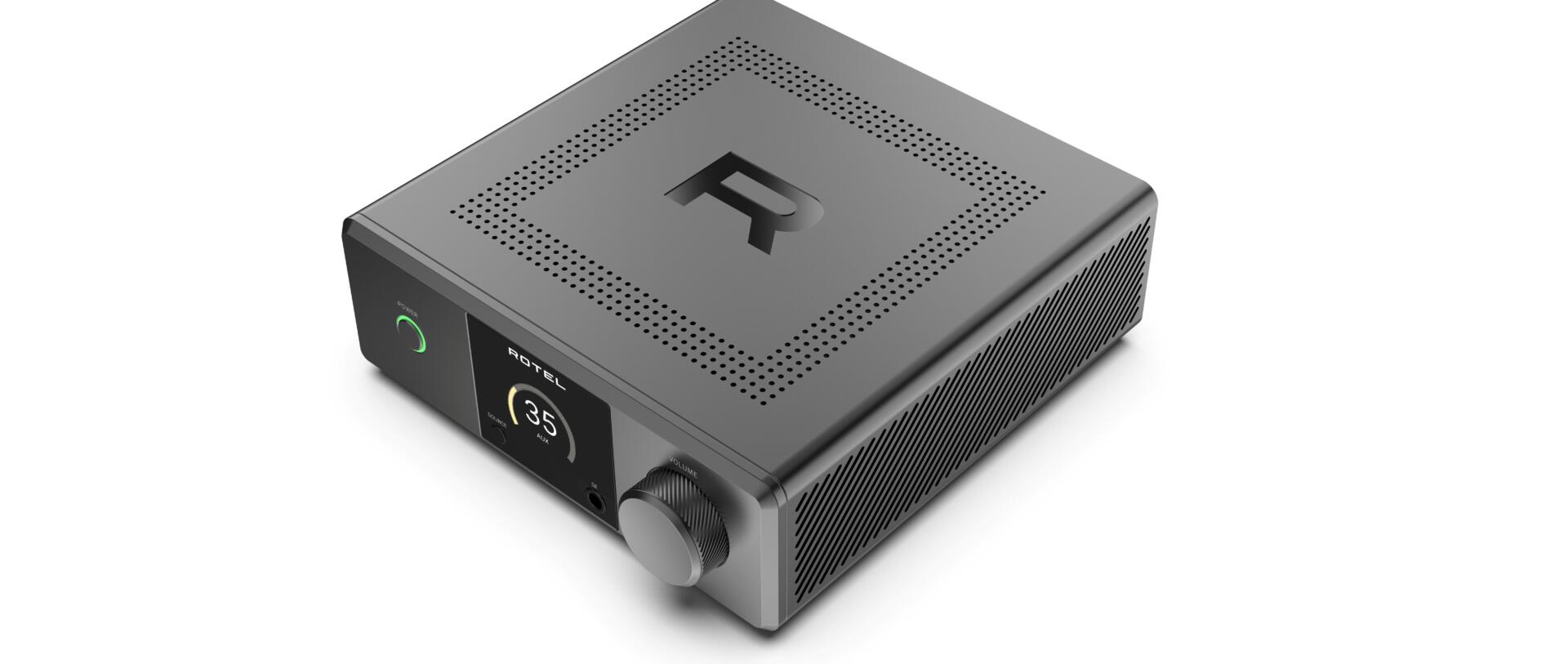
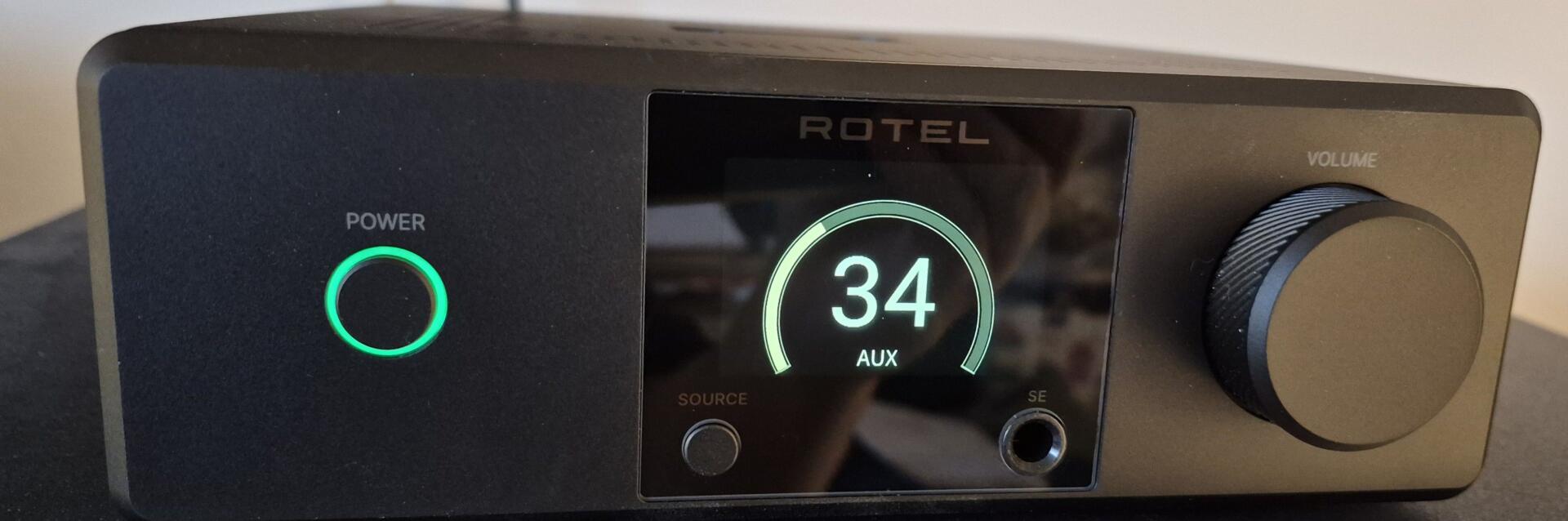
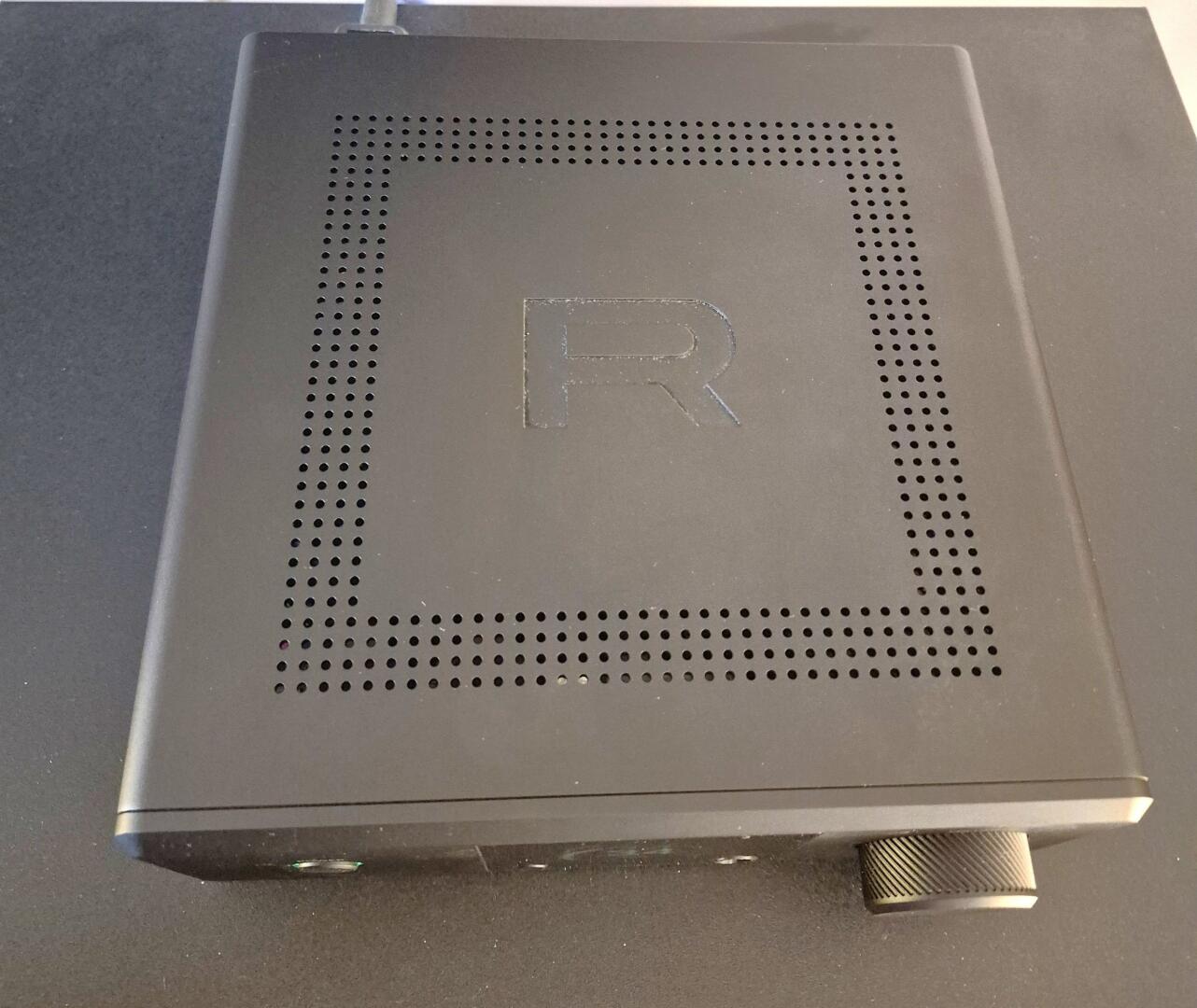
Housed in Rotel’s ultra-size-efficient chassis, the casework is beautifully machined and proudly sports a large R on the top. The DX-Series is ideal for desktop or small-space environments. Their minimalist design has a full-colour display and aluminium remote, offering intuitive control and a refined user experience. Finish choices are black or silver (I was sent the black).
The Rotel DX-5 delivers 33W of Class AB power. Rotel eschewed the class D route, now so popular, especially to boost power ratings and save space. With Bluetooth, USB, HDMI ARC, and headphone support, it is perfect for music lovers seeking high-quality sound and versatile connectivity. At only 33W, you might think it is not very powerful, but being aimed at desktop or home AV use, unless the room is large, sound levels should be fine with compatible speakers. As a lifestyle product, the DX-5 fits easily on a shelf or unit, and I used it on my hi-fi rack in my living room, hooked up to my CD player, turntable, streamer and TV via the HDMI ARC connection.
I had not used HDMI ARC before, so when I first connected with a quality HDMI cable, I was perturbed to find no output. I read the instruction manual and played around with the settings on my smart tv but had no joy. In the end, I contacted Henley for technical support, and they quickly resolved the issue by telling me to output the TV sound via PCM. Voila!! Sorted. Whenever I put the TV on the DX-5, if set to ARC, it would automatically manage the audio through my Totem’s, and the TV sound would be muted. Watching all types of tv programmes, it is surprising how much lower-end detail and bass is missing through your TV speakers. Dialogue was clearer, giving an enjoyable boost in entertainment.
At its core, the DX-5 features a high-performance ESS ES9039Q2M DAC that delivers precise, immersive sound. Whether you’re using balanced or single-ended headphones or connecting to powered speakers, the DX-5 offers a refined listening experience with minimal setup.
Specification and Price
Rotel DX-5 Specification
ANALOG SECTION
Power Output (FTC) 25 W / ch
Maximum Power Output (Non FTC) 33 W / ch, (1 kHz, 4 Ω)
Continuous Power Output (Non FTC) 25 W / ch (1 kHz, 8 Ω)
Total Harmonic Distortion < 0.03%
Intermodulation Distortion < 0.03% (60 Hz : 7k Hz, 4:1)
Frequency Response 10 Hz – 100k Hz (0 ± 0.19 dB)
Damping Factor 140 (20 Hz – 20k Hz, 8 Ω)
Input Sensitivity / Impedance 680 mV / 100k Ω
Input Overload 4.2 V
Signal to Noise Ratio > 100 dB (IHF “A” weighted)
DIGITAL SECTION
DAC ESS Sabre ES9039Q2M
Frequency Response 10 Hz – 80 kHz (0 ± 2 dB, Max)
Input Sensitivity / Impedance -10.3 dBFS / 75 Ω
Signal to Noise Ratio > 100 dB (IHF “A” weighted)
Digital Inputs SPDIF LPCM (up to 24-bit / 192 kHz)
PC-USB USB Audio Class 2.0 (up to 32-bit / 384 kHz)*
*Driver installation required
Support DSD (up to 4X, 11.2M Hz) and DoP (up to 2X, 5.6M Hz)
Roon Tested
HDMI Support ARC function
OTHER
Dimensions (W × H × D) 215 x 76 x 251mm
Front Panel Height 70 mm
Net Weight 4.1 kg
List of Dealers here;
Full details are on the company’s site.
Current Retail Price £1399 in black or silver







Performance
I first tried my Musical Fidelity CD player with favourite CD’s from Haevn, Acoustic Alchemy and the Doobie Brothers through the RCA auxiliary input. I was greeted by a rich and detailed sound. “Takin’ it to the Streets “by the Doobie Brothers was released in 1976 and produced by Ted Templeman, who had a long association with them. A fifty-year-old album, it stood up well, and the DX-5 showed how well it was produced and crafted. I have several Doobie Brothers albums on vinyl and CD, and they all still deliver real enjoyment. The sound field spread out in front of me and was well layered, picking out all the musicians with congas and percussion clearly defined. The harmonies are a strong point for the Doobie Brothers, especially when Michael McDonald leads vocally.
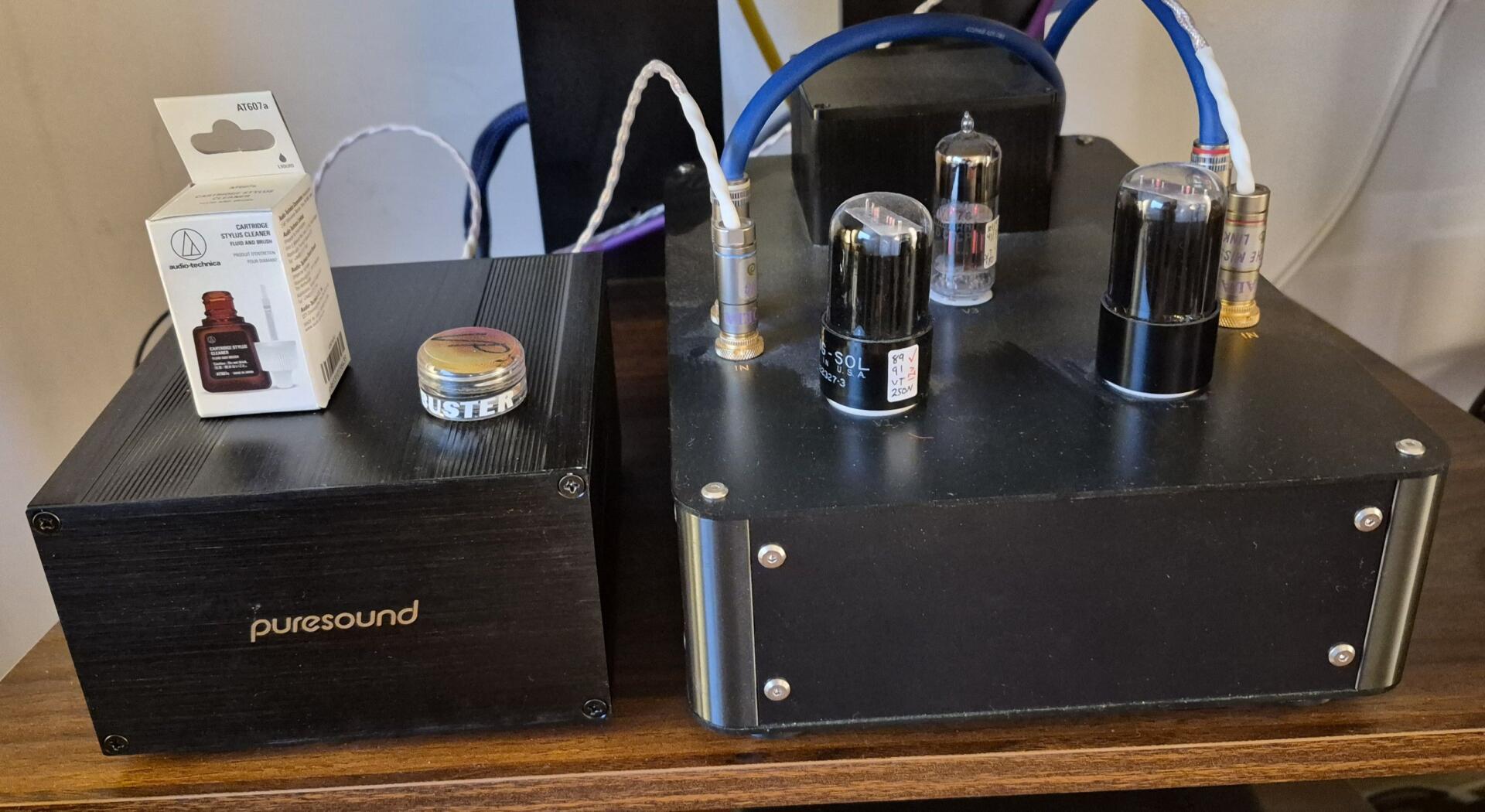
The DX-5 doesn’t have a dedicated turntable input, but that wasn’t an issue as I hooked up my Mellow Tone Audio valve phono stage and Puresound T10 step-up transformer to the aux input. The DX-5 proved its abilities with a punchy, hugely enjoyable sound from my Technics SL1300G and Hana SL Mk 2 (a roughly £4000 front end, including the phono stage and step-up). I played some albums I hadn’t spun in a few years, particularly George Michael’s “Faith” and “Listen without prejudice”. A supremely talented musician and vocalist, sadly taken from us far too early. All his albums are very well produced, and on “Faith” I especially like the tracks “Hand to Mouth” and “Monkey”. The depth and detailing of the sound were excellent using the Mellow Tone Audio valve phono stage and Puresound. The pitch and accuracy of the SL1300G drove the infectious beat along, and the DX-5 lapped it up. The synthesised bass was superb from the Roland Juno 106 (primary for bass/strings), Yamaha DX7, Roland D50 and JX10.
Joni Mitchell’s “Chalk Mark in a Rain Storm” album from 1988, produced with Larry Klein, was partially recorded in the UK, and Peter Gabriel did some backing vocals. I would not have known that but for the excellent gatefold album cover, which had all the lyrics and production details clearly and visibly readable without the need for an electron microscope. As well as the sound of vinyl, the album covers make life so much easier for us visually challenged oldies!! I have many of Joni’s albums on vinyl and cd and she rarely misses the mark for me. Her vocals are distinct, and the album is noted for its slick, 80s-era “sheen,” combining Mitchell’s jazz-folk style with synth-heavy, structured production. Purists gave it a mixed reception, but I like it.
Streaming has been a more recent addition to my system in the shape of the Wiim Pro Plus. It worked seamlessly with the DX-5 and surprised me how well the two units combined. Syml’s album “Live at Hangar 30 “from 2024 has always touched me emotionally and helped me immensely during a bout of depression. The live acoustic was captured perfectly, and through the DX-5, it was sublime. Brian Fennel (Syml) plays an upright piano here, and the resonance of the hammers hitting the strings comes through beautifully, hanging in front of me in mid-space. Streaming is very useful for me to cherry-pick new music or look up recommendations. I still prefer physical media, though.
The 6.35mm headphone socket is useful for late-night listening and worked well with my Sennheiser Momentum 4’s. The Bluetooth option worked seamlessly with my Samsung mobile, so again, a handy option for background listening to music or podcasts.
The Verdict
The Rotel DX-5 is a highly accomplished lifestyle unit. It is beautifully made, being compact and bijou. Rotel have put a lot of thought into this design, and the quality of build and overall sound are a level above the popular, cheaper options from other companies. Yes, you pay a premium for the build quality, but the DX-5 will give many years of trouble-free service due to the solid metal casework (4.1Kg) and excellent components and custom in-house power supply.
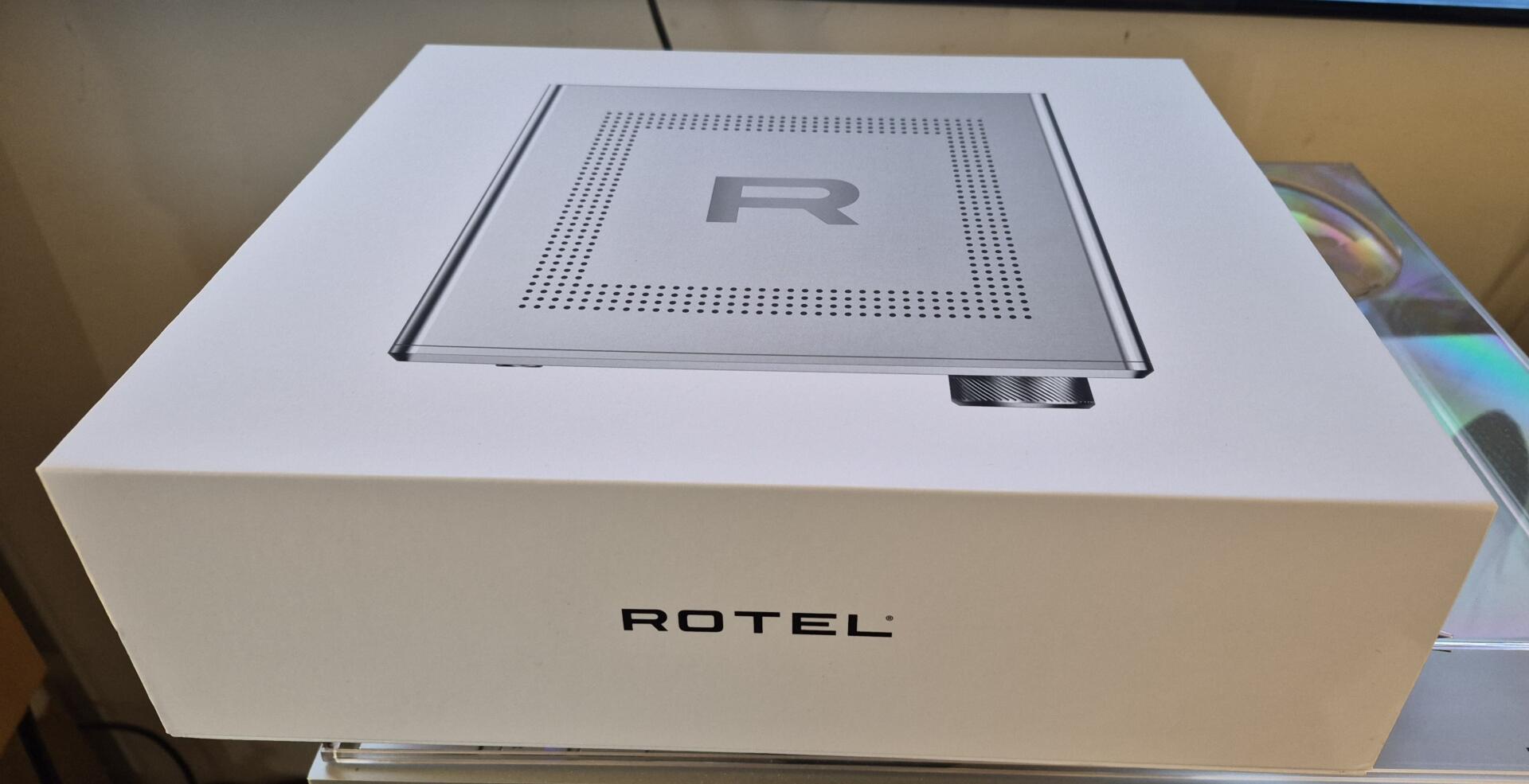
The metal remote is lovely and compact, and once you get used to pressing the buttons correctly, it responds well. Rotel packages the DX-5 in a quality presentation-style box, a nice luxury touch. The instruction manual is on a USB stick. The asking price isn’t for the budget-conscious; it’s aimed at the more serious listener who wants quality without breaking the bank. I reckon a lot of people will be more than happy to stick with the DX-5 once sampled in their system. My Totem Signature one speakers loved it along with the Storm sub, and I could happily live with the combo, whether in my main system or a second one.

ROTEL DX-5 Highlights
Related Posts


Eversolo Introduces the AMP-F8 Class AB Power Amplifier
The Eversolo AMP-F8 is a high-performance Class…
Musical Fidelity M5xi & M6xi Integrated Amplifiers Announced
Henley Audio has announced the Musical Fidelity…