Introduction
This editor is a huge advocate for subwoofers, and the phrase, “the best pound for pound upgrade you can make to a HiFi system” (REL 99 Classic review) has been read more than once in the many reviews on this site. There’s a simple reason for this; it is just patently true. Every time I get involved with a subwoofer, it is the same outcome; the REL 99 Classic won best loudspeaker of 2024, after receiving an Editor’s Pick. The REL Carbon Special won a Best of 2023 award after receiving an Outstanding award. It was the same story with the baby REL Tzero MkIII that won an Outstanding award at just £399. I bought myself a single REL T/5i to support my own Jern 14DS loudspeakers, which are designed to go down to only 100 Hz. This, however, is not a REL franchise here at HF&MS, and the Eclipse TD520W subwoofer won an award too back in February 2021.
You’ll find many REL T/9x SE reviews online, I’m sure, but what about a pair of REL T/9x SEs? We have a pair of loudspeakers for our stereo streamer and stereo amplifier and preamplifier, why would we limit ourselves to one subwoofer? Is it a case of saying two subwoofers, half the effort and twice the output?
Design
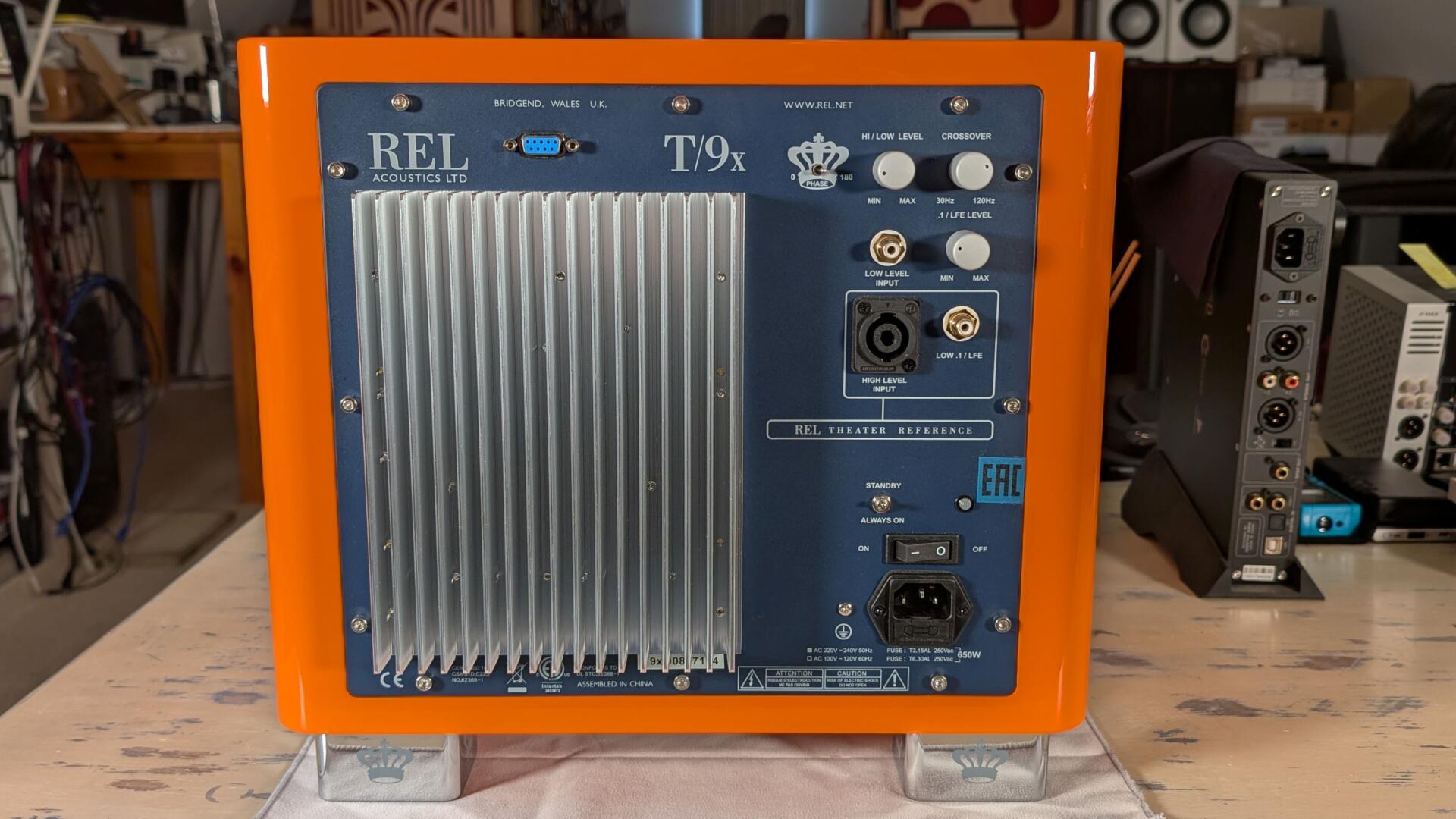
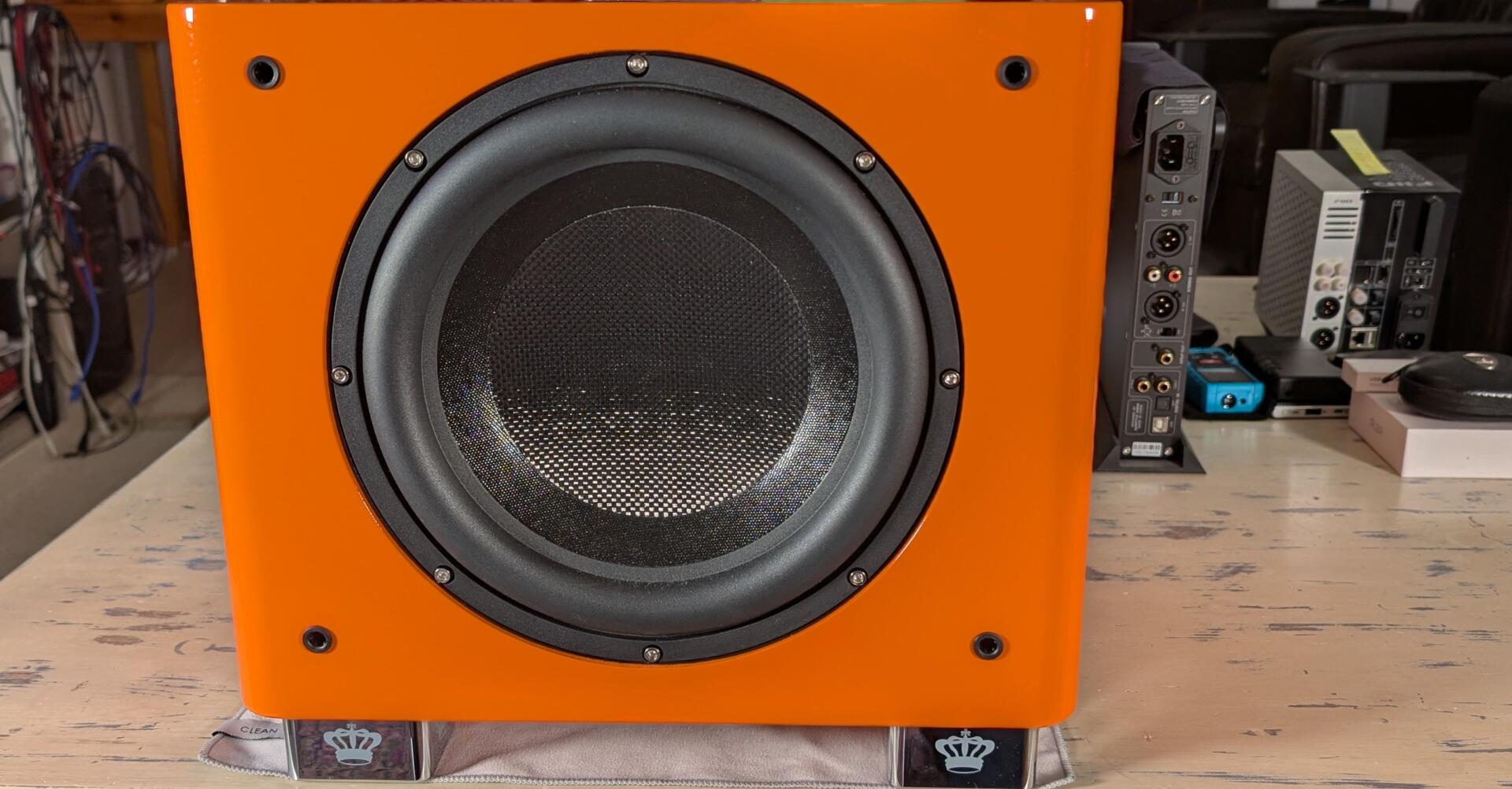
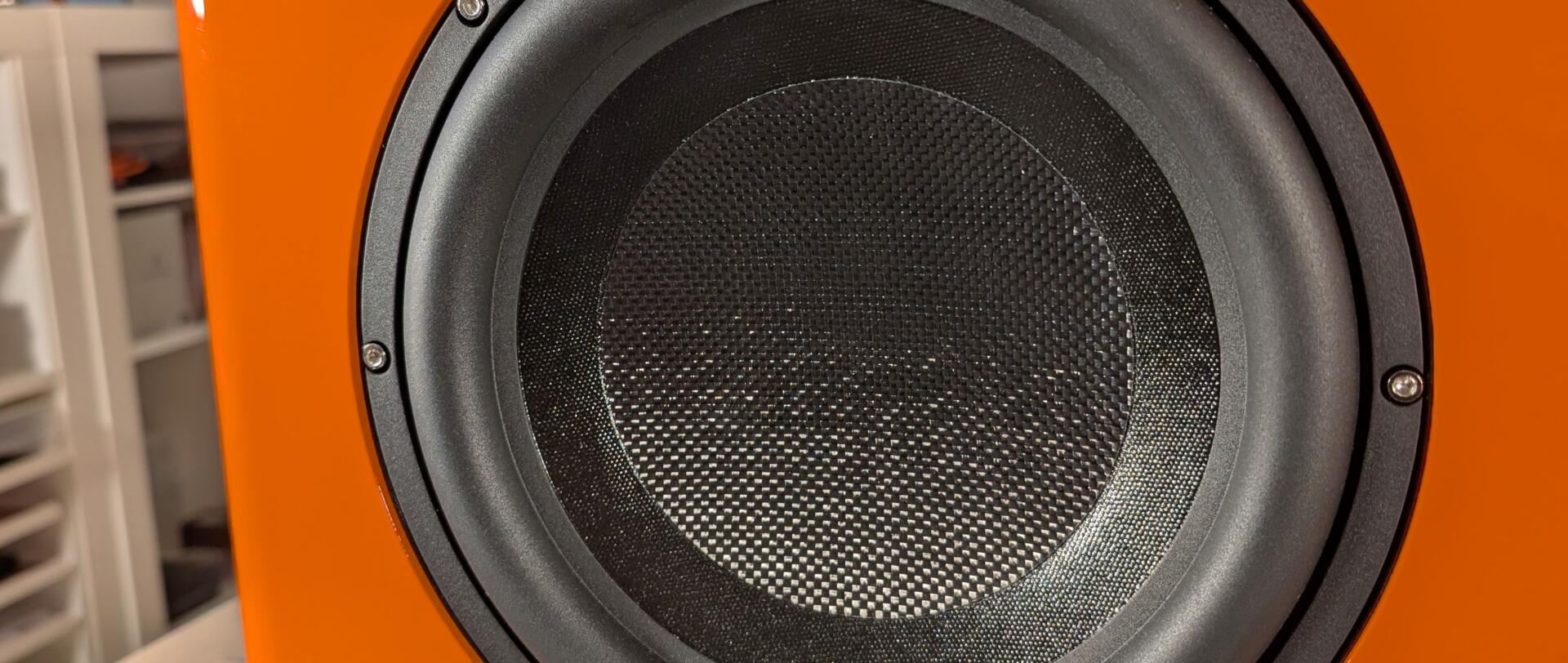
The REL T/9x SE subwoofer features a front-firing active driver and a down-firing passive radiator. The SE features a new 250mm (10 inches) long-throw, “FibreCarbon” cone, with an inverted carbon fibre centre cap, in a steel chassis. This is an upgrade on the straight T/9x, with a 250mm “FibreAlloy” cone. The 10-gram weight decrease with the carbon in the centre of the driver is the key here, promising faster responses from the lighter cone. The passive radiator is the same 250mm long-throw, “FibreAlloy” cone found in the T/9x, with an upgrade to the mounting.
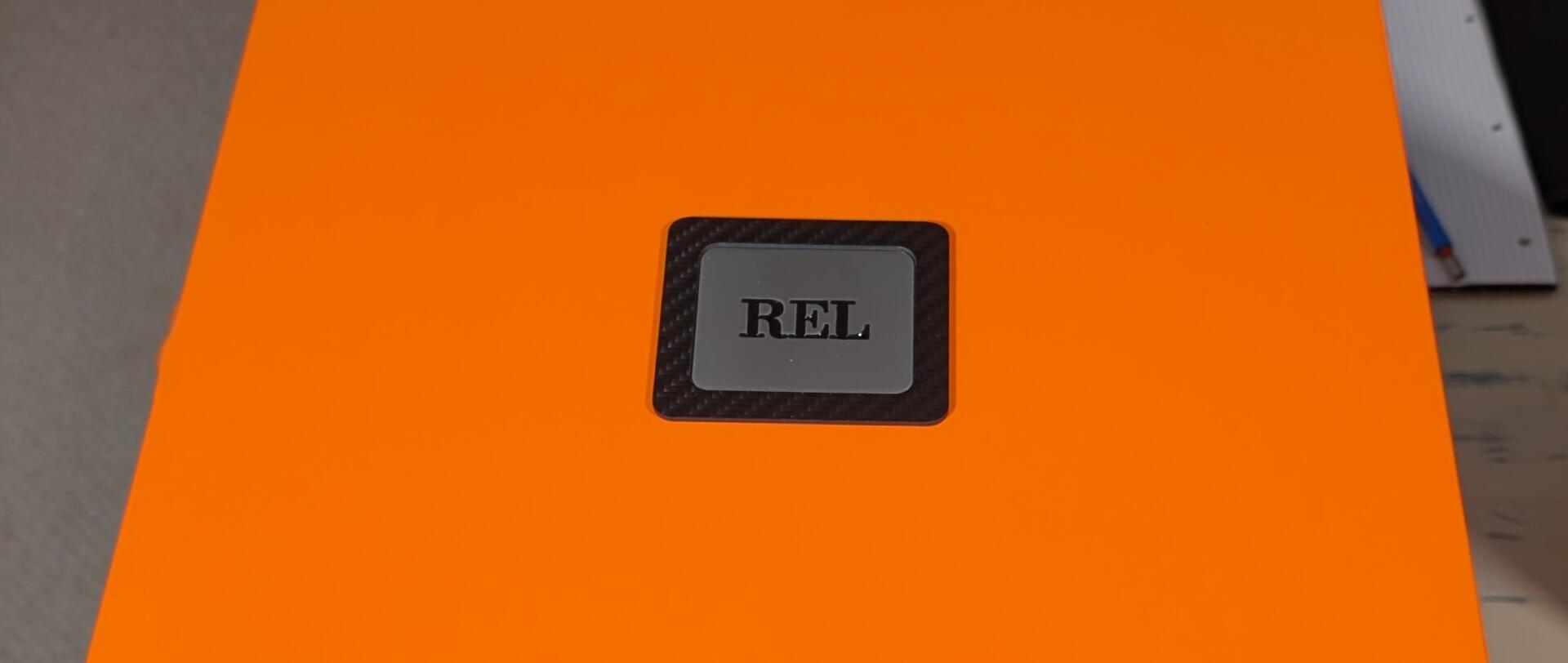
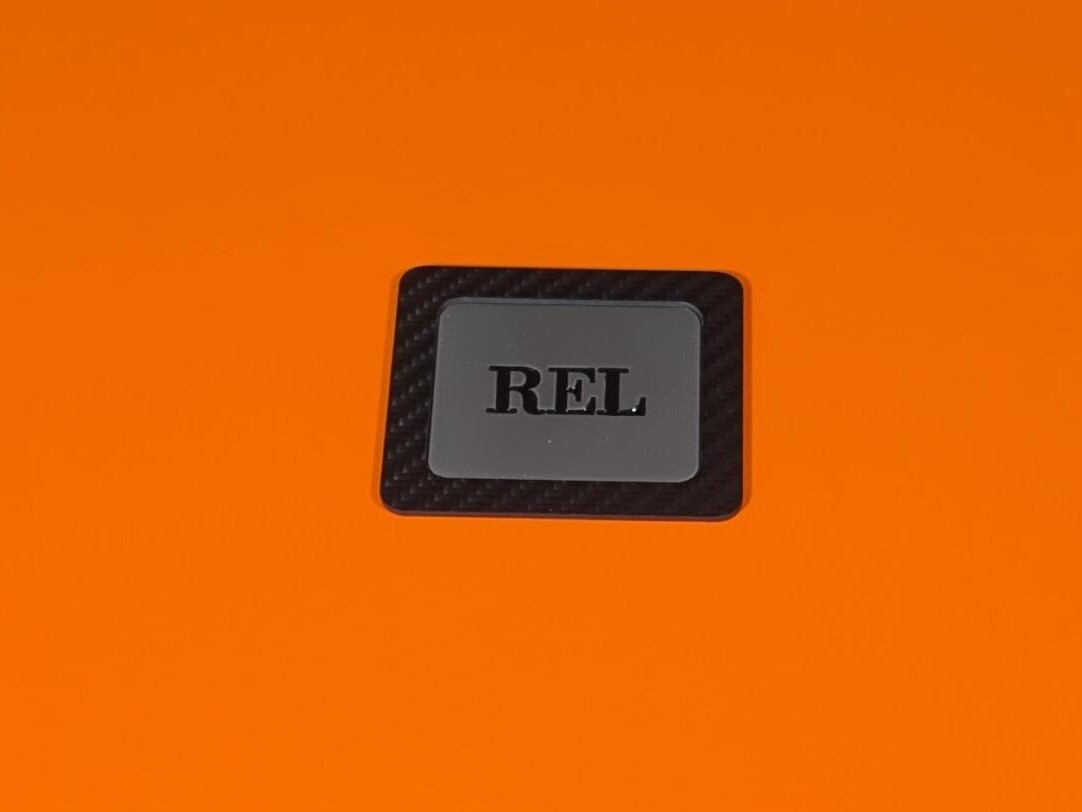
These REL T/9x SE subwoofers are precise. The famous multi-layered REL paint lacquer is here, with this T/9x SE subwoofer boasting a meticulous seven layers of lacquer that add to the integrity of the cabinet, and ultimately the sound output. The metal badge is placed deliberately at the Node Point of the unit, on the top of the sub, which takes three days to perfect. Each solid billet aluminium foot undergoes a three-day chroming process —an upgrade with the SE, too.
Inside the REL T/9x SE subwoofer is a 300-watt Class A/B Amplifier that can receive high- or low-level inputs
Quality
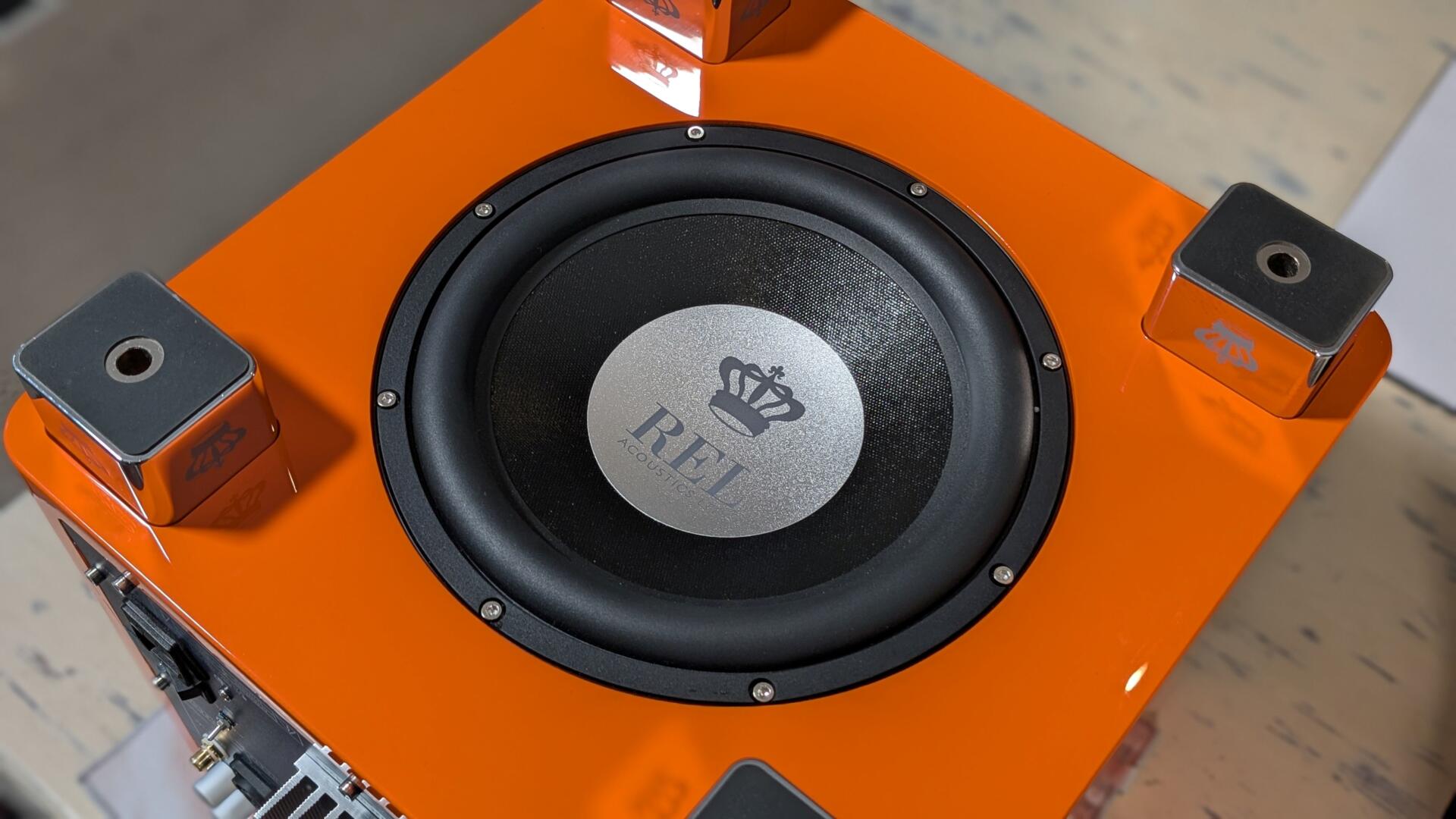
The units are delicious in feel and finish. Fingerprints are not visible at a distance with the Tangerine Dream Lacquer I have, though they’re there, and you’ll frequently be polishing the top and sides out of respect. The chrome feet are sumptuous and disappear into the carpet as they reflect the surface they’re on, be that carpet or wood.
The units weigh in at 20+ kilos, so they’re substantial but not too challenging to move around.
Specification and Price
REL T/9x SE Stereo Pair
Dimensions 370 x 340 x 393 mm, + 44.5mm in depth when using Hi Level connector
Weight: 20.6kg
-6 dB at 27Hz Low Frequency
Full Specification here.
REL’s Website subwoofer finder is here; this matches your room and loudspeakers to your needs.
Full details are on the company’s site.
Price – £1,549.00 each, £3,098.00 stereo pair, Oct 2025 prices
Availability – limited edition







Performance
Review Equipment
I’m using a Melco-based source on the good side of an ADOT optical data converter, paired with an Auralic ARIES transport and an iFi Pro iDSD DAC, both located on the no-noise side of the data switch. I have an Atlas Mavros USB with Grun between the transport and the DAC.
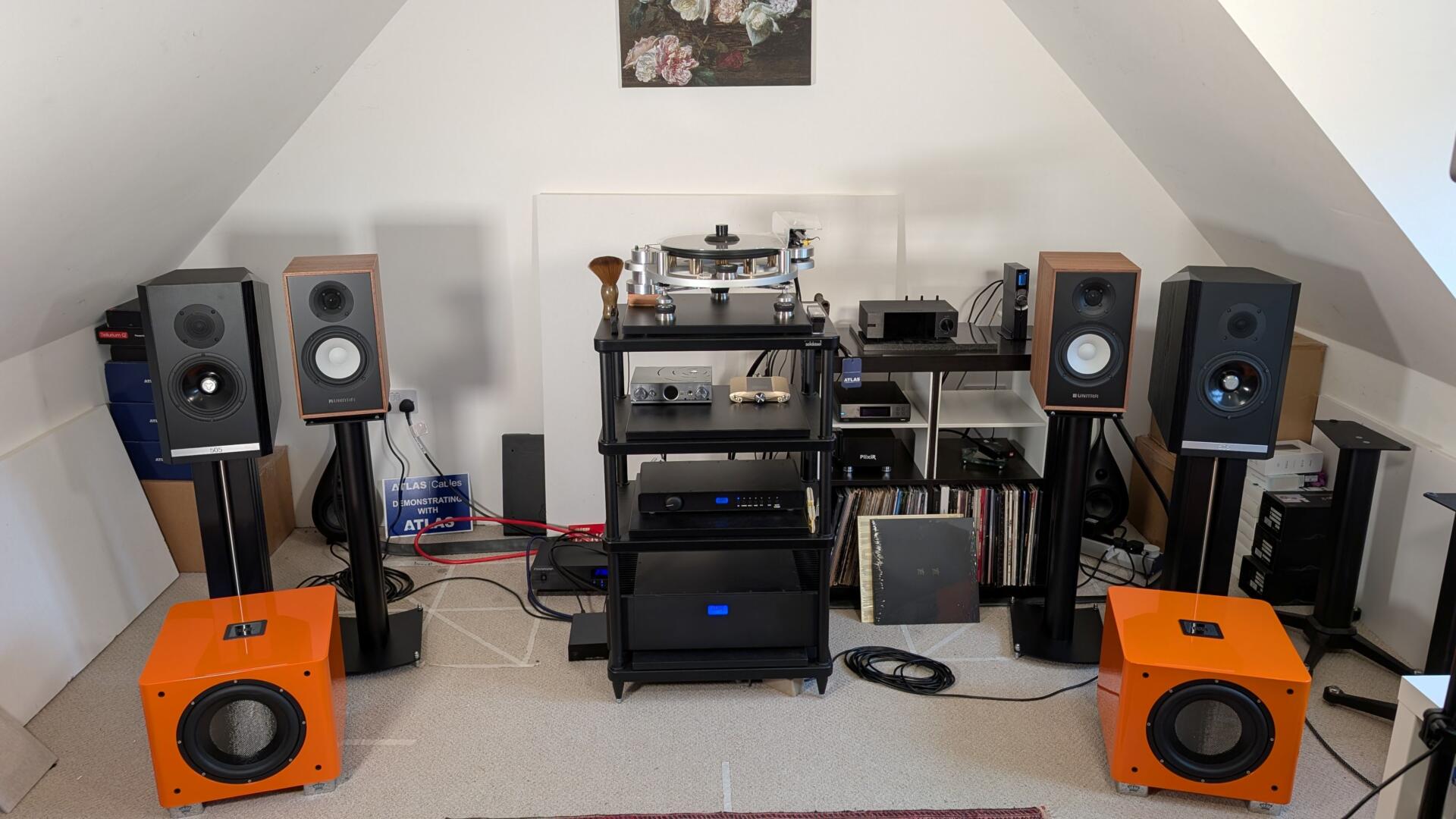
For amplification, I have used the peerless Moor Amps Angel 6, paired with the Moor Pre preamplifier. I’m using Tellurium Q Ultra Silver II XLRs and loudspeaker cable. The passive loudspeakers are the Kudos Audio 505s.
The active PowerGrip YG-2 remains a significant component of this setup.
Physically
Setup is fairly simple: you dial in one subwoofer at a time, and the 0/180 phasing will remain the same. Thereafter, any room imbalance (furniture, glass, etc) needs to be dialled in by adjusting the gain at the rear. For example, one side of my room can fire the low-frequency sound wave down the length of my 19m room, and the other side is half that into a lounge chair, approximately. So, my gain adjustment needs to take this into account. Otherwise, I’ll have low-frequency waves bouncing around the room, so I need to keep control of them.
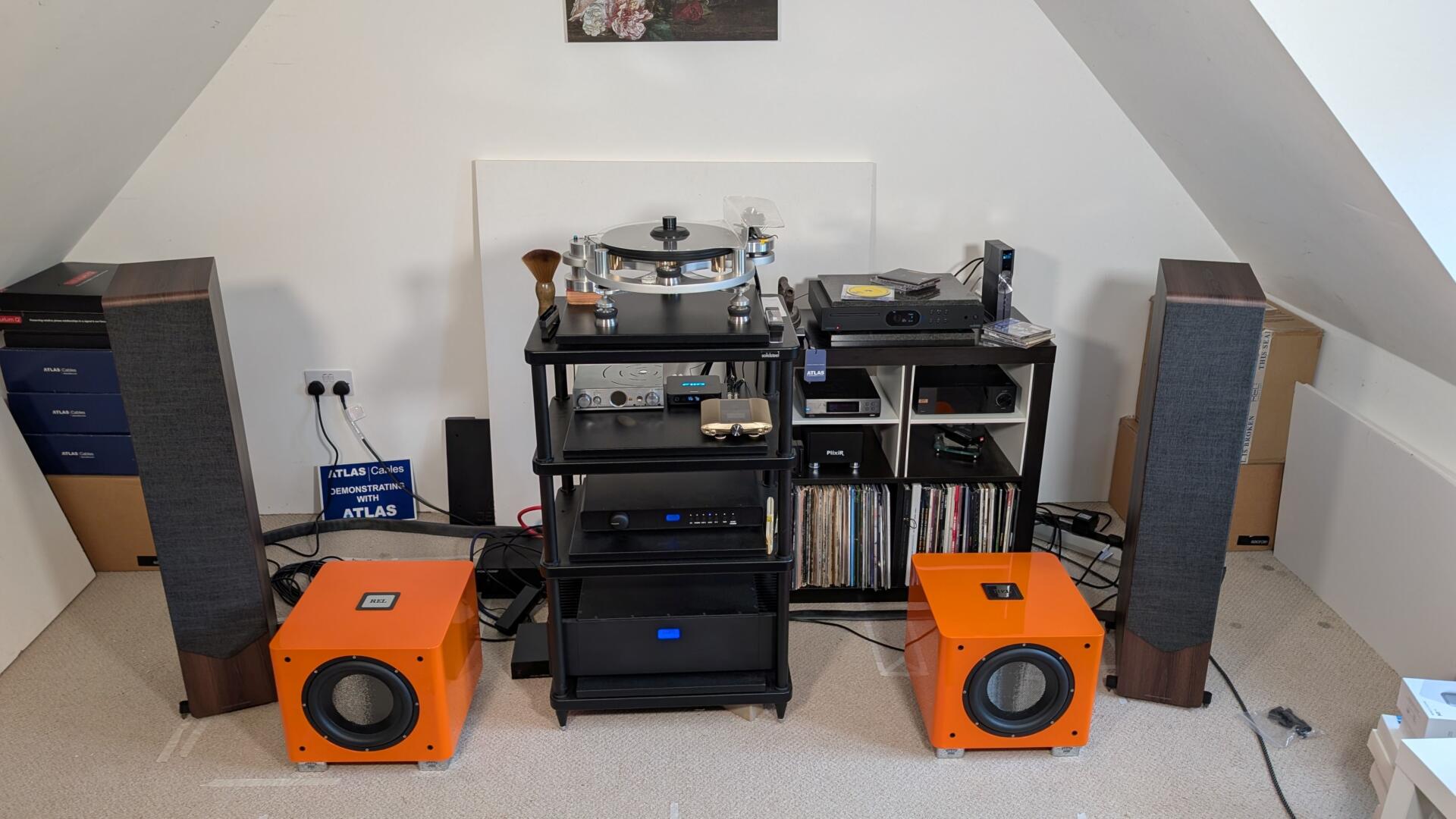
I have the RELs wired separately, left and right, to the Angel 6 amplifier binding posts to extract the full high-level signal.
I have the RELs at the base of the Titan 505 stands. Aesthetically, these units are dynamite. They’re such a statement.
Performance – Moor Amps Angel 6
It’s fairly complex to articulate the effect of a subwoofer, but that is what it is, an effect. Very low frequencies are often felt more than they are heard. The high energy introduced to the room from the active and passive drivers provides that platform with the bottom octaves being presented at pace to the room. Loudspeakers have the space to breathe with the platform provided by the subwoofers. If you have sub bass, and you can find it, and you want it, this is the way to go. Very few loudspeakers can go as low as these subwoofers, and if they do, you’re spending a lot more than this, with amplification to match (like a Moor Amps Angel 6!).
I think it is worth pointing out that sub bass is hard to find. For example, an afternoon of searching for sub bass from my old school days revealed the poor-quality recordings on offer from the likes of my 80s favourites, sadly including Sisters of Mercy (Lucretia, My Reflection was nothing like as weighty as I recall it), The Cult, The Damned, and Bauhaus. More recent recordings, however, from artists such as Lana Del Rey, Billie Eilish and The Weeknd, are positively founded on sub bass. We’ll come onto Newton Faulkner’s Teardrops shortly.
Often, the first album I like to play is Ray LaMontagne’s Trouble (20th Anniversary Remaster, Qobuz 24-bit, 44.1kHz). The bass in the title track is hard to get to, but here, it is perfect, soft, gentle, and it gets better as you turn down the volume. All the details in the bass guitar and vocals are in the Titans, but the bass delivers the emotion. The following track, Shelter, is better; a reminder, this is such a good album. Jolene is still a heartbreaker. The key point here is that I have that bass response I’m looking for, even at low volume. This same response is ordinarily unobtainable in Lana Del Rey’s track A&W (Qobuz, 24-bit, 48kHz). But at 5’27” this bass response is poised, weighty and emotional.
The final low-volume bass response to listen to is Nils Frahm’s Chant (Qobuz 24-bit, 96kHz), where that bottom Octave is so soft.
What about a bit of pace and thump? Blinding Lights by The Weeknd (Qobuz 24-bit, 44.1kHz) usually does the trick; with a present sharp bass thump directed at you (often called the attack), there’s nothing more to do than tap your feet wildly. Speaking of tapping feet, I’m going to suggest here that I have never heard Dire Straits’ Money for Nothing (Qobuz 24-bit, 192kHz) intro better than this.
No subwoofer review is complete without Newton Faulkner’s Teardrop (Qobuz 16-bit, 44.1kHz), the ultimate expression of bass response in a demo. Here, with two subwoofers, I have a balanced and deep response to that bass drop at a minute and thirty or so. I have to say I have the gain at the rear necessarily on a pretty low setting on the rear of each T/9x SE. I guess this is a reflection (pardon the pun) of the room and the Titans, which, in any case, have an impressive isobaric bass reflex response.
Modern music production seems to be founded on bass impact, take Domonique Fils-Aime’s Birds (Qobuz 24-bit, 88.2kHz). Without equipment like this, it is challenging to generate this foundational response easily.
Is a stereo pair twice as good as a Single T/9x SE?
I’ve spent quite a bit of time switching from one single REL T/9x SE to a pair. It is a question of ease in the room and balance. Yes, bass frequencies are omnidirectional, so it shouldn’t make much difference, but two is twice the fun and generates more energy and weight in the room. Easily. Again, I’ll repeat, I’m someone who listens at relatively low volume, so the effect is working well for me in this case.
Thoughts
To me, this does not feel like REL upselling. This is just a more spacious and energetic listening experience, enhanced in my case at lower listening levels. If you’ve ever been in a big REL room at Bristol with stacked line arrays, this is your more achievable version.
Overall
These stereo pairs are an easier, more forgiving option for delivering prodigious bass into your room and liberating your loudspeakers. Despite the cumulative price, this is a worthy investment. Most reviews recommend contacting a local dealer for a demonstration. I’d say the same, but be prepared to write the cheque in the first five minutes!

REL T/9x SE Highlights
Love
- Low-volume listening
- Energy in the room
- Space in the soundstage
- Hero colours
Like
- Easy to set up
Wish
- Literally can’t think of anything other than if I can afford these
Related Posts

Best of 2025 – REL T/9x SE Stereo Pair
Best of 2025 - REL T/9x SE subwoofers in a stereo…

Best of 2024 Concludes with Outstanding Product of the Year
The HF&MS Best of 2024 Awards Season concluded…