




Introduction
Last year, I had the pleasure of reviewing the Moor Angel preamp and 4 power amplifiers. I had been aware of Moor Amps since their inception, and the outcome was a great success. Preamp and power amps have very much been the pinnacle for purists, allowing ultimate flexibility and theoretically the best performance. Today, the landscape has changed. Decades ago, preamplifiers and power amplifiers were the norm, especially in the USA, and I used to drool over the likes of Mark Levinson and Krell setups.
The USA has the advantage of generally larger homes, whereas in the UK or Europe, real estate properties are far more limited due to costs and a lack of space. I have used both pre/power amps and integrated amplifiers in my many system changes, and both options have their advantages. Among the myriad options available to audiophiles and enthusiasts, integrated amplifiers remain a cornerstone—offering the convenience of an all-in-one solution without sacrificing audio quality. The Moor 4i Integrated Amplifier stands out as a compelling choice, merging robust engineering, sophisticated design, and cutting-edge technology.
An integrated amplifier combines the functions of a preamplifier and a power amplifier into a single unit. This integration saves space, reduces complexity, and can offer impressive value. In the modern era, integrated amplifiers often include digital-to-analogue converters (DACs), phono stages for turntables, and connectivity options that support both traditional and contemporary audio sources.
The Moor 4i embraces this ethos, presenting itself as a versatile hub for any home audio system. Whether you are a vinyl purist, a digital streamer, or someone who appreciates both, the Moor 4i offers a suite of features aimed at delivering high-fidelity sound with flexibility and ease. There is no built-in DAC or phono stage, but both can be added externally. I added my WiiM Pro plus streamer and Mellow Tone Audio valve phono stage with ease to the high-quality RCA inputs, and my CD player completed the lineup. The Moor 4i Integrated keeps things very simple.
Design Philosophy and Build Quality
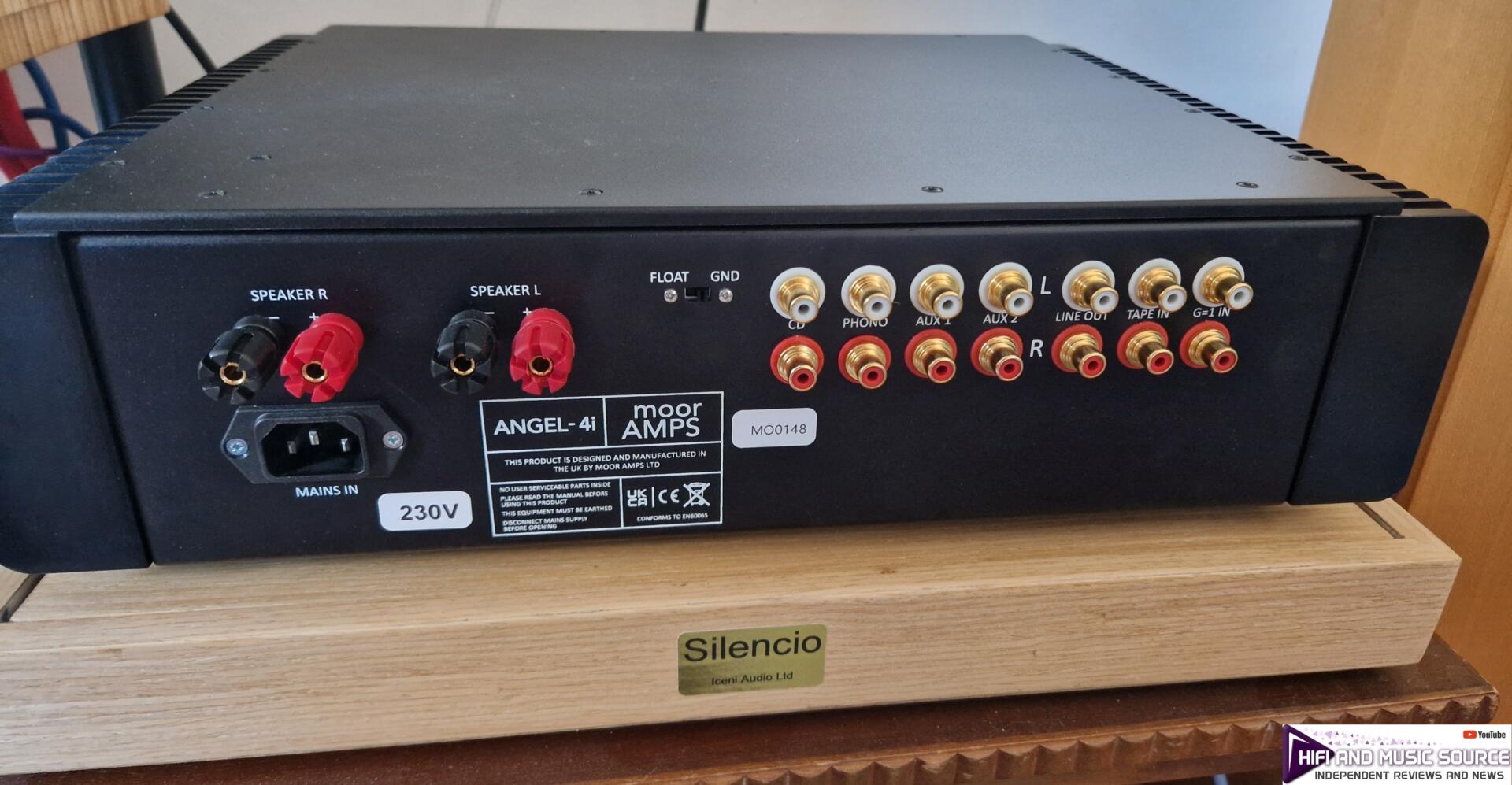
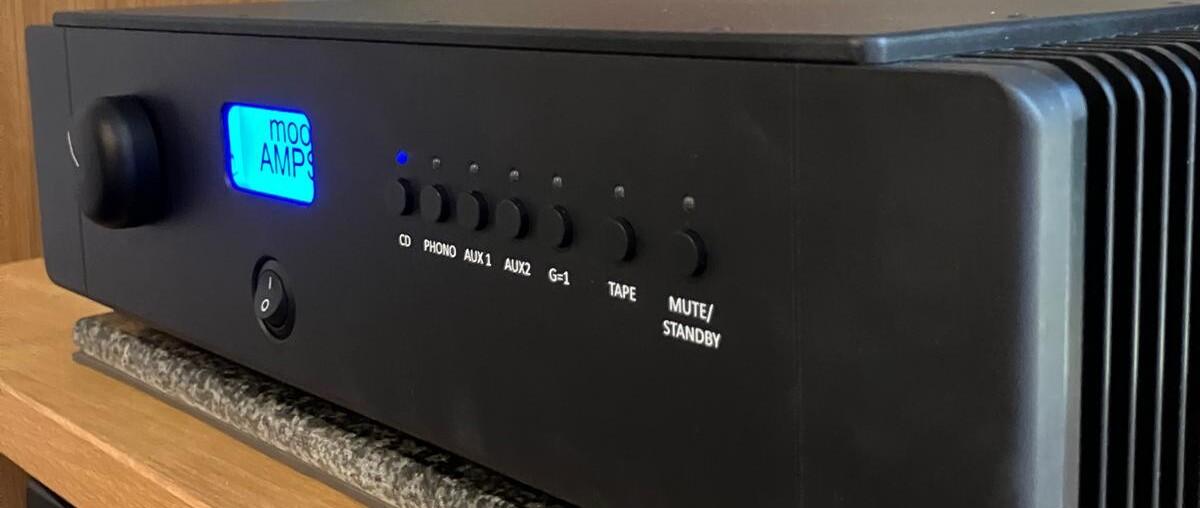
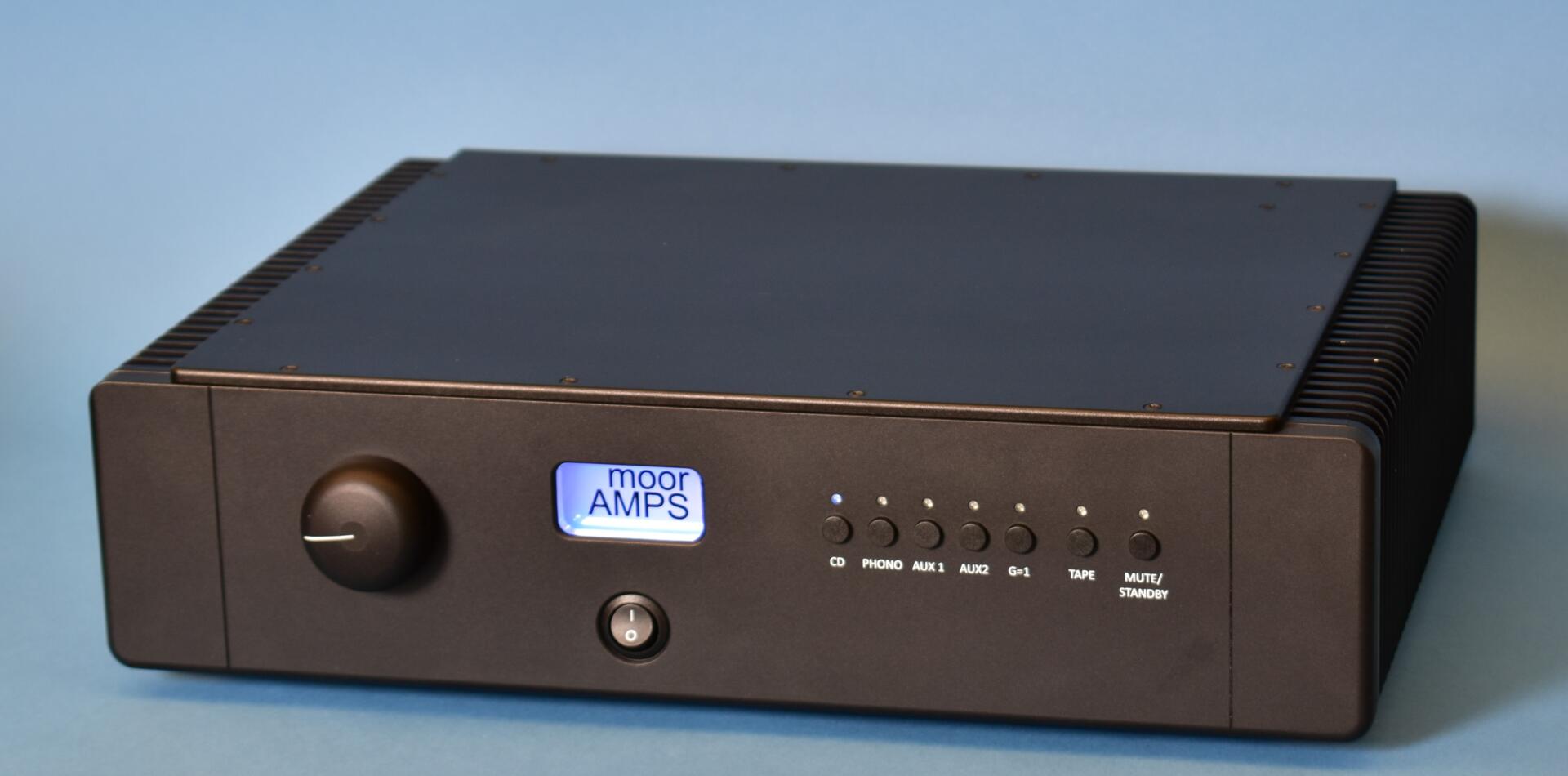
The first impression of the Moor 4i Integrated Amplifier is one of understated elegance. The chassis is typically crafted from high-grade aluminium, weighing in at 16 kg, ensuring both durability and effective shielding from electromagnetic interference. The front panel is minimalist, adorned with a large volume knob, clearly labelled input selectors, and a discreet display.
Under the hood, the Moor 4i’s construction reflects attention to detail. The 3-island power supply architecture is inherited from the Angel-6 power amplifier, with a toroidal transformer designed to minimise hum and deliver consistent, clean current to the amplification circuits. Internal wiring is selected for optimal conductivity, and the circuit boards are laid out to reduce crosstalk and signal degradation. The preamplifier is from the entirely passive Angel-Pre preamplifier. So here is the amalgamation of the separate Angel-Pre preamplifier and the 4 power amplifier in one box.
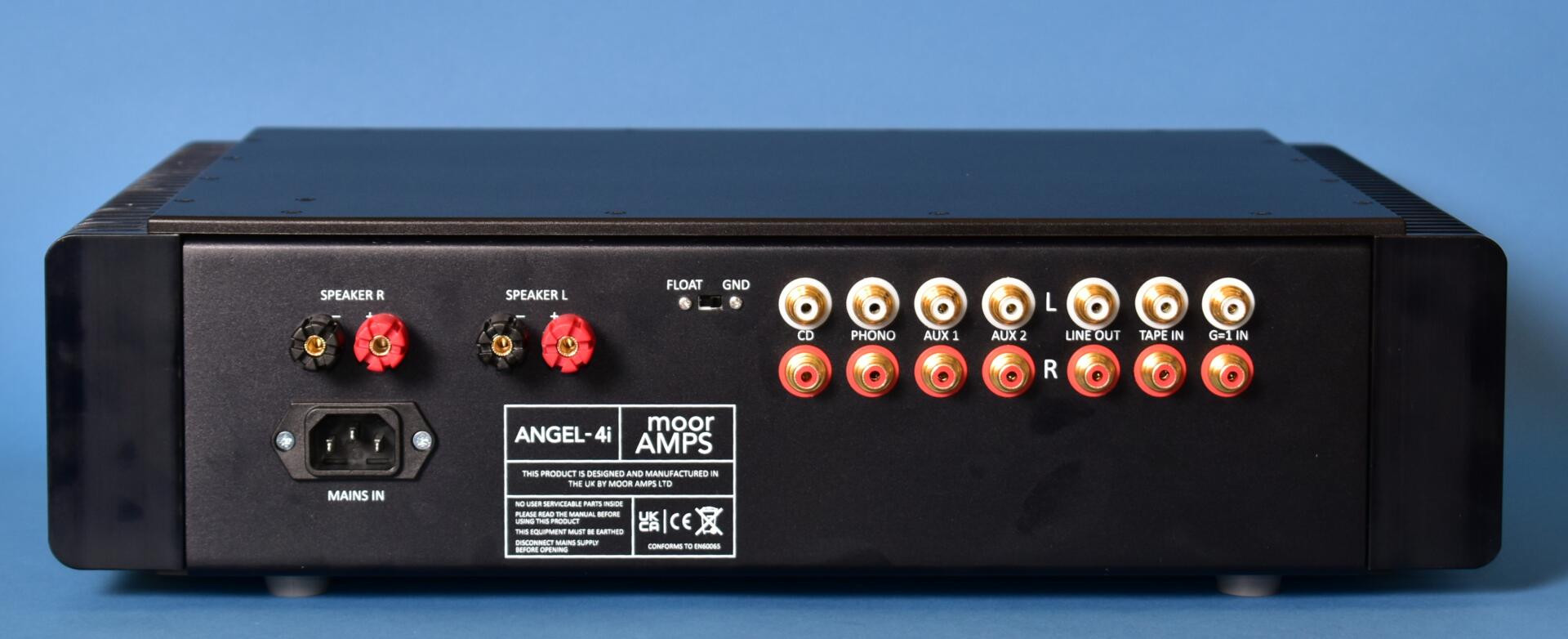
Power output is 75 watts per channel into 8 ohms and 150 watts into 4 ohms. A high-quality ALPS volume control is motorised for use with the solid and heavy remote control. There are four RCA source inputs and an additional unity-gain input for use with an AV system. Finally, a tape loop for monitoring use with 3-head tape decks or reel-to-reel machines. There is no headphone socket, which is a shame but not vital.
The output stage is highly linear, utilising four ring-emitter transistors to share the load current and maintain linearity, thereby providing a tight grip on the loudspeakers to deliver scale, dynamics, and authenticity of the musical performance.
Performance and Sound Quality
At the heart of the Moor 4i’s appeal is its sound. The amplifier strives to deliver a transparent, neutral presentation, allowing the character of your speakers and source material to shine through. The soundstage is expansive, with excellent imaging and a sense of depth that brings recordings to life. This became obvious soon after I set the unit up. The Moor amps creep up on you like a Ninja stealth warrior. They don’t have a specific sound signature, being very neutral, but there is something right about the presentation that strikes you once you get used to the sound. As I played more CDs and vinyl, the impression was of a very organic sound that not only had depth and scale, but as if flesh had been put on the bones of the music.
Having just recently reviewed the excellent QUAD 33/ 303 combination, it was an ideal situation to have the Moor 4i to compare them to. The QUAD works out at roughly half the price of the Moor if you use two 303 power amps, but it cannot compete with the Moor 4i regarding the realistic layout of the instruments and voices in the recordings. This is not a criticism of the QUAD 33/303 in any way; it simply highlights what the doubling of cost can do in terms of performance (Not a guarantee, I may add).
One case in point was a 50-year-old record I played by Racing Cars, a Welsh band from the 70’s. They were famous for their only chart hit, called They Shoot Horses, Don’t They? After the initial success of that single, they gradually drifted into obscurity. Still, I feel they were underrated for their laid-back pop style when progressive rock was very popular in the 70’s. The tracks are not complicated and easy to follow, great for background music or a chilled session. The Moor 4i achieved these tasks easily.
The amplifier’s grip on the lower frequencies was authoritative yet musical, providing a solid foundation without becoming boomy or overwhelming, and my Totem Arros were very happy with all types of music.
The midrange vocals and acoustic instruments were rendered with warmth and clarity, revealing subtle textures and emotive nuances. Syml’s latest album, Nobody Lives Here, is uncomplicated, but it has a depth of feeling within the spaces he creates as an artist that is addictive. Another band that mastered this were The Police. Take Walking on the Moon for example. Walking on the Moon has a “sparse” arrangement, centred around a three-note bass riff. It is one of the Police’s more reggae-influenced songs. Here were three musicians at the top of their game using their skill to float the sound into a hypnotic performance in reggae style. It’s a track I never tire of listening to.
High frequencies were extended and articulate, but never harsh, making the Moor 4i suitable for long listening sessions without fatigue. Playing Weather Report’s album Heavy Weather on vinyl, the classic opening track Birdland moved at a pace, helped by my Technics SL1300G/ Hana SL Mk2, showing what a great direct drive turntable can achieve. The entire album is very well recorded, even on a standard pressing, and the imaging is excellent, with all the percussion clearly defined. This is thanks to the contributions of Alex Acuña and Manolo Badrena, while Joe Zawinul’s synthesised keyboards and Wayne Shorter’s saxophone are underpinned by Jaco Pastorius’s sublime fretless bass playing. Jazz fusion is not to everyone’s taste (my wife and daughter especially don’t get it), but it has served me well in my musical journey.
Dynamic expression is another strength, with the amplifier able to handle both the delicate shadings of a string quartet and the explosive energy of a rock or electronic performance. Quiet passages emerge from a black background, while crescendos have real impact and drive.
Integration with home theatre systems is also possible via bypass modes or pre-out/power-in jacks, allowing the Moor 4i to function as part of a larger AV setup when desired.
User Experience
The Moor Amps 4i Integrated Amplifier was easy to use and reliable. The remote control was responsive, but not perfect, and the front panel interface was intuitive, with clear visual indicators for all functions. Set-up was straightforward, aided by logical input labelling and high-quality connectors.
The amplifier’s understated appearance helps it blend seamlessly into a variety of decors, from traditional to modern. Its relatively compact footprint means it can be placed on a shelf or within a media unit without dominating the room. Moor Amps have not tried to make the 4i pretty or blingy; it’s all about the sound quality. Many companies have spent a lot of time and manufacturing costs producing beautifully machined casework from solid billets of aluminium. Whilst I wholly admire these products and drool over them at shows, I can’t help wondering how much of the manufacturing budget goes on the casework.
Pricing and Availability
The Moor Amps 4i Integrated Amplifier is £7995
It is available through the dealer network here
Full Specification is here
Output Power – 75W RMS per channel into 8 ohms, 150W RMS per channel into 4 ohms
Frequency Response – 5Hz to 50kHz +/- 1dB
Dimensions – Width 430mm x Depth 360mm x Height 120mm
Weight – 16kg


Conclusion
The Moor Amps 4i Integrated Amplifier represents a harmonious blend of tradition and innovation. It honours the legacy of high-fidelity audio while embracing the demands of modern listening. With robust construction, a good feature set, and sound quality that rivals more expensive separates, the Moor 4i is a worthy investment for anyone passionate about music. Its ability to serve as the heart of a versatile, high-performance audio system ensures that it will remain relevant, enjoyable, and impressive for years to come. Moor amps have certainly succeeded in their goal of adding a fabulous integrated amplifier to their range, including the Angel preamplifier and the 4 and 6 power amplifiers.
£ 7,000 is not pocket money for the 4i, but the performance and solid build more than justify the asking price. If you are in the market for a new integrated amplifier or want to downsize from a pre and power amplifier to save space and connectivity issues, seriously consider the 4i and find a dealer you can audition it at or loan you one.
Overall
Pros
- Audiophiles seeking high-quality sound without the complexity of separates
- Music lovers who enjoy both analogue and digital formats
- Users looking to streamline their system with a single, capable component
- Home theatre owners wishing to upgrade stereo performance while retaining flexibility
- Anyone who values long-term reliability and elegant design
Cons
- There is no dedicated phono input, but anyone serious about vinyl will use a separate high-quality phono stage anyway, as I did.
- No headphone output.
- The speaker connections are directly above the mains IEC input, so it can be awkward to get at, but it’s not a deal breaker. I spoke to Tim, the designer, about this, and he said shoehorning all the components into one chassis instead of two obviously meant compromises in circuit layout and minimising interference and signal paths. Having recently built a couple of valve-based kits and following the designers’ reasons for the layout, etc., it’s no mean feat to complete a successful finished product.

Moor Amps 4i Integrated Amplifier Highlights
Related Posts


Ultrafide Announces Accessible Power Amplifier
The SP500 amplifier is a more affordable…
Full Stack Audiolab 9000 Series Review
This is the first UK review of the full Audiolab…
Musical Fidelity B1xi Integrated Amplifier Announced
Henley Audio has announced that the first of the…
Unitra enters the UK market, distributed by The Audio Business
The Audio Business has announced this week that…