



Introduction
The latest thoroughly updated QUAD 33 preamplifier and 303 power amplifiers were released last year, in 2024, to quite a fanfare of excitement on one side of the coin and why bother from the other side. When I saw the press release, I got excited. I am no stranger to QUAD equipment, having sold it from the 1980s onwards, and I have owned the original 33, 303, 306, 405, 34, 44 and FM4. They were all purchased second-hand and, depending on condition and age, either just checked over or upgraded with the various add-on parts readily available on the internet from specialist companies. I spent hours upgrading or just servicing the 33 and 303, especially with mixed results. That was partly down to my inexperience at the time, or faults due to age, which made repairs very tricky unless you had plenty of practical knowledge.
QUAD – Pipe and Slippers?
The QUAD brand from yesteryear had a stigma attached to it in audio circles as an older customers’ product. In other words, the brand appealed to the “Pipe and Slippers Brigade” customer who was probably near retirement or already had retired, and they listened mainly to classical and older jazz music. This wasn’t always the case, as I had a young man who bought the 33/303 and used them with the ESL 57s. He played a lot of modern rock, etc.
I am in no way criticising QUAD as a company, as their customer service is exemplary, and Peter Walker, the founder, was a legend then and now. Like most designers and pioneers, Peter Walker had his ideas on how his products were designed and developed over many decades. The company he left has since been amalgamated into IAG, and it is manufactured in China. Do not let that prejudice your opinions of what was a proud UK company originally. The world is a very different place now, and “Made in China” is no longer a phrase for cheap or poorer quality.
Many electronics companies manufacture in China or the Far East today for many reasons, with manufacturing costs being the main one. The QUAD 33 and 303s I am reviewing now would not have been a viable proposition if they had been made in the UK or Europe. The design work and research can be done here, but the scale of manufacture just isn’t feasible. (A sad fact of life and survival in today’s economy).
The QUAD design team haven’t just rehashed the old designs to try and sell to older customers on a nostalgia trip. They have thoroughly updated the 33 and 303 to incorporate high-quality components now available, which are far superior to the originals of 55 years ago. The circuit designs are innovative, but the designers wanted to maintain the DNA that Peter Walker instilled in the originals and not rip the heart and soul out. The modern looks resemble the old models so that they are instantly recognisable as QUAD but with a contemporary twist.
QUAD – rejuvenated
I feel QUAD has done a great job rejuvenating the classic models into slickly engineered products that look and feel far more expensive than they retail for at £1199 each. This goes back to what I stated earlier, made in China has enormous benefits. The units are beautifully machined and assembled, instilling absolute confidence and pride of ownership. I have seen many internal shots of the units, and they are impressive. Large quantities will have to be made to maintain economical costs, but QUAD apparently can’t keep up with demand, and the 33 and 303 are on back order all the time. I can see why.
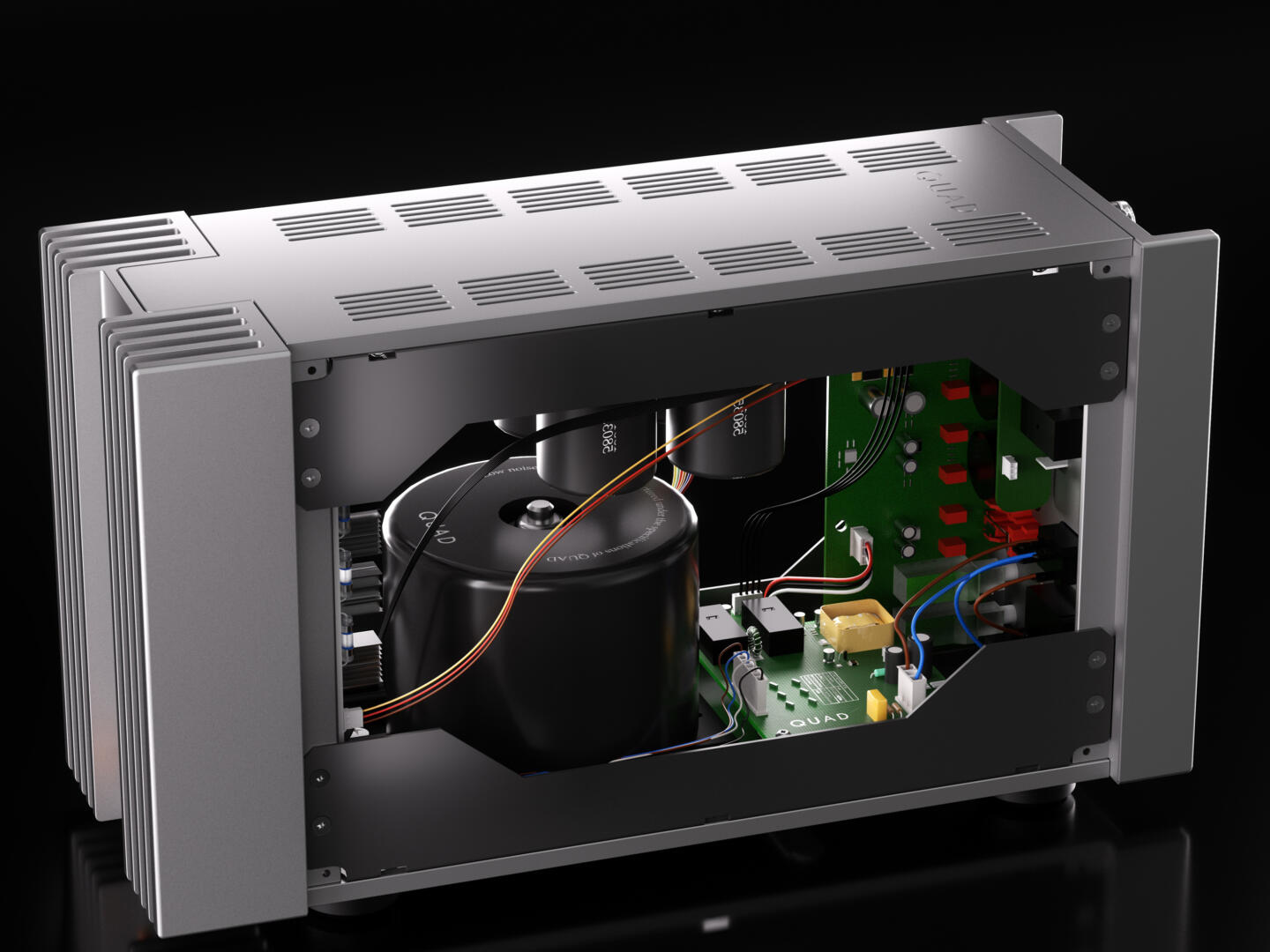
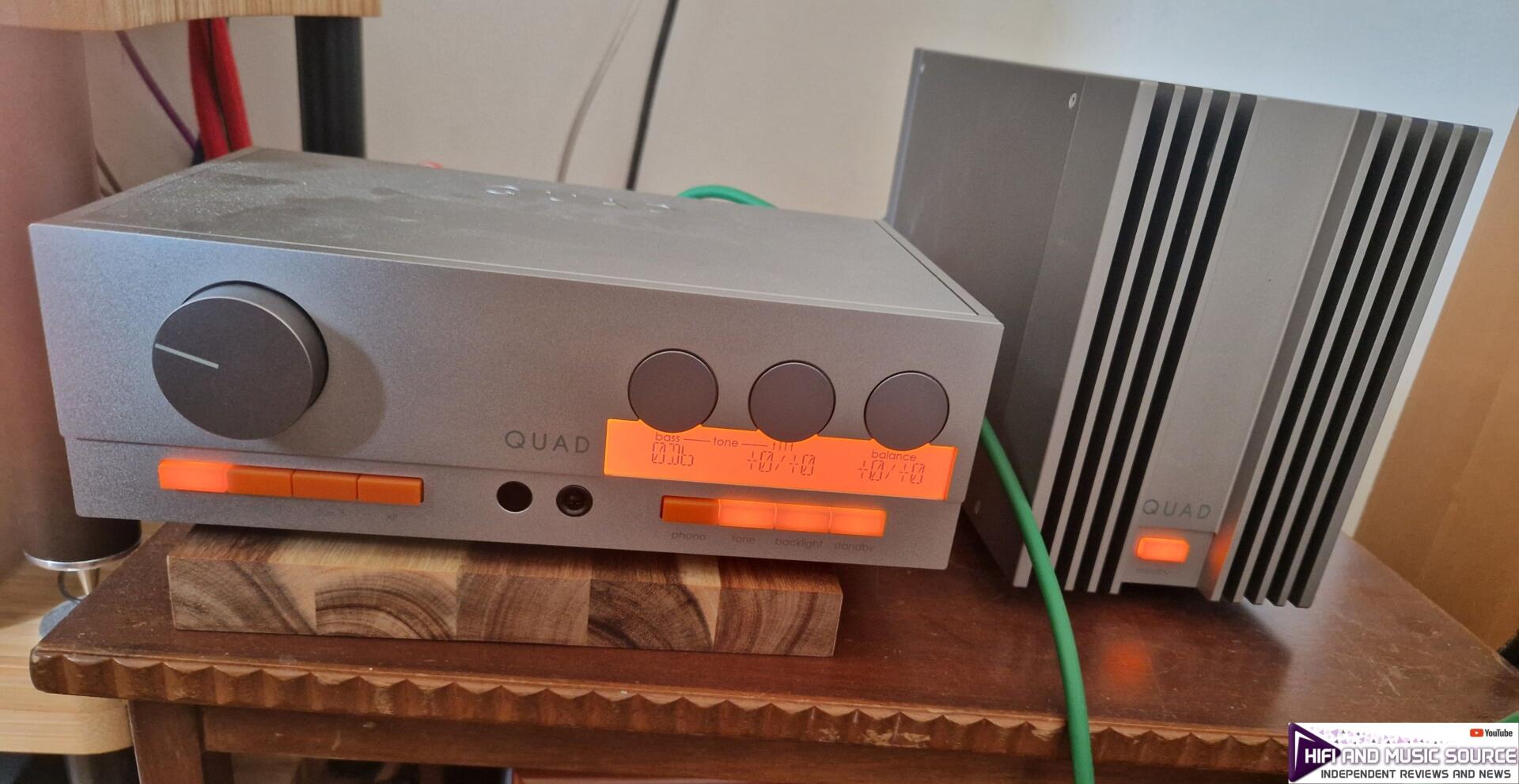
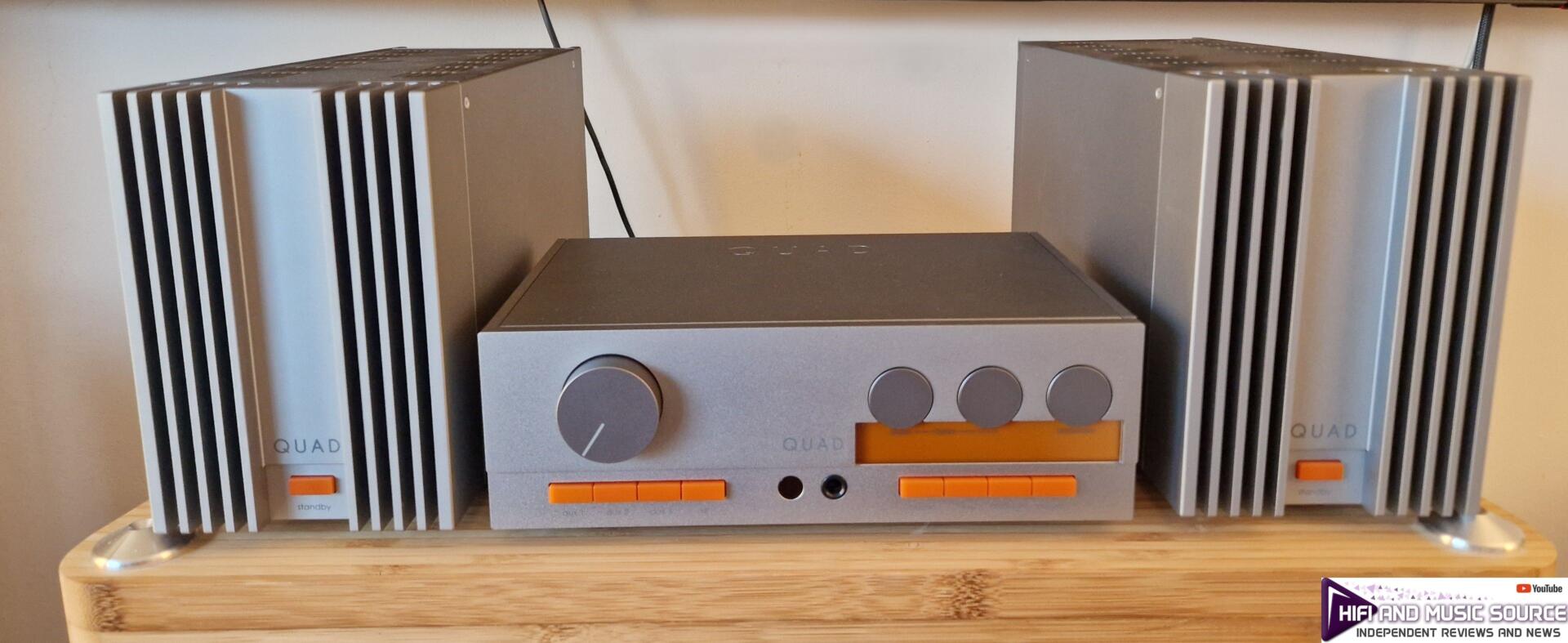
The compact form factor follows the original models, being very neat and practical. Modern homes are limited on space for many, and whether it’s the older enthusiast or the younger newcomer, they will welcome smaller units. I’ve had my share of big, bulky units, and once the honeymoon is over, you soon realise size isn’t everything. The QUAD 33 preamplifier can sit on a shelf or unit easily, and the 303 power amplifiers can either sit on the floor next to the loudspeakers or on a unit next to one another. I was supplied with two 303’s so I could compare stereo from a single unit, which is probably the most popular option, or obtain two 303’s to act as mono blocks by being bridged. Bridging allows the user to use a stereo power amplifier that can be bridged due to the relevant circuit design and switching capability into a mono block, gaining extra power and separation for each channel. It is a purist approach that isn’t a true monoblock but is practical and cost-saving.
The gain in power is from 50W per channel into 8 ohms to 140W, which provides a lot more muscle to drive a larger range of modern speakers without losing the finesse and control of the original 303, which could drive the original ESL57s, a feat many designs back then couldn’t. The BBC used a lot of 303s in studios and outside broadcast vans for good reason, they sounded neutral and were reliable.
The electronics design team have remained faithful to the design ethos of the much-loved originals, even down to incorporating the ‘triples’ output stage design in the 303… back in the ’60s, this was a highly innovative way to solve the thermal instability problems that plagued early transistor-based amp designs. Even though it’s no longer strictly necessary when using modern circuit components, it wouldn’t be a 303 without it!
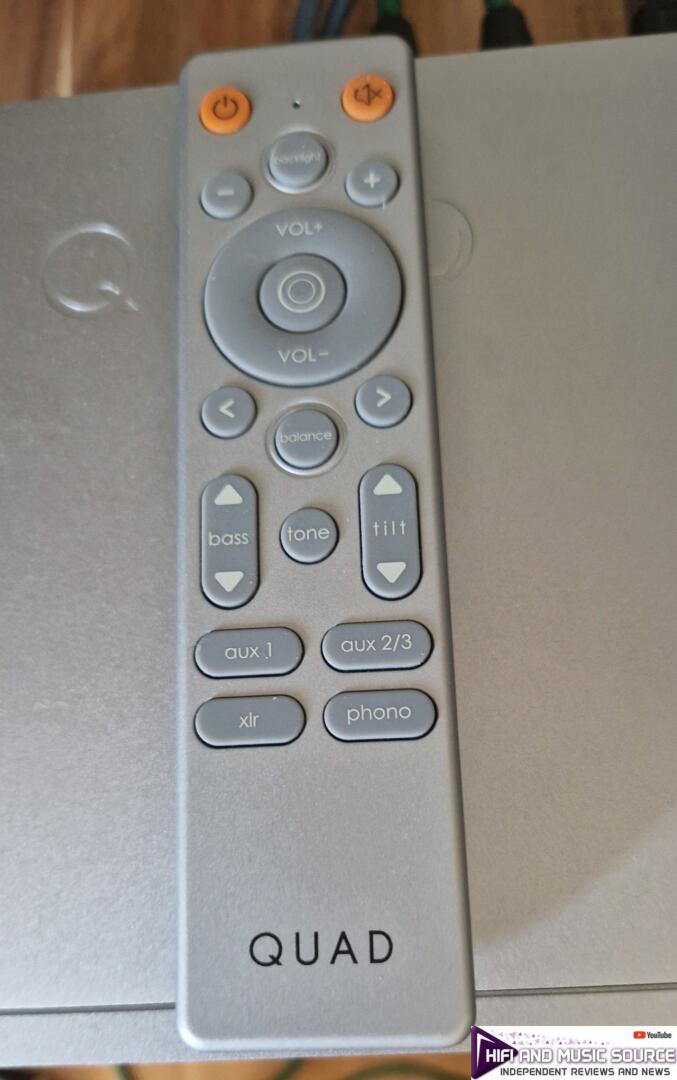
The 33 preamplifier is purely analogue, no built-in DAC here, as the designers wanted to stick to the original ethos. There are subtle differences in the looks of the preamplifier, but the original design has been replicated for a new age. The display is backlit and informative using modern LED, which are super reliable, unlike the old incandescent bulbs, which inevitably would fail, and replacing them was a fiddle. One prominent feature is the comprehensive remote control, which I love. The remote is a neat plastic affair which is fully functional and responsive. A metal one would have been the icing on the cake, but the cost would have inevitably gone up.
A digital microprocessor controls functionality for convenience but is not involved in the analogue audio side. Outputs from the preamplifier are flexible with both RCA unbalanced and balanced XLR, and there is also an AUX output. I used the balanced XLRs to the 303s, simplifying connections, and a popular option that studios would undoubtedly have used. The original 33 only had a QUAD 4-pin DIN output to the 303-power amp, so lead upgrades were more of a challenge if you wanted to.
The phono stage is a brand-new design and caters for both moving magnet and low-output moving coils. The old 33 had plug-in boards that gave a lot of flexibility to adapt the input and were a boon back then, but the contacts could tarnish and, if not fitted securely, cause connection problems. The design is bang up to date, using ultra-low noise audio op-amps. A detailed description of the 33 can be found on QUAD’s excellent website.


QUAD 33 Preamplifier
The front panel controls are comprehensive but simple to use, and unlike the old model, aren’t clunky push buttons that were prone to failures due to wear or dirty contacts. QUAD has a legendary service department that would happily service any unit they had made, not something all companies do, especially in the throw-away society today. There are probably still many QUAD owners out there using the older models, which would have been sent back to QUAD to be serviced.
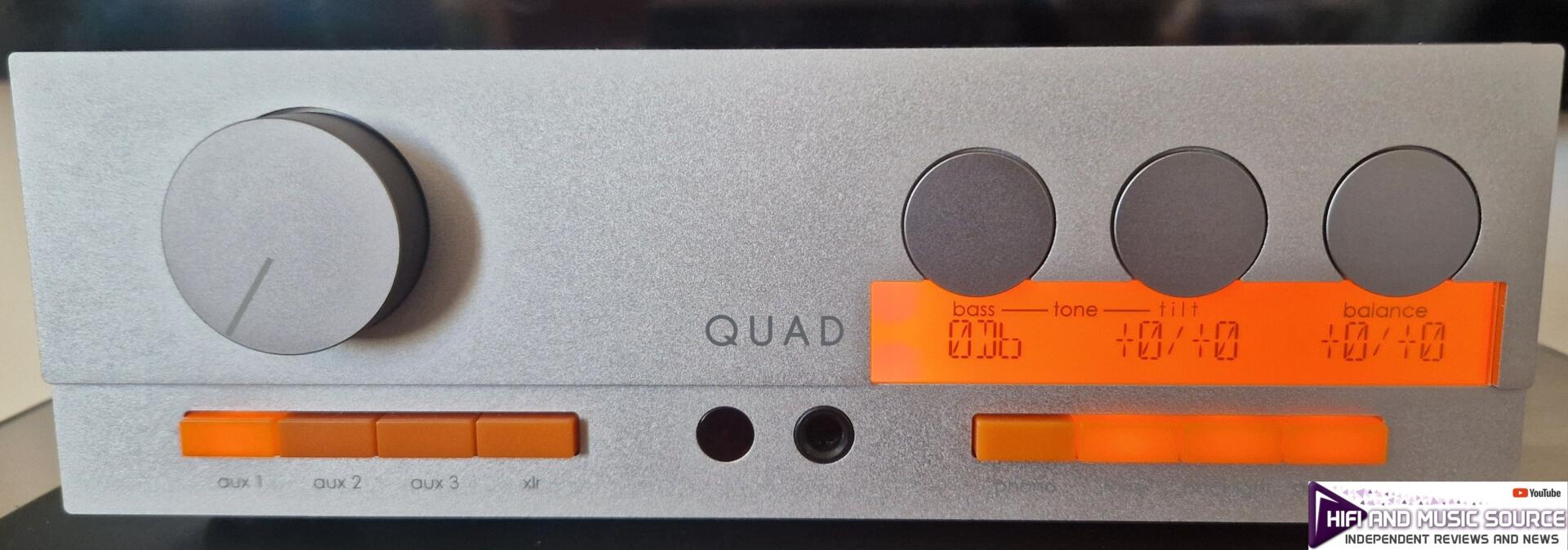
The front panel illumination in bright orange cleverly mimics the original look and helps navigate the various functions. The display can be dimmed or switched off altogether if the user wishes from the remote, as I am sure the Blackpool illuminations effect would put off some potential owners. I loved it, and orange is a favourite colour of mine.
The volume control is a fully analogue precision motorised quality ALPS potentiometer. A further row of three endless rotary encoders offers intuitive and immediate control over the QUAD-specific fine-tuning settings. The tone controls/ filters on the original have been carefully changed to adapt to modern-day thinking and logic. The new QUAD 33 presents bass adjustment, tilt control and balance control to allow tuning to an acceptable degree without intruding unnecessarily into the harmonic range essential for realistic reproduction. I tried them, but preferred to stick to a flat response generally in my setup. I can see where users might find them helpful, and they can make that choice.
Critical Listening
I first used the 33 with one 303 power amp to assess the sound and compare it with my aural memory of the originals I had used. Ideally, having the older models to hand would have been better, but I could still make a good assessment. The original 33 preamplifier had its flaws, but if it was serviced after a few years or sympathetically refurbished to maintain Peter Walker’s design, the audio signature was of a lush, smooth but clear sound that never jarred the listener’s ears. Many of my customers in the 80s either loved the QUAD or moved onto brands like Naim, which had a very different approach and ethos to amplifier design. Opinions were divided, but I gave them the choice and guided them appropriately. The 303 power amp was and still is an excellent unit, and if it’s serviced and new output capacitors and components are upgraded, then it is a hidden gem. There was a reason the BBC used so many of the 303s back in the 70s and 80s.
When I got my old 303 back from service a few years ago, I was amazed at how well it compared to other designs. The sound was smooth but still detailed, and it was an amp that could drive a wide range of speakers. Purists would probably disagree, but you can go down a rabbit hole with prejudices. We all differ in our tastes. The new 303 is like a new car that has better build quality and hopefully reliability compared to the manufacturer’s older models. The new model is bigger and taller with much better connectivity. The new 303 keeps to the original formula of using the famous QUAD ‘symmetrical triples’ which significantly reduce distortion, and the output transistors’ temperature is independent of output transistor temperature, so stability is maintained. If you wish to delve deeper into the design, QUAD’s website is excellent and comprehensive. I reckon most readers will either not be bothered by the technical side, or it will go straight over their heads. I enjoy it, but there again, I am a geek.
The new 303 has a little extra power – offering 50W @ 8 ohms (70W @ 4 ohms) with a maximum current delivery of 10A into difficult loads. The original 303 was known to have issues with lower impedance loads; the new 303 has no such trouble. Ideally suited to the more demanding requirements of the modern audiophile, it ensures any speakers – even including QUAD’s electrostatic designs – can be driven with ease. My Totem Arros are 4 ohms, and the 303 had no issues. The amp remained cool even after several hours of use, something the old 303 would have struggled to do. Connectivity options comprise single-ended RCA and balanced XLR inputs, a 12V trigger input and high-quality speaker binding posts. Simple, solid and thoroughly authentic, inside and out. The power output for ‘bridged mode’ (for use as a mono-block power amplifier) reaches 140W @ 8 ohms or 170W @ 4 ohms (bridged mono).
The up-to-date connectivity is excellent because the old 303 was awkward to use. It didn’t have a power switch, so you either had to switch it on from the wall socket or use a Bulgin power lead from the 33, which powered the 303 when you switched the 33 on. Power supplies have improved considerably, and any enthusiast knows that a plentiful power supply is key to good sound. The 303s have individual power /standby buttons, so powering on and off is simple. What caught me out, though, was that the 33 and 303 have a delayed standby mode when they haven’t detected a signal after 30 minutes. It’s a clever feature in an energy-conscious world now, but if you forget about it when you’ve had a break in listening, and go back to continue, and wonder why there is no sound output, you go doh!! This feature can be switched off, though.
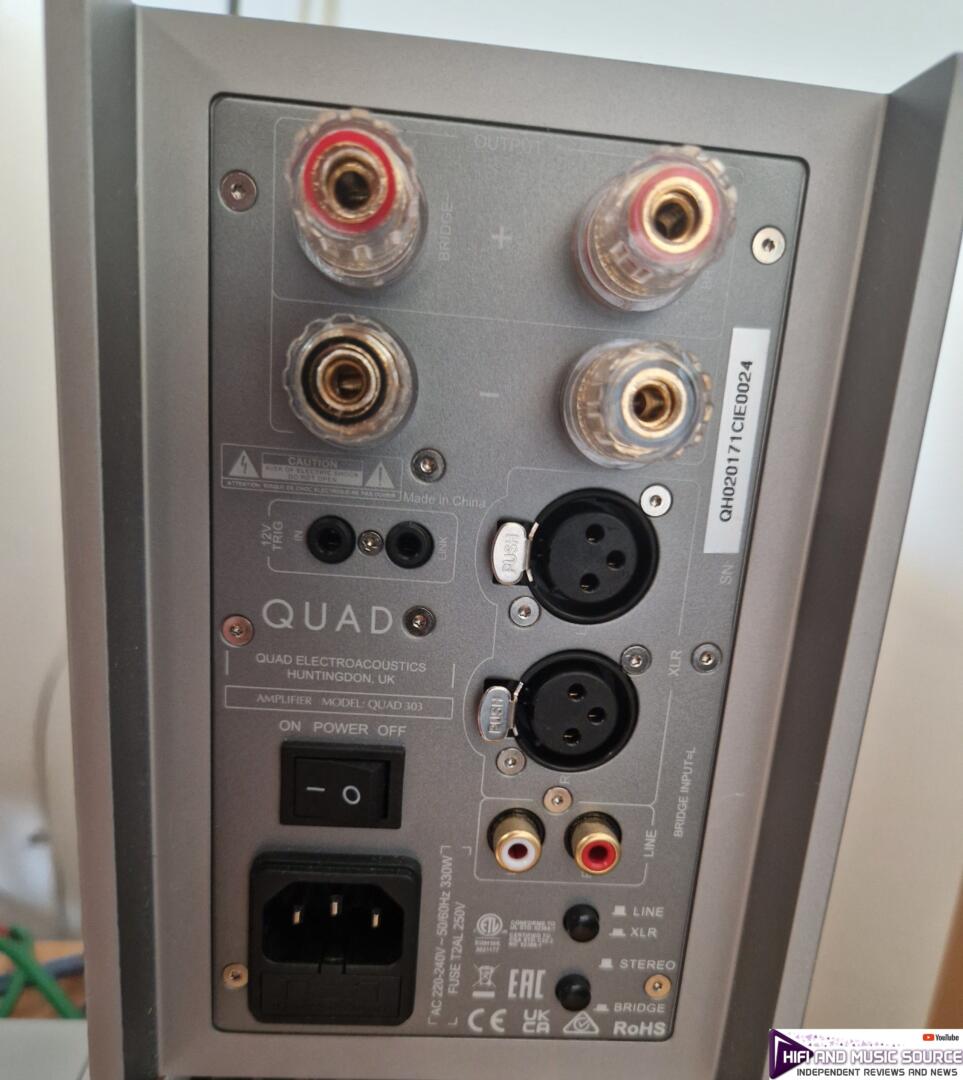
The back of the amplifier has four high-quality gold-plated multi-way binding posts, balanced and unbalanced inputs, and the relevant switches to allow simple bridging of each amp if you use two. There are also 12V trigger connections to switch the amps on when the 33 pre is powered up for convenience, especially if the 303s are on the floor or hidden in a rack. The 12V trigger leads aren’t supplied as standard, so if you want that facility, contact your dealer to get some.
As a straightforward pre and power combination, from the off, I was very impressed by the sound. Compared to the older originals, which are warm and cuddly, i.e. inoffensive but not bland and very easy on the ear, the new combination has a lot more pizzazz about it. The presentation is clearer as if a veil has been lifted, and it makes it easier to follow the music when paired with decent speakers and a good source. It isn’t super detailed, but neither is it overly analytical, so the listener can enjoy the performance without their ears being assaulted by harshness or excessively bright sound stage. It was a sound through my resident Totem Arro’s which made me feel these are all right. For the asking price, I couldn’t fault the performance. Sure, people will disagree, but for the money, they are excellent. Top-to-bottom definition was good, and I didn’t struggle to hear little nuances or details in recordings I know well.
An instance of this was Dire Straits’ first album with the track “Six Blade Knife”. As the track sublimely rolls along with the laconic bass line and the backing guitar and percussion, there are points in the track where a percussion instrument or electronic effect is used that is in the background and relatively faint, but on a good system, can be heard. I heard it when I first got the album back in 1977, and I often use it as a test track. The QUAD had no trouble picking it out.
303 – Bridged Pair
As good as the basic combination was, when I inserted the second 303 into the system and bridged them, it was like a shot in the arm. Suddenly, the sound field opened out and detail improved. My Arro’s now breathed as if getting a lungful of fresh country air after being used to polluted city air. The extra power output, control, and grip on the speakers were obvious. I’d heard the bridged combination earlier this year at the Bristol HiFi Show, where QUAD was showing this pair off driving their new ESL 2912X Electrostatic Speakers costing £12,999. I was very impressed by the sound even under show conditions.
SYML (aka Brian Fennel) is a current favourite of mine, and when I played his album on CD “The Day my Father Died”, the spacious recording was highlighted by the bridged pairing of 303s and a deep sound stage was projected into my room. Separation was excellent, a trait my Arros are famous for, and the images of the vocals and instruments hung in space. I love a 3D sound field, but I know it’s not a priority for some people. Again, it’s back to psychoacoustics, and everyone hears things differently. The spread of the images stayed within the boundaries of my Arros, but for the asking price, the QUADs were brilliant. I’ve had much more expensive amps in my system that are better than the QUAD’s, and so they should, but at double or triple the price, they aren’t massively better. Haevn are another band I play often on CD and vinyl. Their recordings are rich and spacious due to one of the band members’ background in writing film scores, so orchestral strings appear regularly. The acoustic presentation can be straightforward, and the spacing makes it for me. Having listened to film scores from my youth, they are bold and exciting often, but the subtler ones can touch your emotions, and Haevn excel at this.
The album “Eyes Closed” has one standout track called “Where the Heart Is”, well worth a listen. All music genres worked well from Dave Gilmour, Peter Gabriel, Sting, Bob James, etc. You get the picture.
Overall
Die-hard critics may dismiss this recreation of a classic pre and power duo/trio, saying Why Bother? I’ve read that some people say the orange display is gaudy. Well, for a start, you can switch the display off or dim it, and I happen to like orange as a colour. The engineers and design team have gone way beyond the simple brief of let’s jump on the bandwagon and make a quick buck. They have lovingly recreated the original design, but brought it bang up to date in a spectacular way for me. As a contrast, take the BMW Mini. If you’re old enough to remember the original from the 60s, you will appreciate its highly innovative design and concept. Yes, it was small and dinky, but it could turn on a sixpence, and when uprated to a Mini Cooper, it went like a rocket and won many rallies. The current design is a very different beast. It is like the old model on steroids, but the heart and soul have been ripped out of it. (These are my personal opinions, but many of my friends feel the same.)
Whether you opt for the 33/303 or go the whole hog with the extra 303, you won’t be disappointed. If budget isn’t an issue, get the additional 303 and bridge them. Many customers will be more than happy to go for the basic setup. Of course, you don’t have to have the 33 preamplifier; the 303 power amps are very versatile, and I can see a lot of them being purchased separately in their own right.
QUAD have hit the bullseye for me. I’d have a 33 and two 303’s in a heartbeat if I wasn’t already happy with my setup, but any reader out there who is thinking of changing or upgrading should give the QUADs a listen.
The phono section is excellent for the money, and having MC/MM is very convenient. The headphone socket is also a welcome addition and worked well with my Sennheiser Momentum 4s. Not everyone is bothered about listening to headphones, but it’s convenient to have.
The only criticism I can find is that the writing on the back of the 33 preamplifier isn’t easy to read as the contrast between the printing colour and the case paint is tricky to distinguish, especially if you have poor eyesight or the lighting is inadequate. Also, remember to turn off the standby function if it’s inconvenient for you.

QUAD 33 and 303 Highlights
Related Posts


Ultrafide Announces Accessible Power Amplifier
The SP500 amplifier is a more affordable…
Full Stack Audiolab 9000 Series Review
This is the first UK review of the full Audiolab…
Musical Fidelity B1xi Integrated Amplifier Announced
Henley Audio has announced that the first of the…
Unitra enters the UK market, distributed by The Audio Business
The Audio Business has announced this week that…
MBL Cadenza C31 CD/DAC and C51 Integrated Amplifier

The Germany-based MBL Cadenza C31 is a CD Player,…