
Introduction
The importance of isolating our systems from external vibrations is often overlooked. One of my most lasting sonic memories came from doing just this: when, as a teenager, I bought my first wooden-shelved dedicated HiFi rack. With the new rack installed, it was like listening to a different system. The music sounded darker and controlled, removing the tizz and splashiness from the high frequencies that I had accepted as part and parcel of late eighties CD replay. It was one of those upgrades that delivered a fundamental improvement that satisfied for a long time.
All electronics are susceptible to microphony to some degree, the effects of which will be ruthlessly revealed by a transparent audio system. Turntables, which, to quote Rega’s Roy Gandy, are effectively vibration-measuring devices, benefit hugely from isolation. Even someone with the most casual exposure to vinyl replay will have experienced a record skipping or jumping when the support is disturbed. The same is true with CD players, albeit to a far lesser extent, so it’s not hard to explain the potential benefits of isolation to users of these physical formats. Convincing music lovers that the rest of their system should be isolated from vibrations can be challenging. Yet components such as DACs, preamps, and phono stages can benefit significantly from effective isolation.
So now enters the Anchor Plate Isolation Platform, proudly hailing from Northern Irish brand Titanic Audio. If you are not familiar with the name, you may know its sister company, Titan Audio, which has been producing some mighty fine mains products for some time now. Titanic Audio differs from Titan in that its products are aimed more at vinyl enthusiasts. Both brands fall under the umbrella of the DGR Group, which handmakes all products in Belfast.
The name ‘D.G.R.’ comes from the first initial of the co-founders, David, Gary and Richard Campbell. Gary Campbell is very much the driving force behind the product design and engineering side of the business. Gary tells me he took inspiration from his grandfather, a talented engineer whose creations continue to live on, long after his passing. Such a philosophy is behind all the brands’ products.
What Makes the Anchor Plate Isolation Platform Special?
When considering spending £500 on a platform, one would hope it has something special up its sleeve. According to Titanic Audio, the Archor Plate’s special sauce is the Tri-Axis Vibration Control system. The initial R&D was conducted using advanced CAD software, enabling DGR’s engineers to run simulations across specific frequency ranges. Without such software, developing a product of this kind would have been the work of many years of research and experimentation. Software can only take things so far; however, the final product was signed off on only after the designers produced and listened to five different prototypes, before deciding on the finished product we are looking at here.
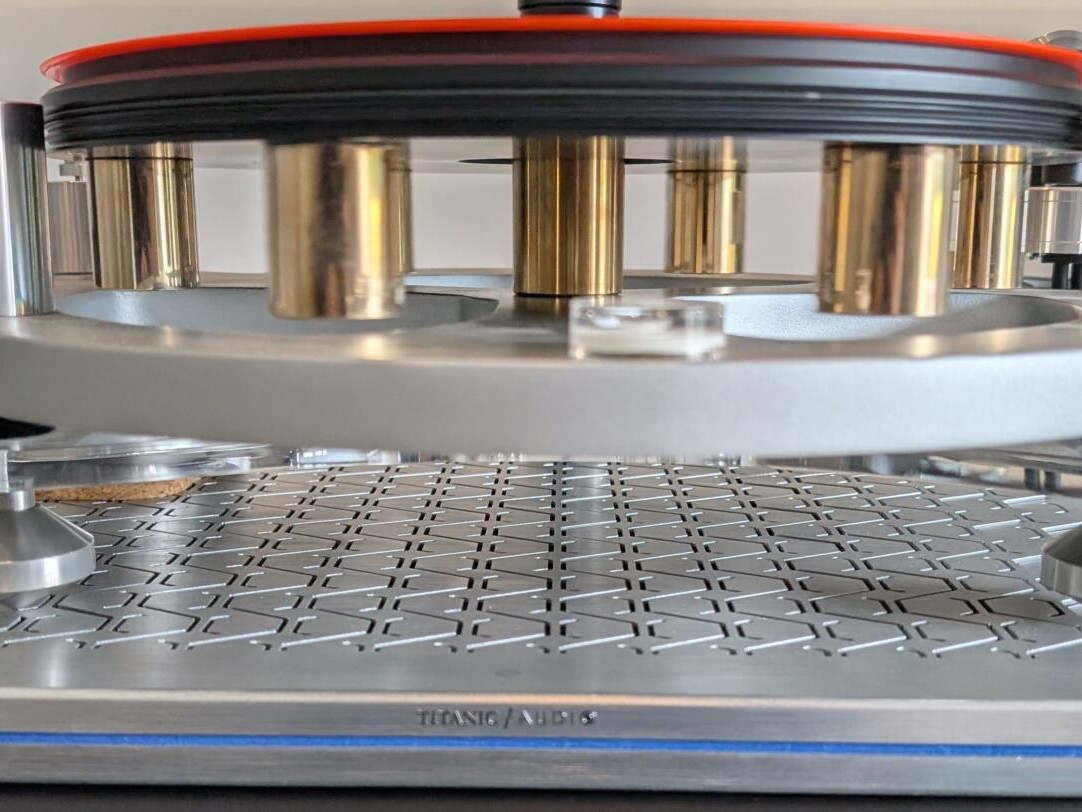
The top plate is designed to control high-frequency vibrations by what Titanic refers to as Hex-DNA Geometry. This hexagonal wave pattern is designed to address fast, low-amplitude vibrations (small movement) caused by the component placed on it, dissipating unwanted energy across the plate’s surface.
A Spring-Loaded-Hex Suspension is designed to address low-frequency and midband vibrations. This suspension is formed by hexagonal pins, placed between the hex plate and the isolation core, to dissipate vertical energy within the surrounding core, from which the energy is dissipated.
The main isolation core, like the hex suspension, is made of a composite material and designed to handle low- and mid-frequency vibrations. The composite material is a foam-like compound with a closed-cell morphology.
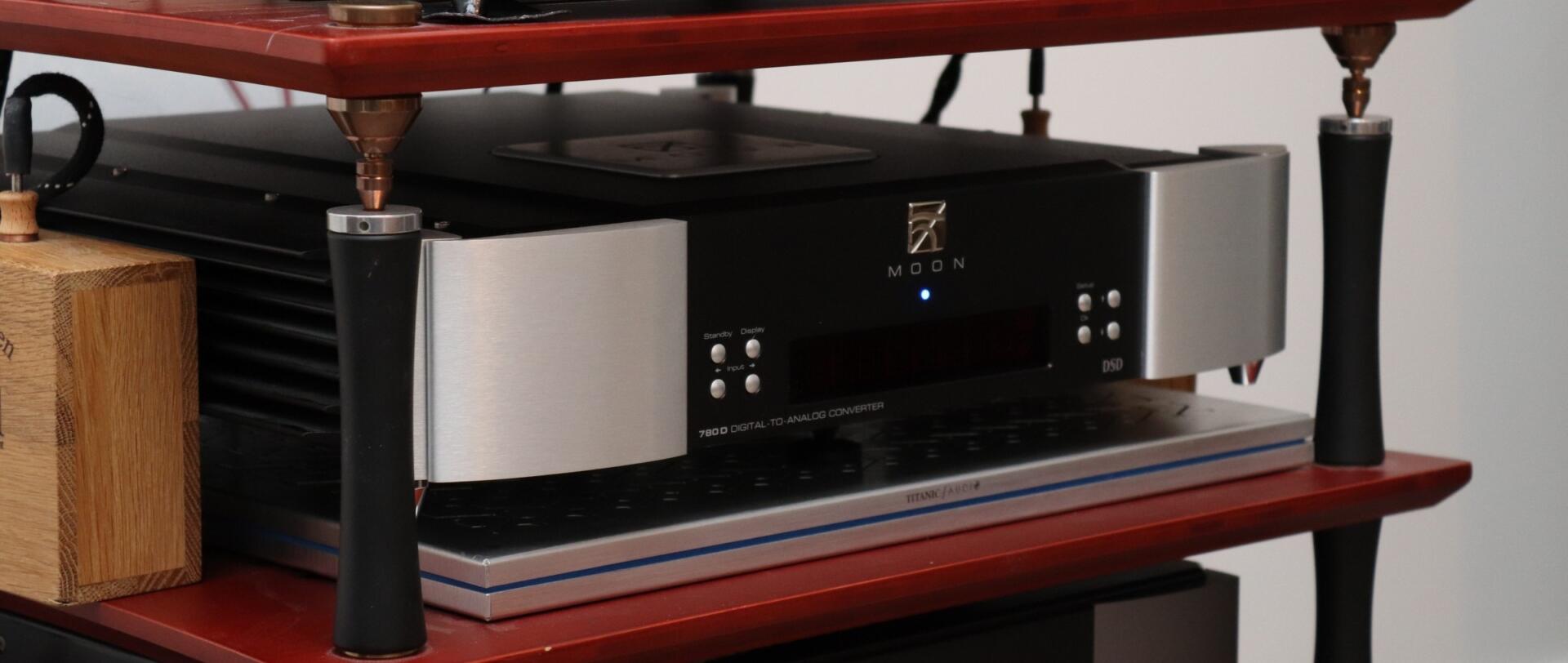
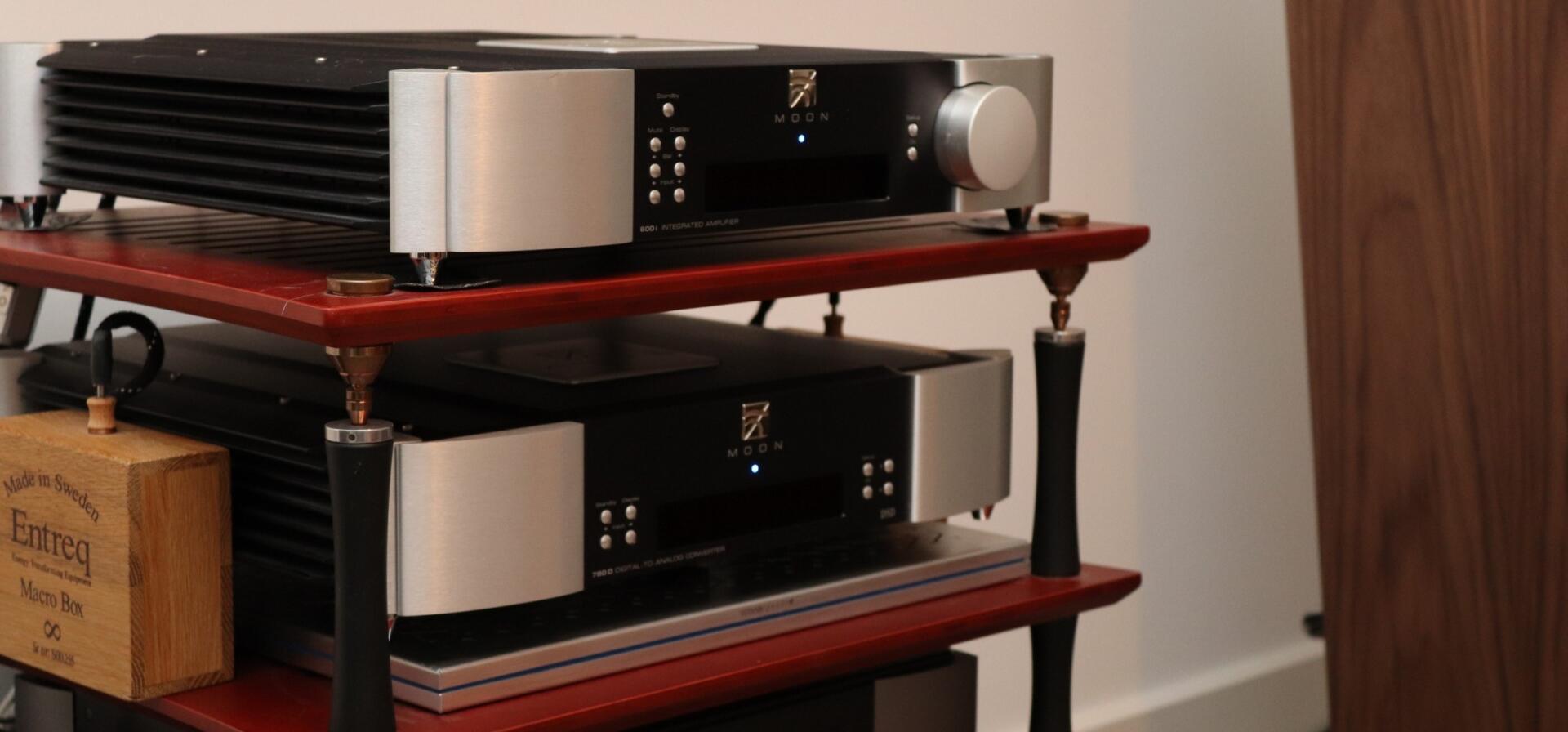
The Achor Plate Isolation Platform is designed to match the dimensions of the typical Hi-Fi component. In the absence of supplied data, my tape measurements are 25mm high, 440mm wide and 390cm deep. Shelf height limitations of my Quadraspire rack prevented me from using the Anchor Plate underneath my Dela/Melco N1-S38 server or Oppo disc player. DACs are known to be particularly susceptible to microphonic effects, so I began with the Anchor Plate under my Moon 780D DAC. Unfortunately, the 780D’s feet were too far apart to fit on the Anchor Plate. Thankfully, I already had 3 RDC cones beneath this DAC, so I was able to place them between the DAC and the Anchor Plate.
I felt the combination of my Quadraspire SVT rack and RDC cones was already providing satisfactory isolation, but assumptions count for nothing in audio. Kicking off with a DSD rip of Yes’ recently released AP75 SACD version of their classic album, Fragile, I was immediately impressed. High frequencies were better resolved, removing glare from Steve Howe’s guitars and Rick Wakeman’s keyboards. Both instruments now sounded sweeter, yet more fleshed out and textured. Bass guitars and drums were more defined and more rhythmic, making it hard to sit still. The Anchor Plate brought a sense of musical cohesion to the party, making it clear why this incarnation of the band is considered to be their peak. I could better appreciate the sustain of the acoustic guitar, along with more snap and focus.
The album’s closing track, the magnificent Heart Of The Sunrise, continued the theme. Chris Squire’s bass guitar sounded more lithe and flowing. Those familiar with this track know it can get chaotic at times, but I felt the system was doing a better job of keeping things under control. Rhythmic flow was notably improved, as was timing. The systems newly found timing abilities meant Bill Bruford’s immaculate cymbal work was easier to appreciate. Jon Anderson’s vocals were given more space, and his diction had improved—all impressive stuff.
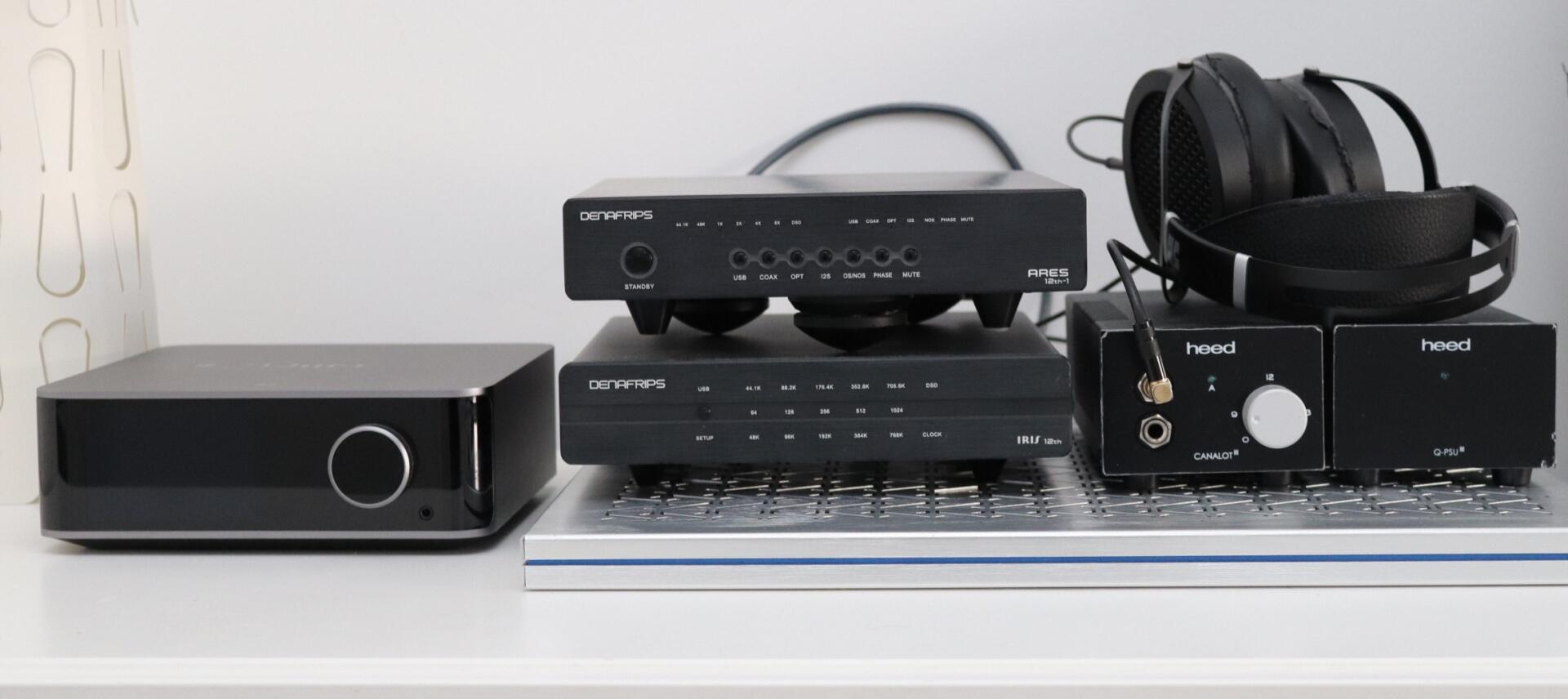
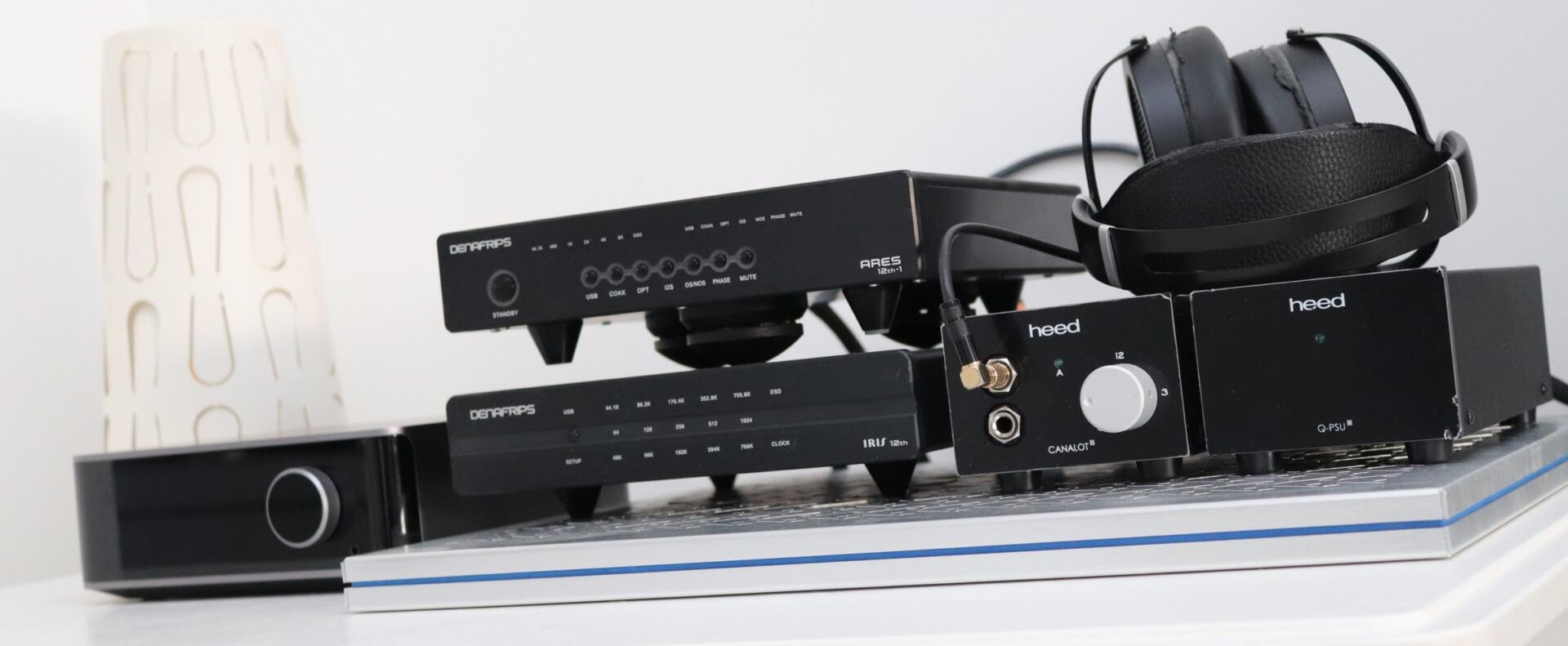
I currently have a second system set up in the bedroom, based around a WiiM Ultra Streamer, Denafrips Ares DAC and Iris DDC, feeding a Heed Canalot III/QPSU headphone amp. This little lot currently sits on an Ikea bedside cabinet. When I reviewed the attractive Blok Stax 2G rack some time ago for another publication, I found that this system performed significantly better on it; unfortunately, however, the rack was returned to its manufacturer several months ago. This system provided the Titanic Audio Anchor Plate with an excellent opportunity to demonstrate its skills. My sonic memory of the system on the Block Stax rack was a darker balance, yet tighter and better controlled. I decided to leave the WiiM sat directly on the cabinet and put the rest of the system on the Titanic Audio Anchor Plate. As shown in the photo, I had to double-stack the Ares DAC and Iris DDC, placing three RDC cones between them. After listening to a couple of albums through my HiFi Man Sundara headphones, taking notes, and installing the Anchor Plate, I listened again immediately with the Anchor Plate in place.
The Anchor Plate produced an immediate improvement in definition and resolution, although I didn’t hear the darker balance I heard when the system was set up on the Block Stax rack.
The first album I listened to was SAULT’s latest, called Chapter 1, via Qobuz (24/88.2). I was immediately struck by how much more spacious the music sounded. The soundstage was certainly more holographic and three-dimensional, now extending well beyond my head. The high frequencies were now cleaner and sweeter. There was more texture to the instruments, particularly the bass guitars, which were reproduced with a new level of dexterity. Drums were now more propulsive, and the music was now that bit more energetic and involving.
The second album I listened to was Gentle Giant’s Acquiring The Taste (Qobuz 16/44.1). As with Yes’s Fragile on the downstairs system, there was more texture to the keyboards and improved definition across the frequency range. Again, there was a pleasant sweetness to the high frequencies, yet more punch and resolution to the bass. This recording lacks soundstage depth, but there was now at least some sense of front-to-back imaging. The trumpets and lead guitars stepped forward from the rest of the band, enhancing engagement.
(Plating Up) Conclusions
The success of a product such as the Titanic Anchor Plate will, to a certain extent, depend upon the component concerned and, ultimately, the rest of your support system. Although my findings are subjective and again relate to the environments and systems in which I tested the Anchor Plate, I did find consistent results across both setups. In both cases, I noted improvements in definition, resolution, energy and timing.
Is your £500 best spent here, on a main product, or on a cable upgrade? Again, this depends on your setup and how well-sorted your system is in those areas. Later at HF&MS, we are planning on testing the Anchor Plate with the editor’s Michell GYRO SE turntable, which, we suspect, will yield even bigger performance gains, so watch this space. In the meantime, I am certainly enjoying the performance uplift this base has produced from my headphone system and hope to prise it back from the editor’s hands when he’s finished with it – here’s hoping he doesn’t love it too much…








Titanic Audio Anchor Plate Isolation Platform Highlights
Related Posts

Degritter Mark II – ultrasonic record cleaner
The Degritter Mark II is an ultrasonic record…
ISOL-8 launches new power conditioning range
ISOL-8 designs mains conditioning equipment to…

Titanic Audio Catalyst Cartridge Stabiliser

The stabiliser is a dual-stage mechanical filter…
Connected Fidelity UNITY mains power cable
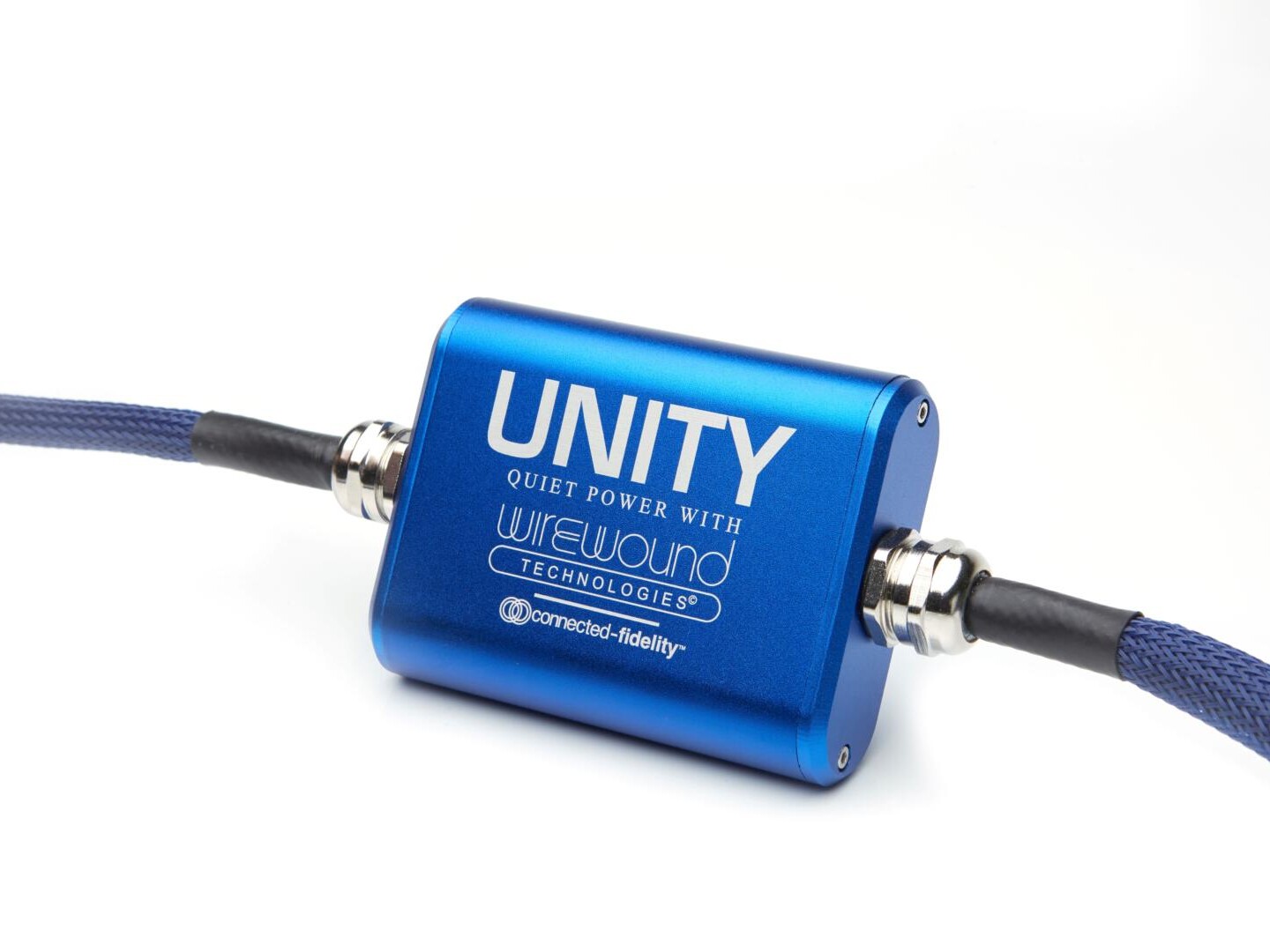
Connected Fidelity is introducing their UNITY…


