Introduction
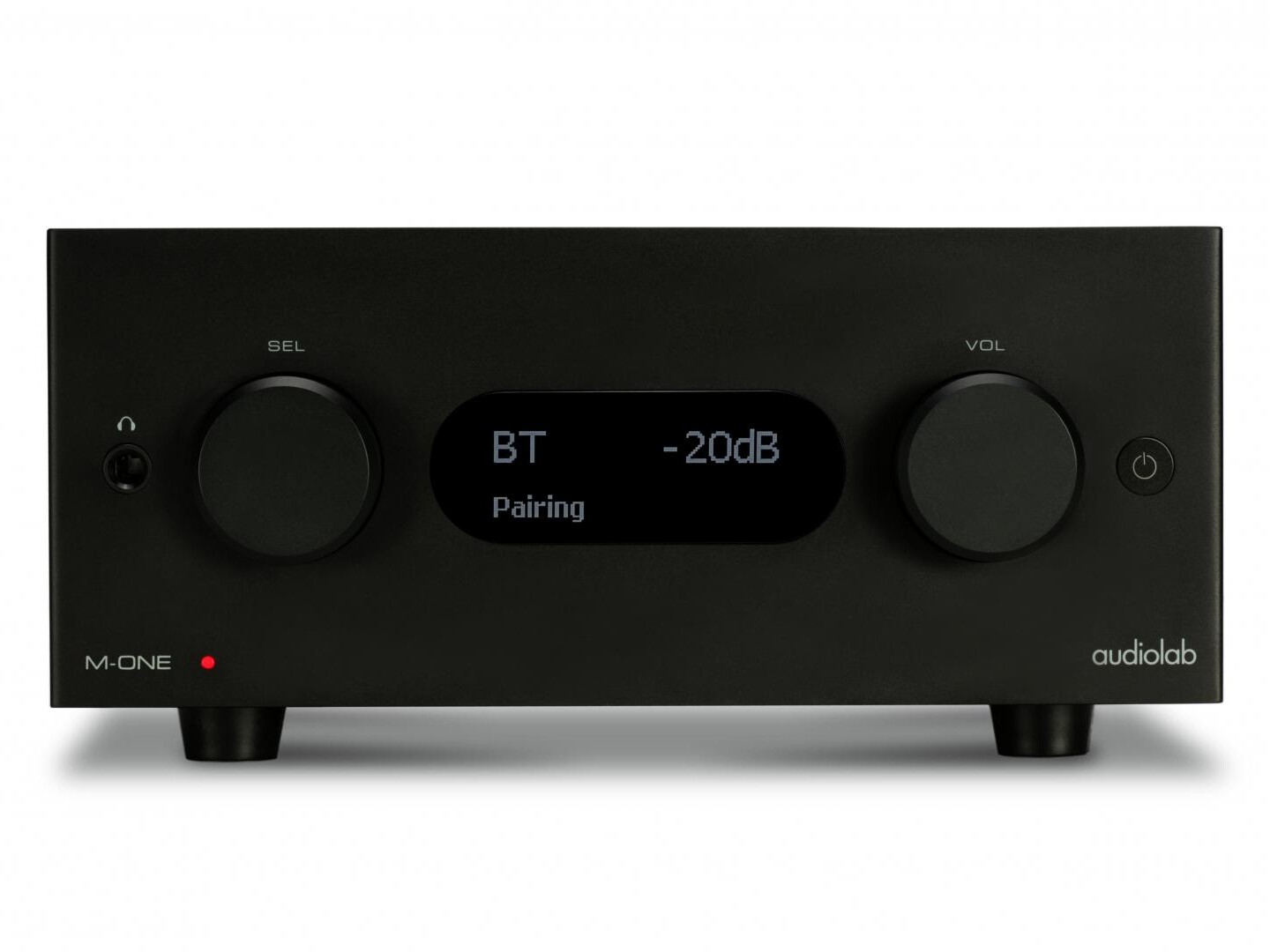
This is the first UK review of the full Audiolab 9000 series stack, featuring the 9000Q preamplifier and the 9000P power amplifier.
I wonder if you’ve read the reviews of the new Naim Audio New Classic range? They are beautiful to look at and are firmly high-end performance, however, they are just unaffordable for many. As an unashamed Naim Fanboy, I simply cannot get near the new stuff despite the fact that my wife likes the look and nods approvingly at the sound quality. I have tried many upgrades to lift the Old Classic equipment closer to the New Classic release.
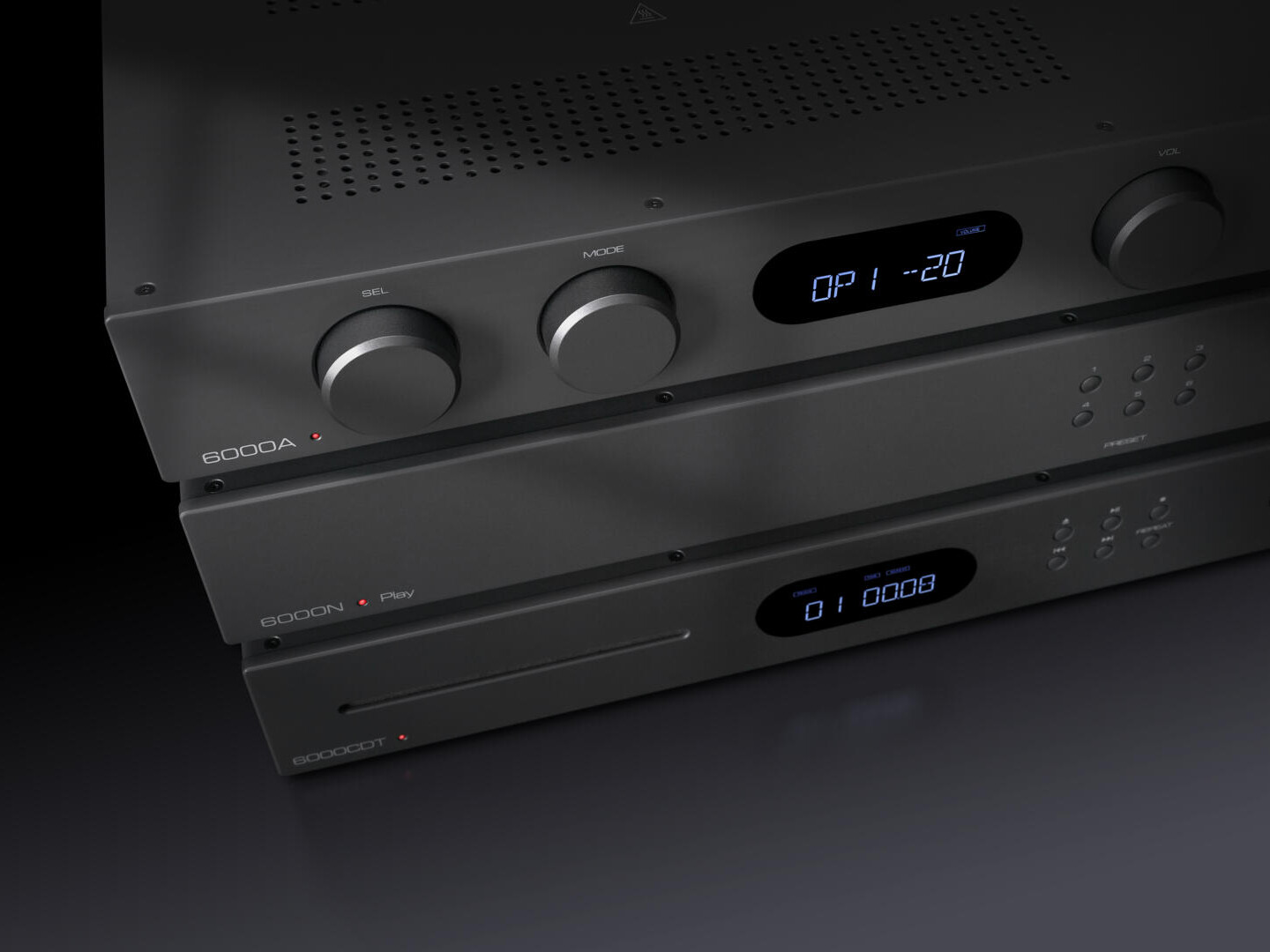
Audiolab has a 40-year pedigree, a Naim Audio-type pedigree. They’re taking on the higher-end brands with both looks and affordability, building on the successes earned by the price-point-defining 6000 series products in the late 20-teens. And Audiolab believes this 9000 Series, updated with their first preamplifier and power amplifier release last year, is the essence of;
affordable high-end audio
Their quote speaks for itself.
Design
This is the first UK review of the full Audiolab 9000 Series stack, featuring the 9000Q preamplifier and the 9000P power amplifier. We should note, at this point, that there is an integrated amplifier available, the 9000A, in the 9000 series; this is some £500 less than the combined price of the P and the Q.
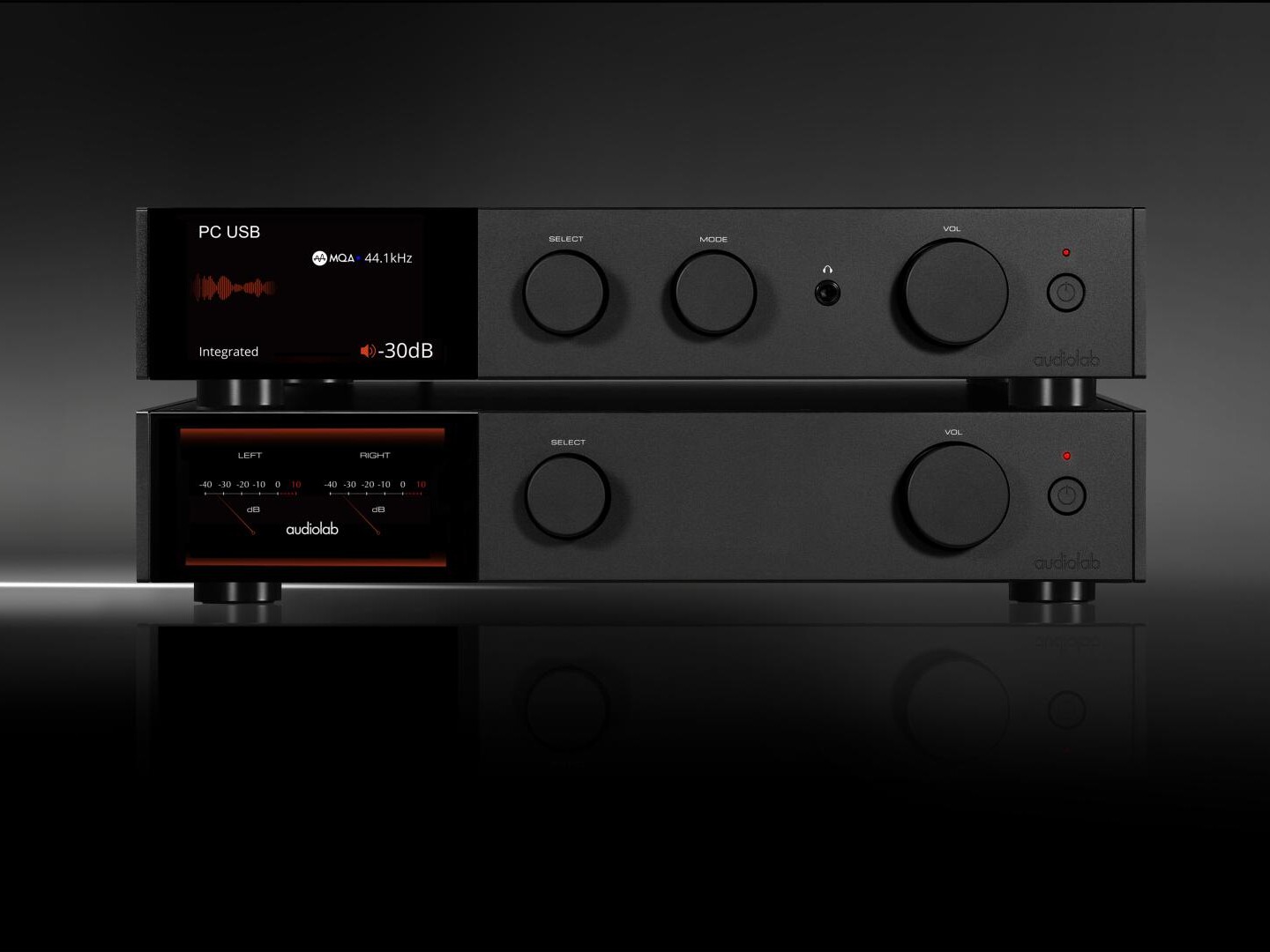
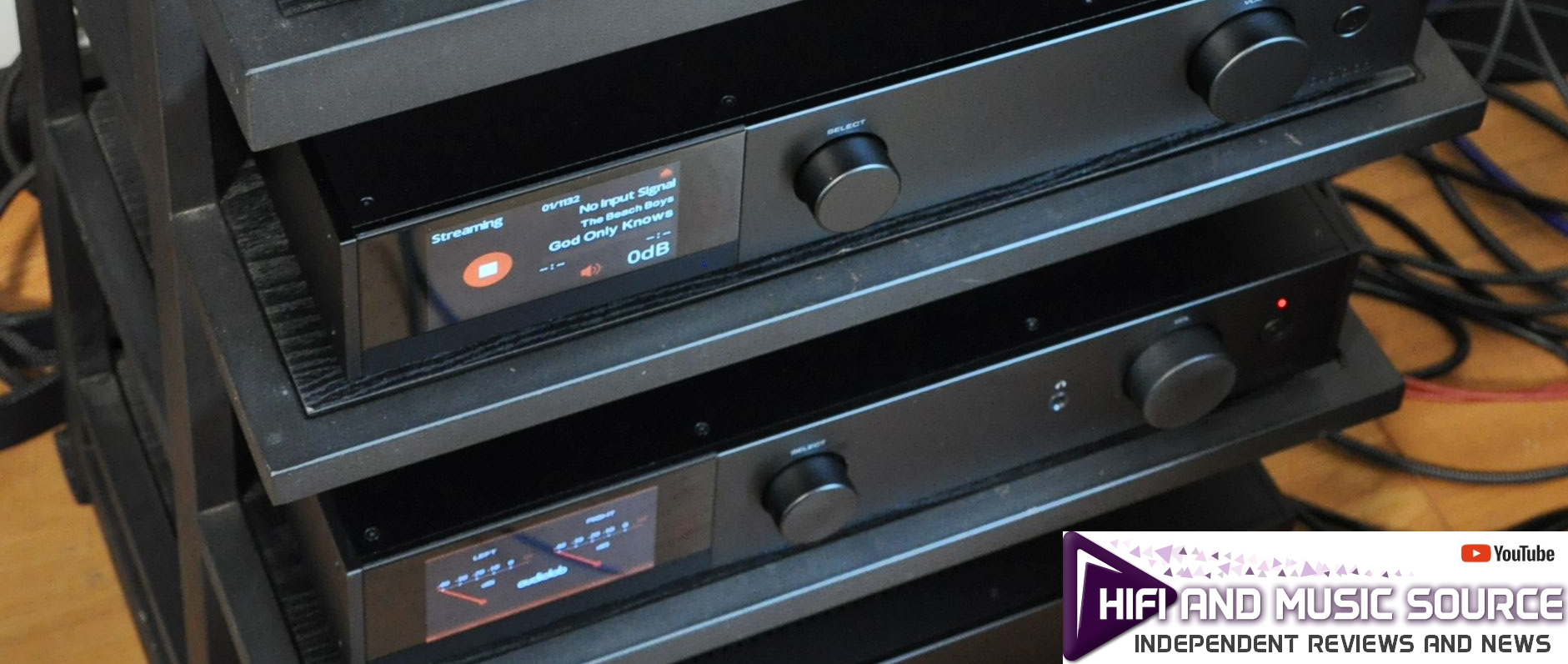
Full details of the whole stack are on the site, but I’ll draw out the key design themes. Each of the units matches with a 4.3in colour IPS LCD screen positioned to the left of them, apart from the 9000P.
9000N – Network player
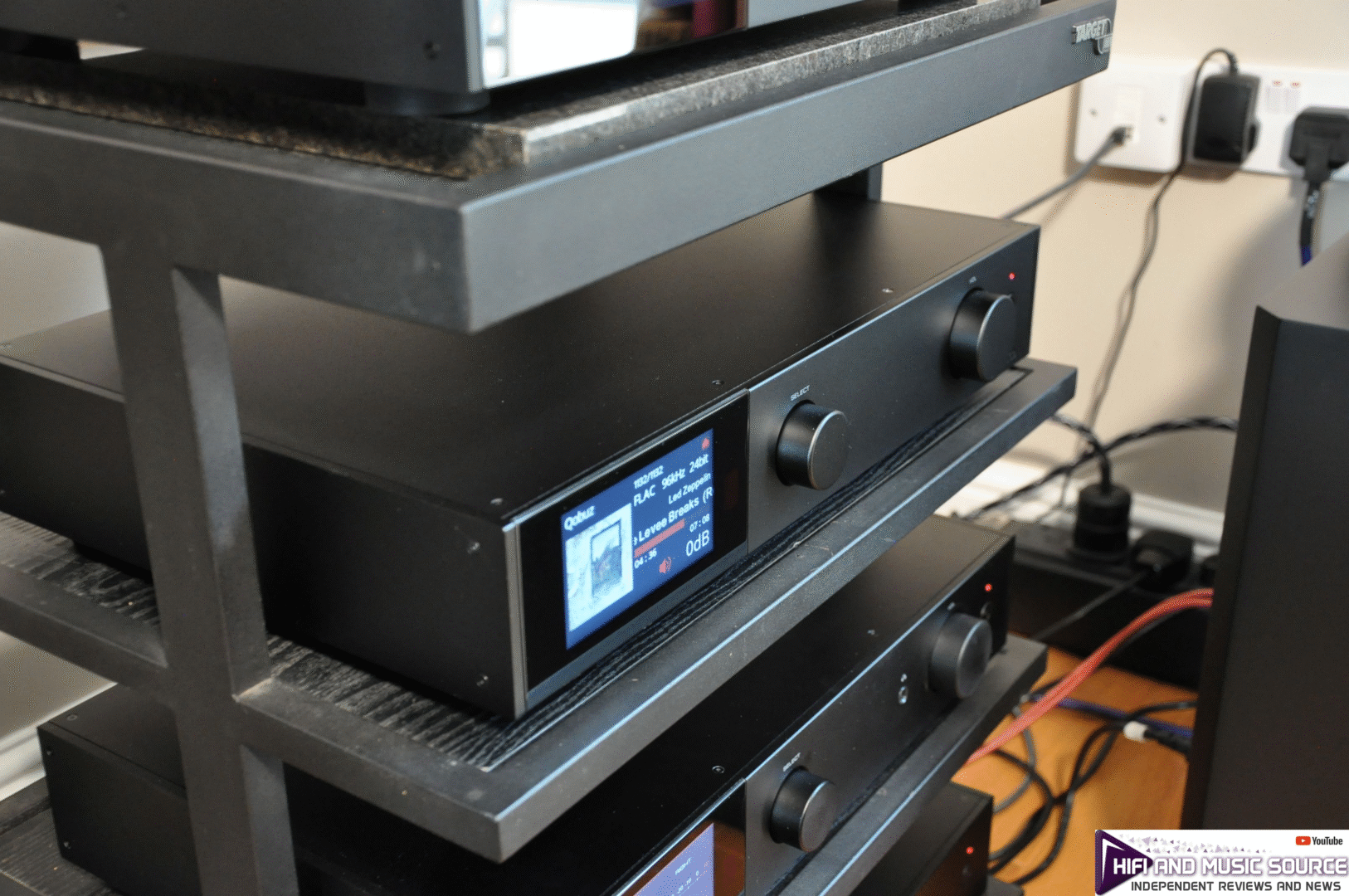
The streaming platform in the 9000 stack is the 9000N network player. It is derived from a rarely bestowed collaboration with Lumin, known for their renowned hi-res clarity, and transparent ‘streaming engine’. The 9000N uses a new Audiolab app that is basically the Lumin app with Audiolab skin.
The network player includes the recently launched Qobuz Connect, Tidal & Spotify Connect and all the usual options you’d expect, including Roon, AirPlay 2, full MQA decoding/up sampling and access to the Plex amp module.
Complete streaming information is presented on the IPS LCD screen positioned to the left of the unit, which matches across the 9000 Series.
The processing brains in the 9000N are a quad-core Arm Cortex-A53 chip that supports the ESS HyperStream II architecture around an eight-channel ESS Technology Sabre ES9038PRO, claiming;
low noise, exceptional signal-to-noise ratio and dynamic range.
Audiolab has had a long relationship with ESS that enables it to extract the most from these pro-level chips.
Hi-Res music is supported throughout with PCM up to 32-bit/768kHz and native DSD up to 22.5MHz (DSD512) on all of Wi-Fi, Ethernet and USB. Interestingly, the Lumin platforms do not have the HiRes Wi-Fi support that is seen in the 9000 Series. The 9000N could equally be used as a DAC only if you had another transport arrangement, be that a CD transport or streaming, though I suspect you may prefer the DAC in the 9000Q as it has a couple of enhanced tweaks and an enhanced power supply arrangement.
Full details of the 9000N network player are on the Audiolab site.
9000 CDT – CD transport
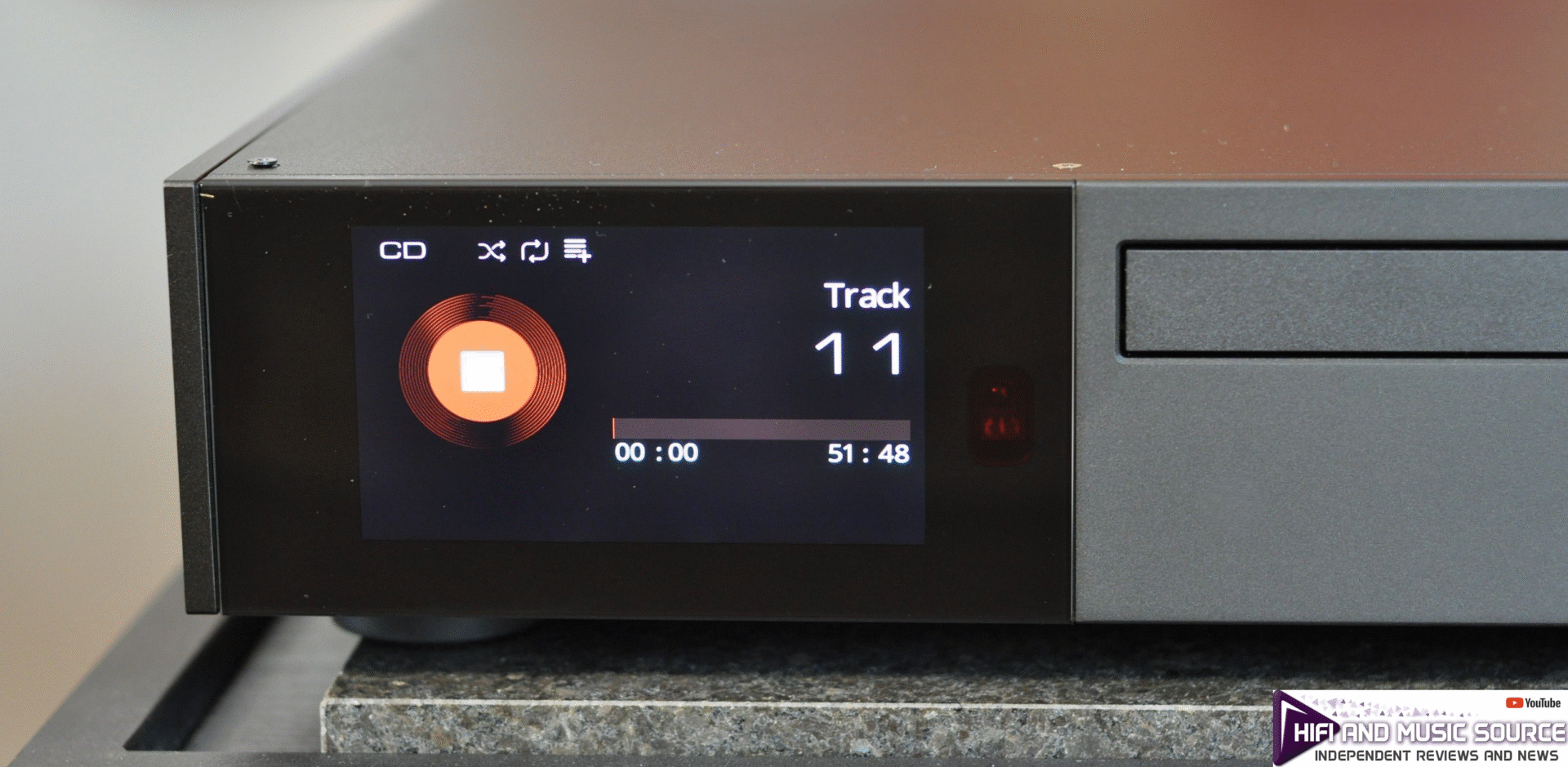
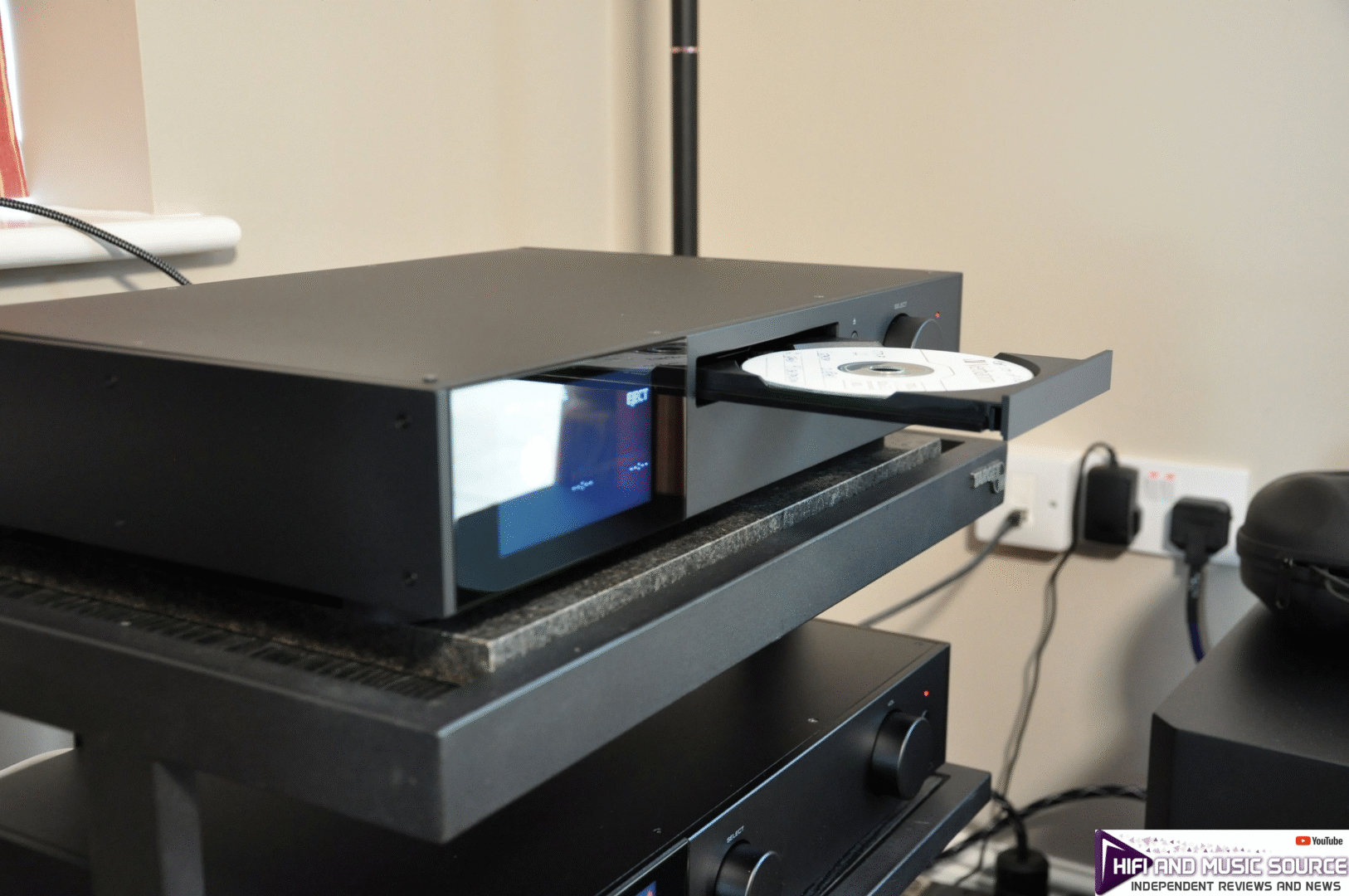
The 9000CDT, CD transport has a slot-loading transport in its own, electromagnetically shielded enclosure. The 9000CDT’s master clock is controlled by a temperature-compensated crystal oscillator, claiming to deliver vanishingly low levels of jitter.
Full details of the 9000CDT, CD transport, are on the Audiolab site.
9000Q, 9000P – pre- and power amplifiers
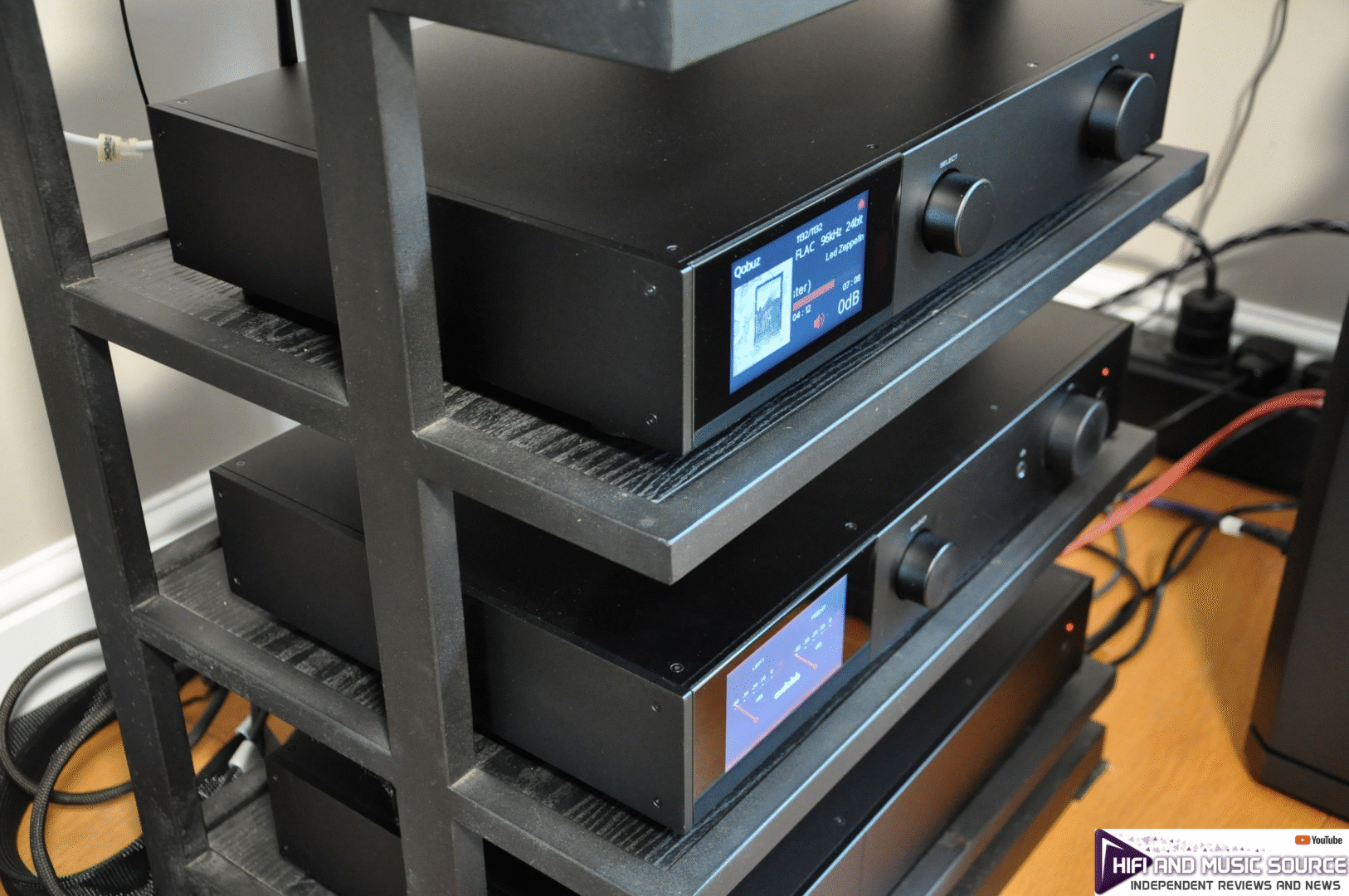
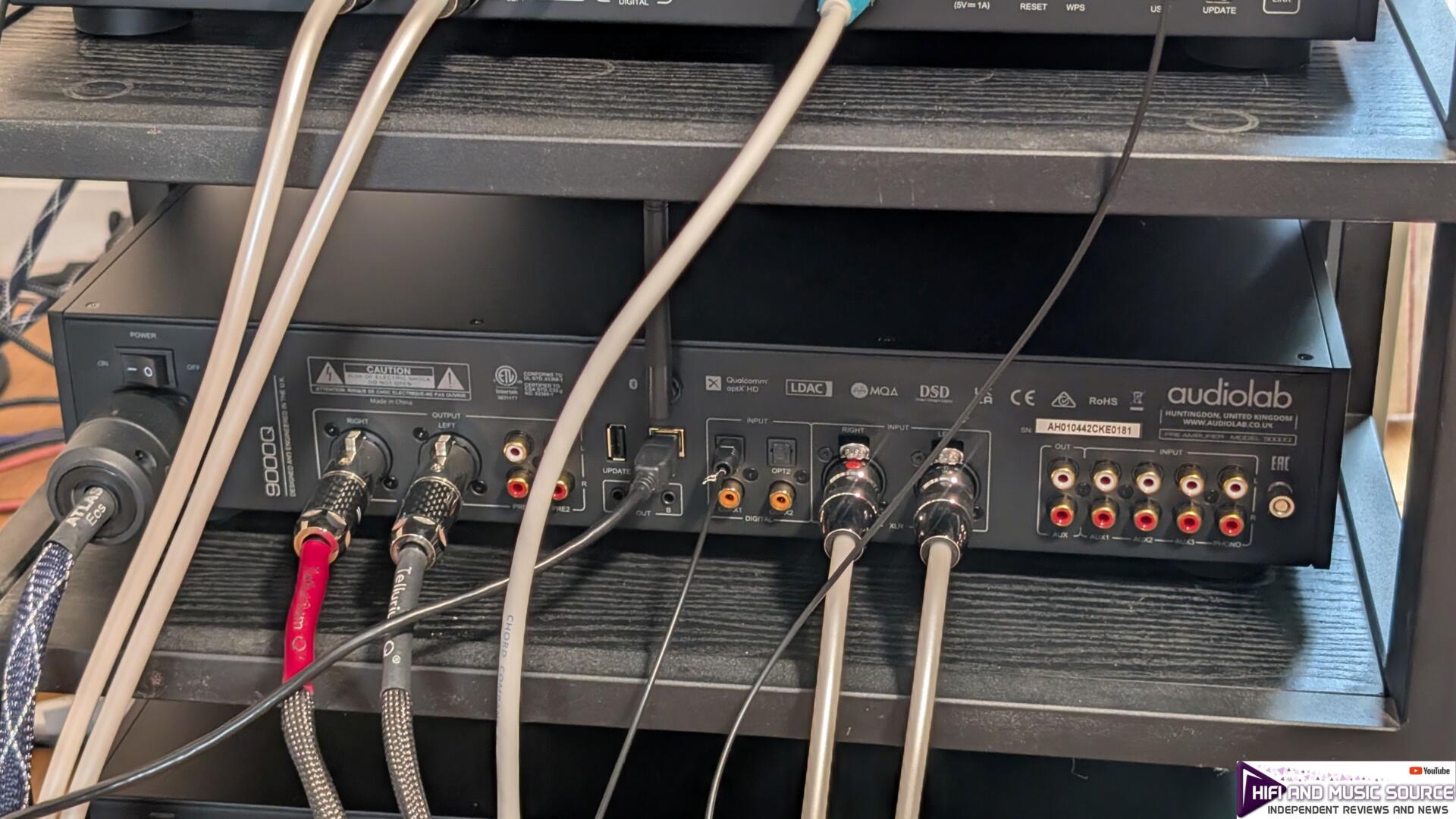
The 9000Q preamplifier is engineered to handle a wide range of digital and analogue sources. These include, on the analogue input side, one XLR input and three stereo RCA line level inputs, as well as an RCA phono (MM) stage input. On the digital input side, there is USB Type B, two coaxial inputs and two optical; the unit also supports Bluetooth 5.1 inputs.
On the Analogue output side, the 9000Q has stereo XLR output to the 9000P (the fully balanced XLRs are input to output), two RCA outputs, further RCA line-level output and a dedicated 6.35mm headphone output stage. The 9000Q has the same ES9038PRO 32-bit DAC as the 90000N, with a few tweaks (see 9000N above).
The 9000P is a 100W/channel (8 Ohms) class AB amplifier with dual-mono circuit topology with separate power supplies for the left and right channels. Like the 9000Q preamplifier, the 9000P’s power supply incorporates mains filtering. The power amplifier offers 15 Amps per channel to physically drive the loudspeaker’s voice coils with a significant 60,000uF reservoir capacitance.
The 9000P unit can be bridged, to form a Monoblock, easily with a second 9000P, where 300W/channel becomes on offer into an 8-ohm load.
Full details of the 9000Q preamplifier are on the Audiolab site. The 9000P details are here.
Quality
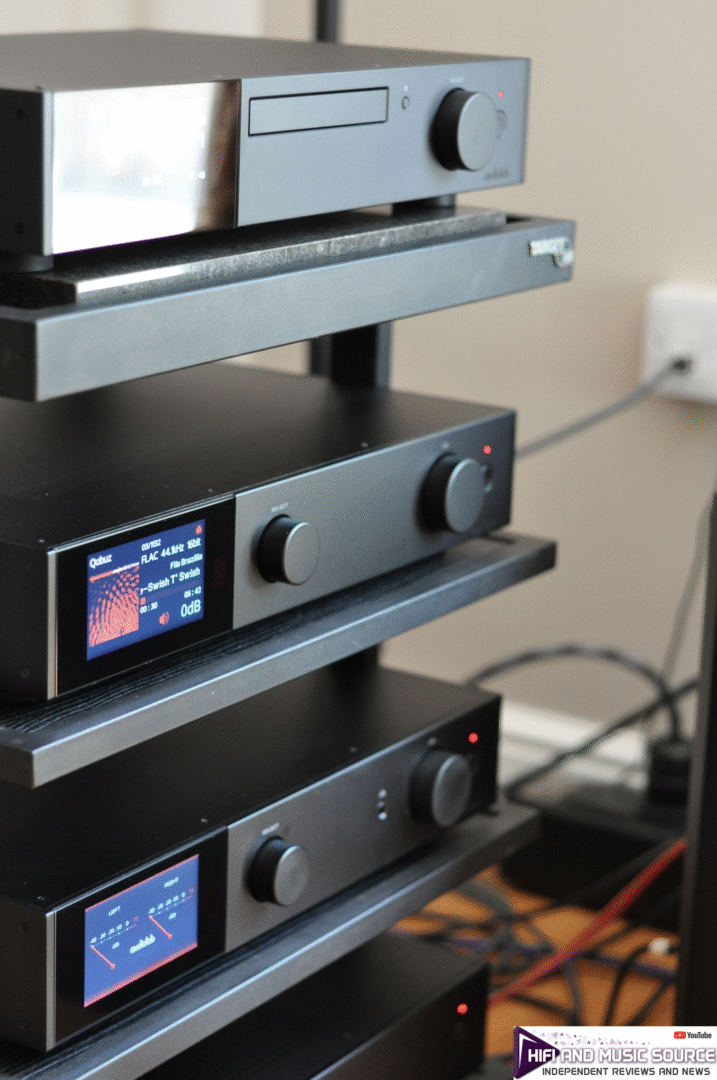
Each unit in the stack is made of a substantial aluminium base and chassis. The matching units are all finished off with a 4.3-inch colour IPS LCD screen positioned to the left of the units, apart from the power amplifier. They look the part with a display offering an array of options, DAC filters (in the 90000N) and screen displays that include VU meters and album artwork.
Each of the units has matching power buttons and matching volume or selection knobs that are soft to the touch. I have a dizzying array of remote controls, one per box, but they are all the same and manage each of the three controllable units.
Specification and Price
List of Dealers here;
Full details are on the company’s site.
All units are 444 x 90 x 328mm, and are available in Silver or Black
9000A – RRP £1999
9000N – RRP £2,499
9000CDT – RRP £999
9000Q – RRP £1,499
9000P – RRP£1,099 (The Q &P can be purchased together for a package price of £2,499)
All prices inc. VAT






Performance
Review Equipment
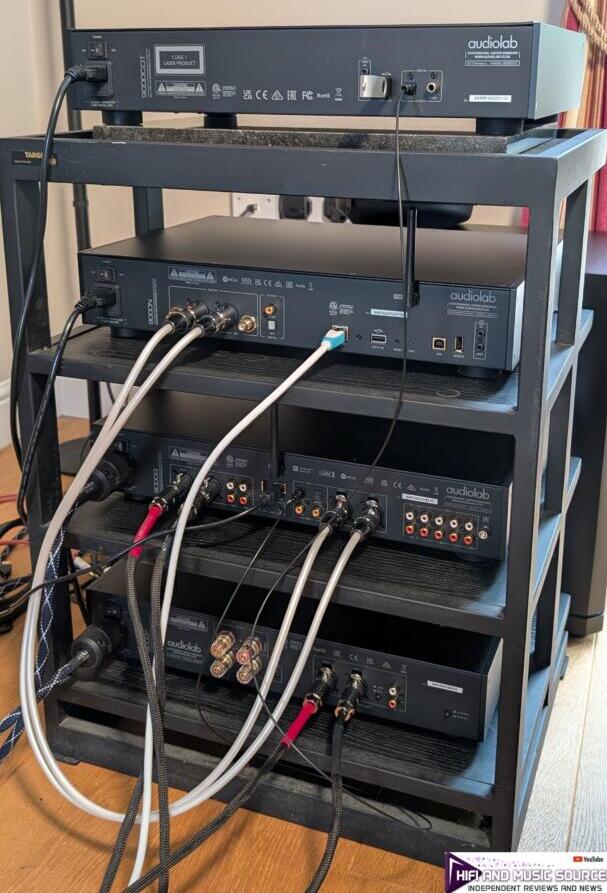
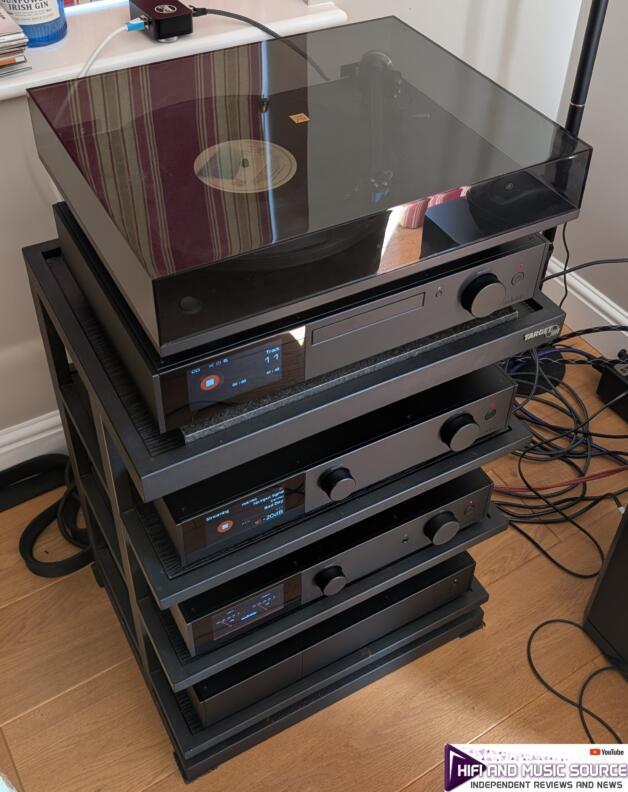
I’ve had the 9000N, 9000CDT, 9000Q and 9000P on a rudimentary black rack that does a decent job. I’m using Atlas interconnects generally, as the units only come with power leads and a remote control. I’m using Tellurium Q Ultra Black II loudspeaker cable to both my own, old and saggy, KEF R700s and a pair of stunning Arendal 1723 THX monitors that are suitably high-end for this review.
For the record, I have gone analogue XLR out from the 9000N to the 9000Q (using the 9000N DAC), and I’ve taken the optical output from the CDT to the 9000Q (using the Q’s DAC).
Physically
My Audiolab 9000 stack is in black, and it is aesthetically gorgeous, to the point where I do need to concentrate more on the sound and forget about the looks. However, it should not go unsaid that the Audiolab stack has the seal of approval from my wife, who prefers this look to the Old Classic Naim look (with the green logo), which has been shipped out of the lounge, lock, stock, for this one.
I’ve noted in casual browsing and research that both the 9000N and the 9000A do not have an HDMI ARC, unlike the 7000A. I imagine that this is because Audiolab is concentrating the 9000 Series on audio excellence, which makes pure sense. This may be an issue for some, though.
I’ve just read that the Audiolab 9000P is protected by a thermal switch which interrupts the AC power supply if the amplifier is overloaded or overheated. I have to say that in this recent weather and with extended listening, I’ve had no problem in the recent heat wave. The units turn themselves off after a defined period of inactivity, which is a good thing.
My original plan was to review this stack of loveliness and swap in and out various streamers, CD player and amplifiers, but I then began to realise I was missing the point. Each of the units has been reviewed elsewhere, so in the end, I have stuck to the stack and enjoyed it!
The full 9000 Series can be wired up to trigger, all on and off, with their 3.5mm triggers at the rear of each unit. I believe you would want to set this up if you were to invest in this stack.
KEF R700
Since I’m more familiar with my old KEFs, I thought I should start with these warmest of 3-way floorstanders. I get a nourishing, ported, bass response from these loudspeakers with the Naim Audio Old Classic NAP 250, and I have found this to be my preference over the last ten years or so. My head has been turned with the NEW Classic NAP 250; this response is deeper and more satisfying with the control you’d hope for from an elite amplifier.
The 9000P amplifier turns heads in the same way. It has excellent instrument separation and resolution, without doubt. For example, Joe Morello’s cymbals at the beginning of Dave Brubeck’s Take Five (Qobuz, 24-bit, 192kHz) are wonderfully crispy, clear and expressive. That middle drum solo in the track is similarly articulate and tidy. I’m going to use the word analytical, but in a good way, as some may hint that this is a bad thing. There is plenty of presence in the room, and there is certainly no lack of power on offer from this amplifier into the moderately sensitive KEFs.
It’s time to crank it up a bit, and having digested the four-part Led Zeppelin documentary on Sky Arts, it’s time for some raw rock and roll. Unfortunately, early Led Zep suffers from poor recording quality, but things improve with Led Zep III & IV. Good Time Bad Times (Qobuz, 24-bit, 192kHz) is about as bearable as Led Zep I gets with these KEFs and What Is And What Should Never Be (on Led Zeppelin II, Qobuz, 24-bit, 96kHz) has that wonderfully crisp snare snap delivered by John Bonham, who it seems to me is a hugely underrated quarter of Led Zeppelin.
The 9000P delivers Led Zeppelin with energy and verve, and the KEFs become the weak point in this Audiolab system at this stage. Switching rapidly, therefore, to the Arendal 1763 monitors, the output is markedly tighter, and the snare feels faster. The performance from the Audiolab 9000P is nothing short of sensational; the 9000P forces me to go loud. Led Zeppelin II is, in fact, legible with these loudspeakers. It’s time for Gallows Pole (Led Zeppelin III, Qobuz, 24-bit, 96kHz) and Black Dog IV (Led Zeppelin IV, Qobuz, 24-bit, 96kHz). What a fantastic sound, the bass response and pace are terrific
Yes, the 9000P has plenty of power, but what about the vocal subtleties of New Yorker Amos Lee? Amos Lee is articulate and delicate, and his debut album is a firm favourite in these reviews. The KEFs know these vocals well, and they’re delivered with care with that signature separation and clarity that is emerging in this review.
Always good, it is time to turn to some familiar pianos, from Lang Lang. There are three pieces I listen to the most, culminating in Rachmaninoff’s Piano Concerto No.2.
Liszt’s Liebestraum (No. 3 in A-Flat Major, S. 541 / 3, Qobuz, 24-bit, 96kHz) is simply a beautiful piece of music with a whole piano key cascade in the middle at 2’35”. Here, the silence is dark, the scales perfect. The live version of Lang Lang’s Arabesque (C Major, Op. 18 Bach: Goldberg Variations, Qobuz, 24-bit, 96kHz) is weighty with the room filling the quiet pauses. The 9000P&Q combine to offer a premium delivery even with these tired KEFs. This is reinforced with the intro to Rachmaninoff’s Piano Concerto No.2 Moderato (in C minor, Op. 18, 24-bit, 96kHz).
Arendal 1723 Monitors
I recently received the above for review, and these loudspeakers are epic, and absolutely gorgeous compared to my 15-year-old KEFs. Again, the aesthetic is hard to look past with these guys, both the loudspeakers and the electronics. This is as good a looking system as you wish for in the stealth black on offer here.
I have the subwoofer that comes with the 1723 THX monitors, but it is unplugged so that I can get a feel of the bass control from the 9000P. They are decent enough without the subwoofer. The 9000P drives these monitors with ease with a similar sensitivity to the KEFs (KEF 89dB 2.83V/m v 1723 88.7dB 2.83V/m). The resolution is perfect, and this system can go loud. There is always that thing where great things either look or sound effortless; this system is one of those things, with the 1723s.
9000Q – more
The 9000 Series pairs well with various music genres, from classical to heavy rock and vocals. The Audiolab app offers seamless control of the 9000N and is a clear improvement over Play-Fi, functioning similarly to the Lumin app but with a different skin. Lumin’s involvement further highlights the streamer’s premium quality; they do not throw their collaborations around lightly.
The app manages my Naim UnitiServe* networked music library very efficiently indeed. On first access, the app scans the digital library for a few minutes (2000+ bit-perfect WAV albums), but thereafter, it is warp speed; it is very gratifying indeed.
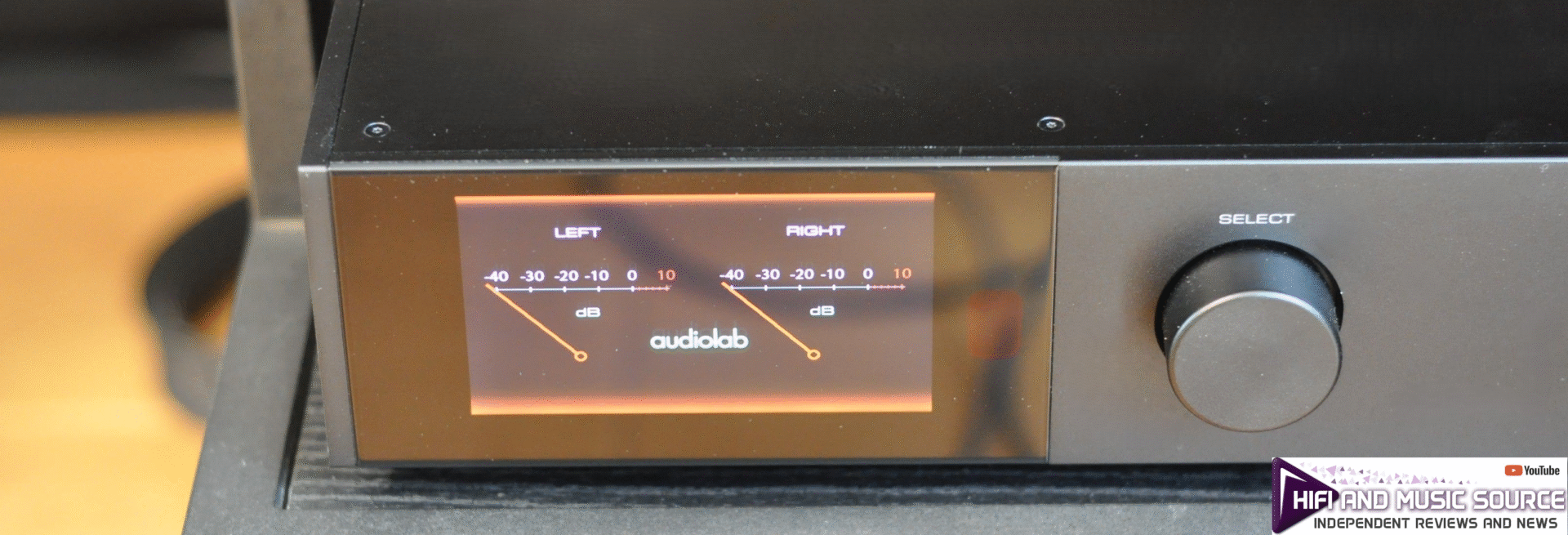
The 9000Q preamplifier appears to be very well organised indeed. I have no complaints and have experienced no crosstalk or noise flicking around the optical inputs from the 9000CDT or the XLR input from the 9000N streamer. Of note with the preamplifier are the screen options, including the fabled VU Meters, all of which are visible from the seating position and should be there if you’re playing Led Zeppelin
A word on the 9000CDT CD player. It looks the part and sounds crystal clear; I’m using optical to the DAC in the preamplifier. There’s not much to choose between Led Zeppelin IV on CD, my networked WAV rip or the Qobuz stream. I bought the model below, the 7000CDT, last year and do regret it at all.
* Recently repaired, thank you, Music Matters, Stratford, and Naim Audio, of course.
Headphones – Meze Audio Elite
I have experimented with the headphone output, which is the proper 6.35mm jack. Inserting the headphones cuts the loudspeaker output. Performance seems to be more than satisfactory in my view, the Elites are an easy driving 32 Ohms and reveal everything. The 9000Q handles the Elites with ease.
Turntable – MM Phono stage
The MM input is excellent. I’m using a Rega RP3, the one before the Planar 3, with an Elys2 cartridge, fairly middling, I’d say, in performance terms. Admittedly, I have not spent hours with it, but the few albums I have played sound lively, clear and well delivered. Sound levels were just about perfect from the 9000Q/RP3 combination, and I think you’d be hard pressed to find fault here. The RP3 finishes off the 9000 system perfectly for me, and overall, the stack is very good-looking indeed. If this were a long-term investment, I would certainly not have the RP3 on the CD player, but sometimes, needs must.
Overall
Overall, the system looks at least as good as it sounds, and that is exceptional. More importantly, it functions superbly as a complete system with the remote control carrying the CDT and basic streaming options and the preamplifier’s volume control. With the Rega turntable and a decent pair of headphones, I think you could consider yourself done, in HiFi terms. With the added option of a future upgrade to a second power amplifier, this is a system to fall in love with forever.

Audiolab 9000 Series Highlights
Love
- Affordable high-end audio
- Stylish, good looking
- Clarity, overall sound
- System control
Like
- One remote control
- Networked library access
- MM Input
Wish
- For nothing here
- I would set up the power trigger interconnects
Related Posts